Charlevoix From Quebec City: Day Trip Or Overnight?
Charlevoix is close enough to tempt you into a day trip and long enough to punish you for it. Here are the real distances from Quebec City, the train season, and the honest case for staying a night.
 Written with Jean-Pierre Tremblay, Quebec City tour guide & heritage specialist
Quick answer
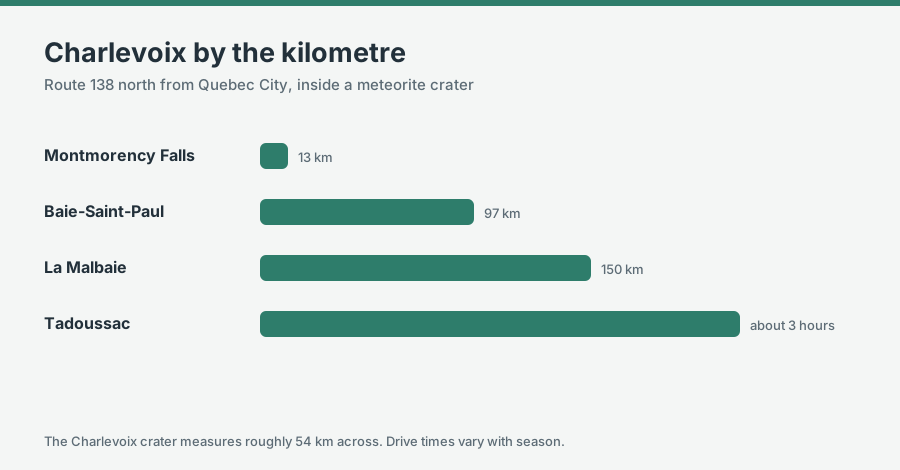
Charlevoix starts about an hour northeast of Quebec City: Baie-Saint-Paul is 97 km via Route 138, La Malbaie roughly 150 km and two hours. A day trip works if you stop at one town. If you want both towns, or the whales at Tadoussac three hours out, book a night and stop fighting the clock.
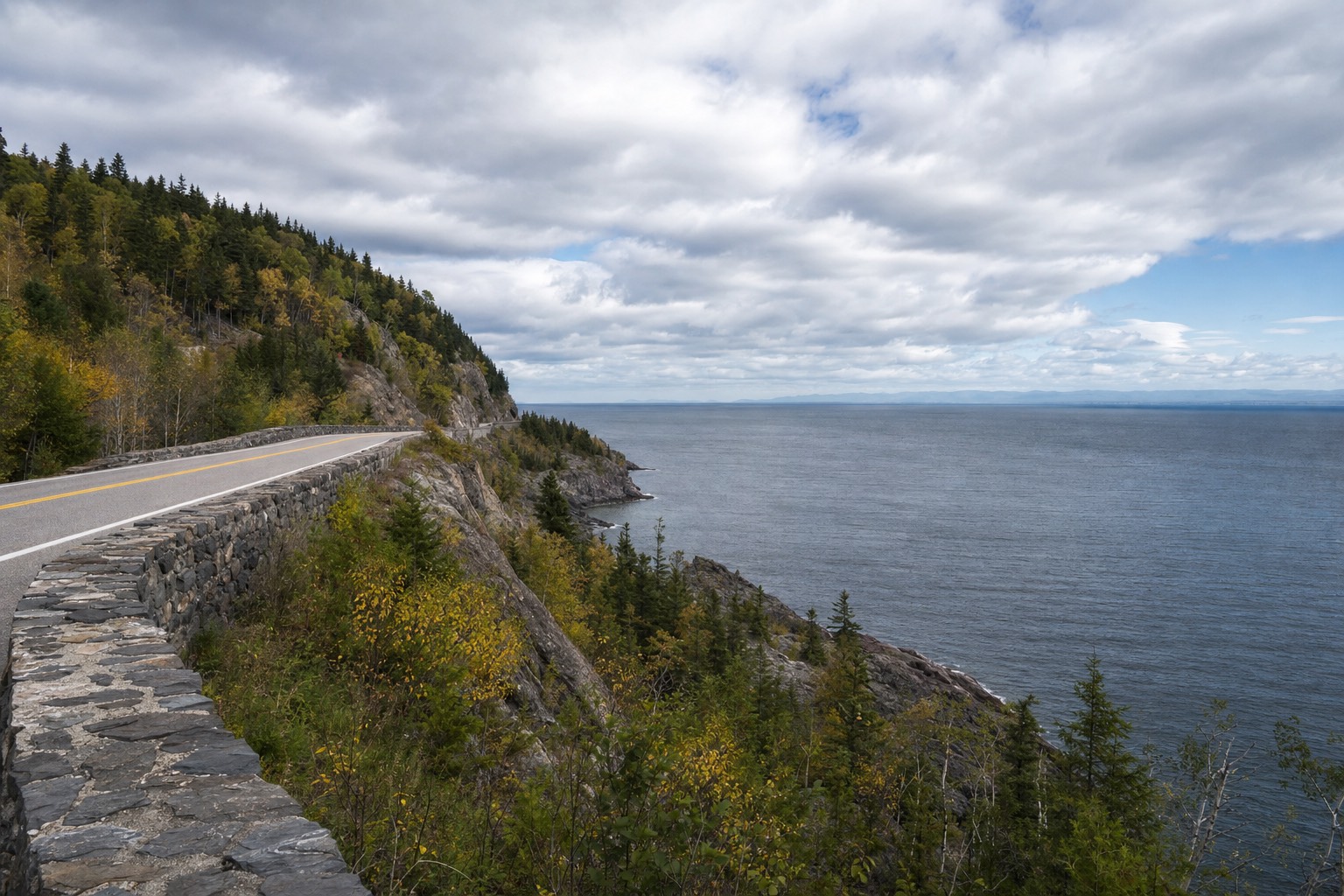
The question usually lands on the Dufferin Terrace, near the end of a tour, when someone points northeast past the Île d'Orléans and asks what is out there. Charlevoix is out there. The coast road climbs out of the Beaupré flats, the hills stand up all at once, and the St. Lawrence widens until the far shore turns into a smudge. Two names carry the region: Baie-Saint-Paul in the valley, La Malbaie further along.
I should be clear about my lane. My ground is inside the walls of Old Quebec, the Frontenac, Place Royale, the Casse-Cou stairs. What I know about Charlevoix I know as a driver on Route 138 and as a guide who has watched hundreds of visitors try to squeeze the region into an afternoon. So you will get the road honestly here, and the towns in reporting voice, without me pretending to have slept in inns I have not slept in.
TL;DR: Baie-Saint-Paul is 97 km and about an hour from Quebec City. La Malbaie is roughly 150 km and about two hours. A day trip to one town is genuinely relaxed; a day trip to both is four hours of driving with lunch wedged in the middle. The whole region sits inside a 54 km meteorite crater and a UNESCO biosphere reserve designated in 1988. Train de Charlevoix runs June 5 to November 1 in 2026, leaving Chute-Montmorency at 8:00 a.m. If your schedule allows one night away, take it.
How Far Is Charlevoix From Quebec City?
Baie-Saint-Paul, the first proper Charlevoix town, sits 97 km from Quebec City, roughly an hour by Route 138. La Malbaie is about 150 km and closer to two hours. Tadoussac, where the whale zodiacs depart, is around three hours each way. The distances are modest. The trouble is that they stack.
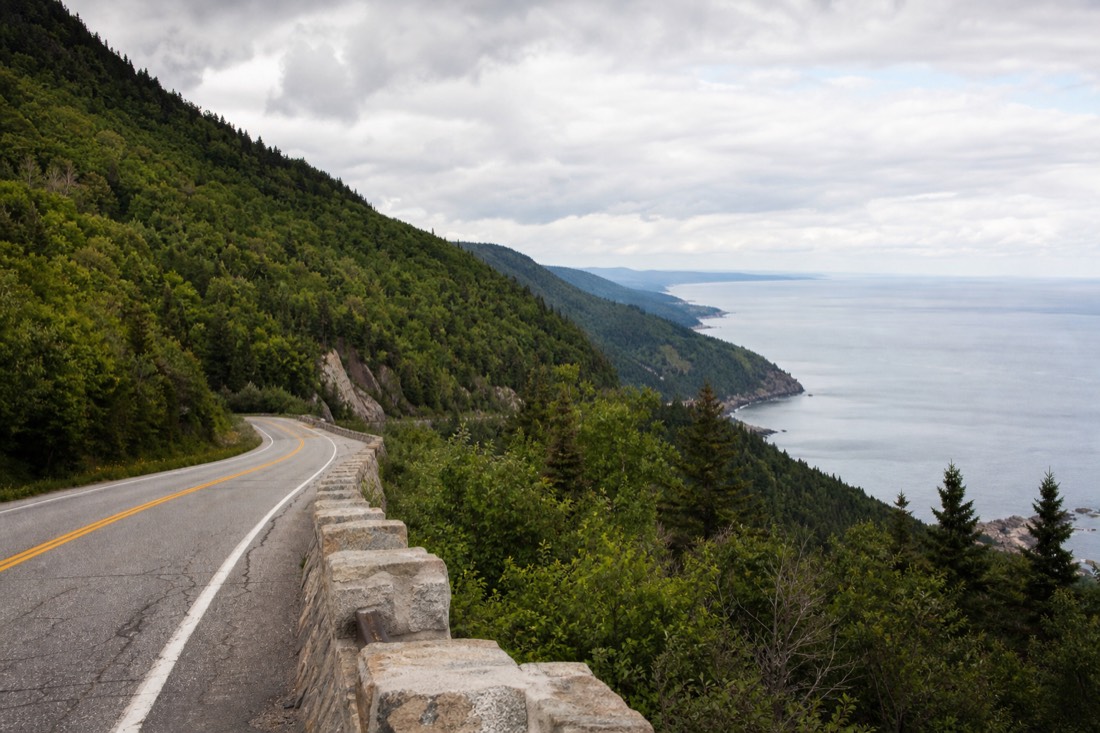
Route 138 is the spine of this whole trip. It runs east past Montmorency Falls, along the Beaupré coast, and then starts to climb, and that climb is where the drive stops feeling like an errand. Nothing about the road is difficult in summer. In winter it is a different animal, with hills, wind off the river and snow that arrives sideways.
| Stop along Route 138 | Distance from Quebec City | Drive time, one way | Its role in the trip |
|---|---|---|---|
| Chute-Montmorency | 13 km | about 15 min | the falls, and the train's departure point |
| Baie-Saint-Paul | 97 km (60 miles) | about 1 hour | the natural turnaround for a one-day run |
| La Malbaie | about 150 km (94 miles) | about 2 hours | far end of the coast road, the overnight base |
| Tadoussac | beyond La Malbaie | about 3 hours | whale-watching departures |
Read that table as a budget rather than a menu. Baie-Saint-Paul plus La Malbaie plus the drive home is four hours behind the wheel before you have parked anywhere twice.
Can You Do Charlevoix As A Day Trip From Quebec City?
Yes, if you pick one destination. Quebec City to Baie-Saint-Paul and back is two hours of driving total, which leaves a genuinely unhurried day. Push on to La Malbaie and you are at four hours round trip. Add Tadoussac and it becomes six hours of road, which is an endurance event, not a day out.
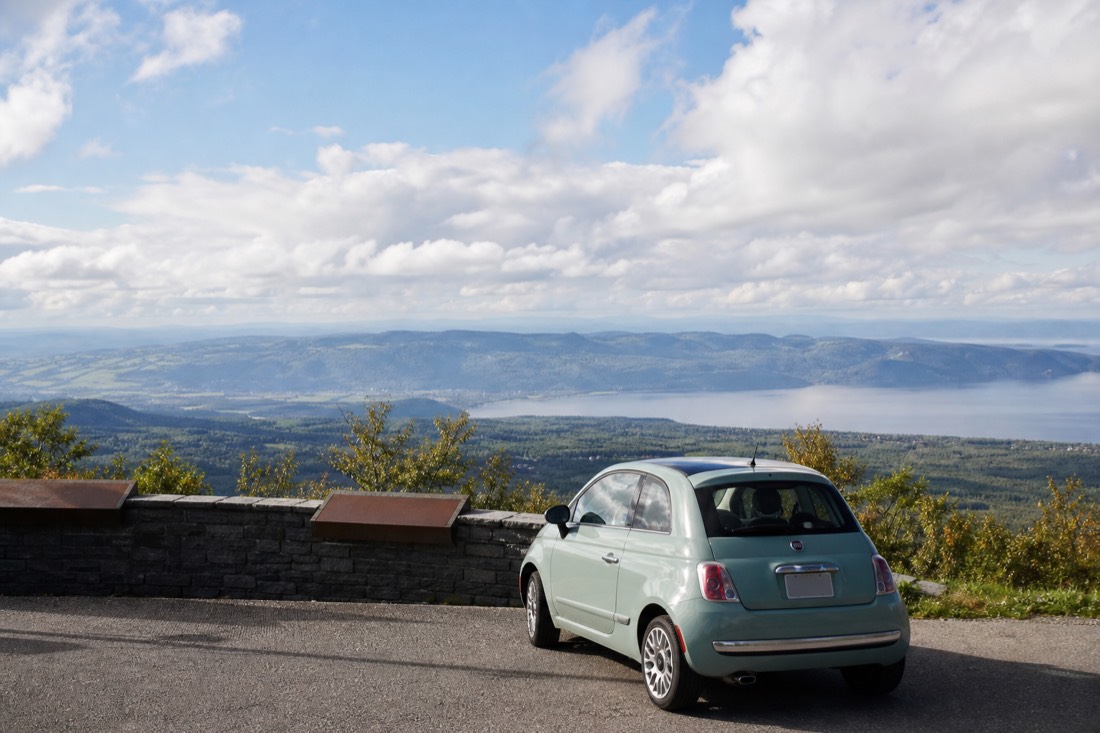
This is the same honesty problem that runs through the whole day trips from Quebec City hub. Most of the region's famous outings sit inside a 40 km arc of the old town. Charlevoix does not. It is the first destination on that list where the drive becomes a real share of the day rather than a footnote to it.
| Day trip | Overnight | |
|---|---|---|
| Realistic reach | Baie-Saint-Paul only | Baie-Saint-Paul and La Malbaie, or Tadoussac |
| Time on the road | about 2 hours round trip | split across two days |
| Departure | leave by 9 a.m. and it still works | leave whenever you like |
| Evening | back in Old Quebec for dinner | dinner in Charlevoix, morning light on the river |
| Whales at Tadoussac | possible but brutal | the only sane way to do it |
| Best for | a first taste of the region | fall colour, whale season, anyone with three days or more |
My actual advice, given freely and often: if your trip is short, do Charlevoix as a one-town day and keep your evenings in the walled city. If you have five days or more, give the region a night. Splitting the difference is how people end up eating gas-station sandwiches at dusk on Route 138.
Why Does The Charlevoix Landscape Look Like That?
Because a meteorite hit it. The Charlevoix impact structure measures 54 km across and is dated to roughly 450 million years ago, give or take 20 million. The crater's rim and floor shaped the bowl that Baie-Saint-Paul sits in. UNESCO designated the surrounding biosphere reserve in 1988, covering 457,000 hectares.
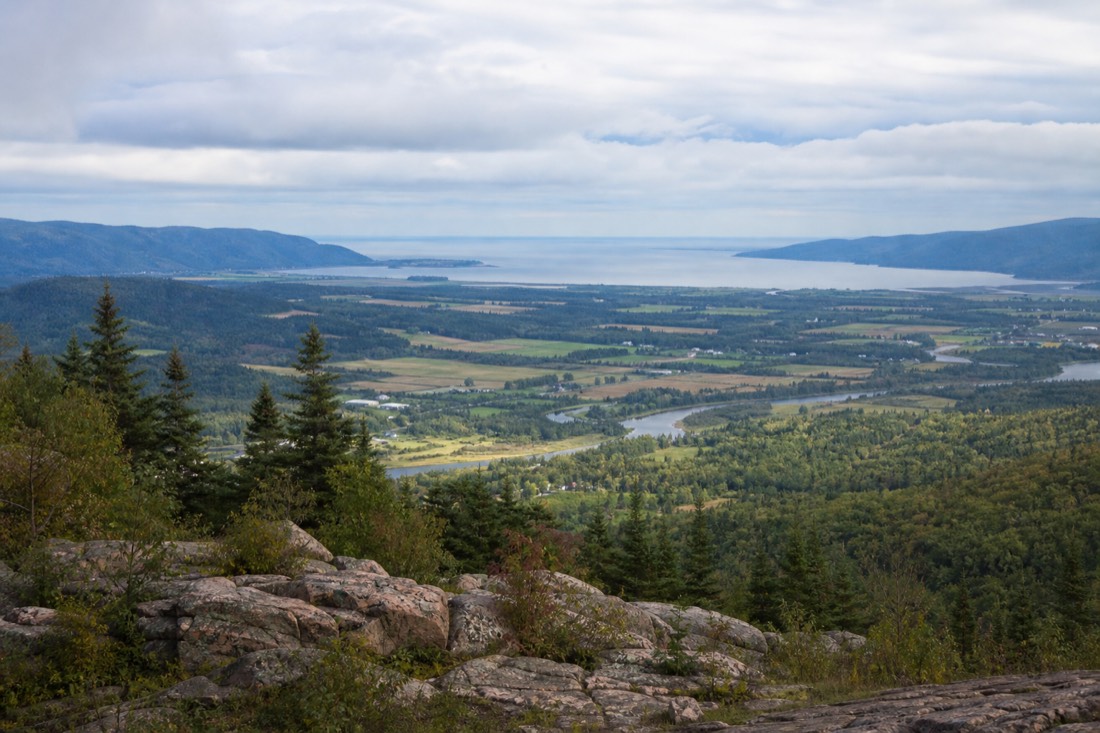
This is my favourite thing to tell people before they drive out, because it changes what they see. The sudden amphitheatre of hills around Baie-Saint-Paul is not ordinary geology. It is a 450-million-year-old scar, one of the larger confirmed impact structures on the continent, and the farmland spread across the valley floor is sitting inside it.
The UNESCO biosphere designation came in 1988 and covers 457,000 hectares of that terrain, which is a way of saying the region is managed as a lived-in landscape rather than a fenced park. Farms, villages and forest share it. That is also why the drive feels so different from the run up to Jacques-Cartier National Park, where the wilderness starts abruptly and the road just ends up in it.
Can You Take The Train To Charlevoix Instead Of Driving?
In season, yes. Train de Charlevoix runs its 2026 season from June 5 to November 1, with daily departures from the Chute-Montmorency station at 8:00 a.m. That solves the parking, the winter road and the designated-driver problem in one move, and it puts the falls at the start of your day.
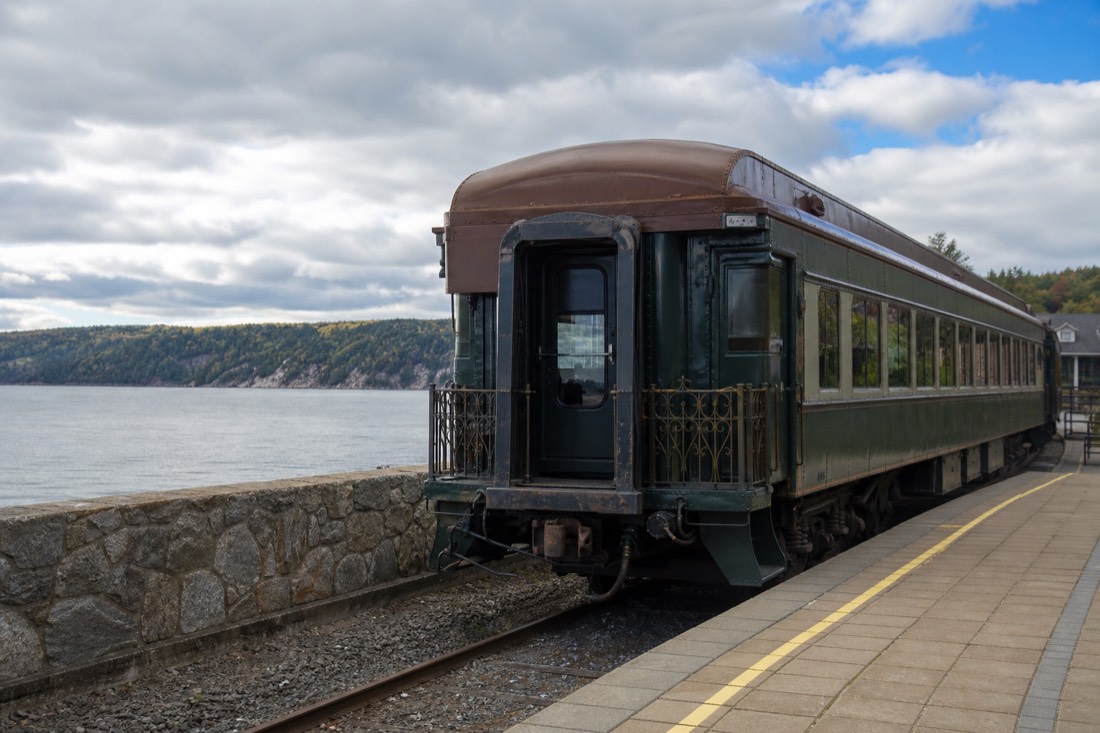
The departure point matters more than people expect. Chute-Montmorency is 13 km from downtown, about fifteen minutes, so you can stand under the falls before you board or after you return. Plenty of visitors build the two into a single day for that reason, and the Montmorency Falls tours page covers the guided versions of the falls half.
Check the current timetable on the Train de Charlevoix site before you plan around it, because a seasonal railway lives and dies by its schedule. The season is worth reading twice: nothing runs between early November and early June, so a winter visitor is driving or not going. Getting yourself out to the station in the first place is covered in getting around Quebec City, which is also where the rental-car question gets answered properly.
Do The Charlevoix Whale Trips Leave From Tadoussac?
They do. The whale zodiacs are reached through Charlevoix rather than from it: you drive the full length of the coast road past La Malbaie, roughly three hours from Quebec City, to Tadoussac at the mouth of the Saguenay. The popular zodiac runs from $106 and holds 4.4 across 2,942 GetYourGuide reviews.
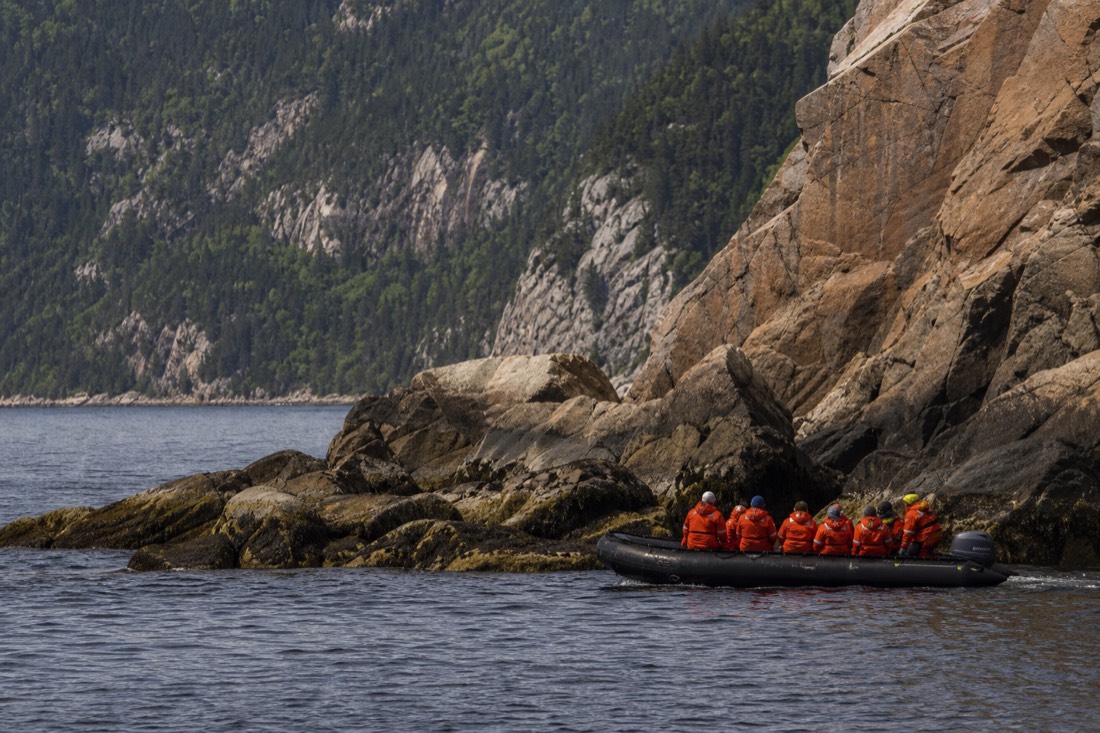
I have never piloted one of those boats, so on the water itself I report rather than testify: operators run open zodiacs and larger vessels out of Tadoussac into the Saguenay-St. Lawrence Marine Park, and reviewers consistently describe the zodiac as the closest-to-the-surface option. What I can speak to is the road, and the road is why this belongs in a Charlevoix article at all. Tadoussac is not a separate excursion. It is the end of the same drive.
If whales are the point of your trip, look at the departures on the whale watching page and check live availability & prices on GetYourGuide before you book any lodging, because the boat schedule should set your night, not the other way round. Whether the whole exercise pays for the mileage is argued out in is Tadoussac whale watching worth it, and my answer there is the same as here: give it a night, or give it a miss.
How Do You Plan The Hours Of A One-Day Charlevoix Run?
Work backwards from two hours of driving. Leave Old Quebec around 8:30, stop at Chute-Montmorency 13 km out, and reach Baie-Saint-Paul by mid-morning. That leaves close to five hours in the valley before the run home. The road time is fixed. Everything else in the day flexes around it.
The clock below is my own allowance rather than anybody's timetable. I build it the way I build a guiding day: pin the immovable parts first, then let the soft hours absorb whatever goes wrong. The immovable parts here are the two one-hour drives, and they do not negotiate. Everything between them is yours.
Two details make this plan work better than a vague "we'll head out after breakfast". The first is the Chute-Montmorency stop, which sits 13 km from downtown, about fifteen minutes, so it costs you almost nothing on the way past and gets a genuine landmark into a day that is otherwise about one town. The second is starting west by mid-afternoon. Nobody plans to drive Route 138 in the dark, and in the short half of the year that happens by five.
If the day slips, cut the falls, not the valley. You can see Montmorency any morning you like from Quebec City. Baie-Saint-Paul you are only getting once on this trip, and it deserves the long lunch rather than a fast walk down the main street with one eye on the car.
| Clock | Where you are | My planning allowance | Fixed or flexible |
|---|---|---|---|
| 8:30 a.m. | Leaving Old Quebec, eastbound on Route 138 | n/a | Fixed, if you want the day unhurried |
| 8:45 to 9:15 | Chute-Montmorency, 13 km out | about 30 min | Flexible, and the first thing to cut |
| 10:15 a.m. | Arriving Baie-Saint-Paul, 97 km in | about 1 hour at the wheel | Fixed |
| 10:15 to 3:00 | The town and the valley floor | close to 5 hours | Flexible, this is the actual trip |
| 3:00 to 4:00 | Westbound on Route 138 | about 1 hour at the wheel | Fixed |
| 4:00 p.m. | Back inside the walls | n/a | Dinner in Old Quebec, not on the roadside |
How Does Charlevoix Compare With The Closer Day Trips From Quebec City?
Charlevoix sits several times further out than anything else on the day-trip list. Montmorency Falls is 13 km, Île d'Orléans and Sainte-Anne-de-Beaupré are 15 to 20 minutes, and Jacques-Cartier National Park is about 40 km north. Baie-Saint-Paul is 97 km, La Malbaie roughly 150. That gap decides your day.
Put the whole belt in one column and the shape of it becomes obvious. Four destinations sit inside a 40 km arc of the old town, close enough that the drive is a footnote. Charlevoix is the first one where the road becomes a real line item in your budget, and Tadoussac is the point where the road becomes the day itself.
This is why I answer the "can we fit Charlevoix in" question with another question: what else is on that day? If the answer is anything at all, the honest reply is no. A morning at the falls plus an afternoon on the island is a comfortable single day for most visitors. Swap either half for Charlevoix and the day is full.
The round-trip column is the one to read twice. It counts only time with your hands on the wheel, not the stops, the parking, the wrong turn at the bridge or the twenty minutes you will lose to a lookout you did not plan on. Add a third to every figure and you will be closer to what actually happens. Where each of these sits in a two, three or four-day plan is worked out in the Quebec City itinerary guide.
| Destination | One way from Old Quebec | Round trip at the wheel | What is left of the day |
|---|---|---|---|
| Montmorency Falls | 13 km, about 15 min | about 30 min | Almost all of it |
| Île d'Orléans | about 15 min to the bridge | about 30 min | Almost all of it |
| Sainte-Anne-de-Beaupré | about 20 min | about 40 min | A full afternoon spare |
| Jacques-Cartier National Park | about 40 km north, under 30 min | about 1 hour | A long day outdoors, easily |
| Baie-Saint-Paul | 97 km, about 1 hour | about 2 hours | One town, unhurried |
| La Malbaie | about 150 km, about 2 hours | about 4 hours | Lunch, a walk, and the road |
| Tadoussac | about 3 hours | about 6 hours | The drive is the day |
Who Should Skip The Charlevoix Drive?
Anyone with two nights or fewer in Quebec City, any winter visitor who has not driven a mountain highway in snow, and anyone whose real target is whales but who cannot spare a night. The region rewards time. Give it a rushed day and you will remember Route 138 better than Charlevoix.
I say this to roughly one group a week, usually the one that has already worked out that the map looks close. It does look close. Ninety-seven kilometres is nothing on paper, and the road is good, and none of that is the problem. The problem is that Charlevoix is a region of slow pleasures, and a slow pleasure on a stopwatch stops being one.
The winter line deserves its own emphasis. Train de Charlevoix does not run between early November and early June, so a January visitor has no rail option at all. That leaves a hilly coastal highway, wind off the river, and weather that can change inside an hour. Local drivers handle it every day. Visitors on their third day of a rental car sometimes should not.
The verdicts below are mine, offered as a guide who would rather send you somewhere good than somewhere far. Nothing on this table is an operator's claim.
| Your trip | My call | Do this instead |
|---|---|---|
| Two nights or fewer in Quebec City | Skip Charlevoix | The falls and the basilica in one guided half day, from $73 |
| No rental car, dates between June 5 and November 1 | Go, by rail | Train de Charlevoix, 8:00 a.m. from Chute-Montmorency |
| No rental car, dates outside that window | Skip it | Canyon Sainte-Anne or the falls, both close in |
| Winter visitor, no snow-driving experience | Skip the drive | Stay inside the 40 km arc; the train is closed anyway |
| Whales are the whole point | Do not day-trip it | Overnight past La Malbaie, boat first, lodging second |
| Here for fall colour, one free day | Go, one town only | Baie-Saint-Paul and the crater walls, home by dinner |
| Five days or more in the region | Go, with a night | Both towns, or push on to Tadoussac |
When Is The Best Time To Visit Charlevoix?
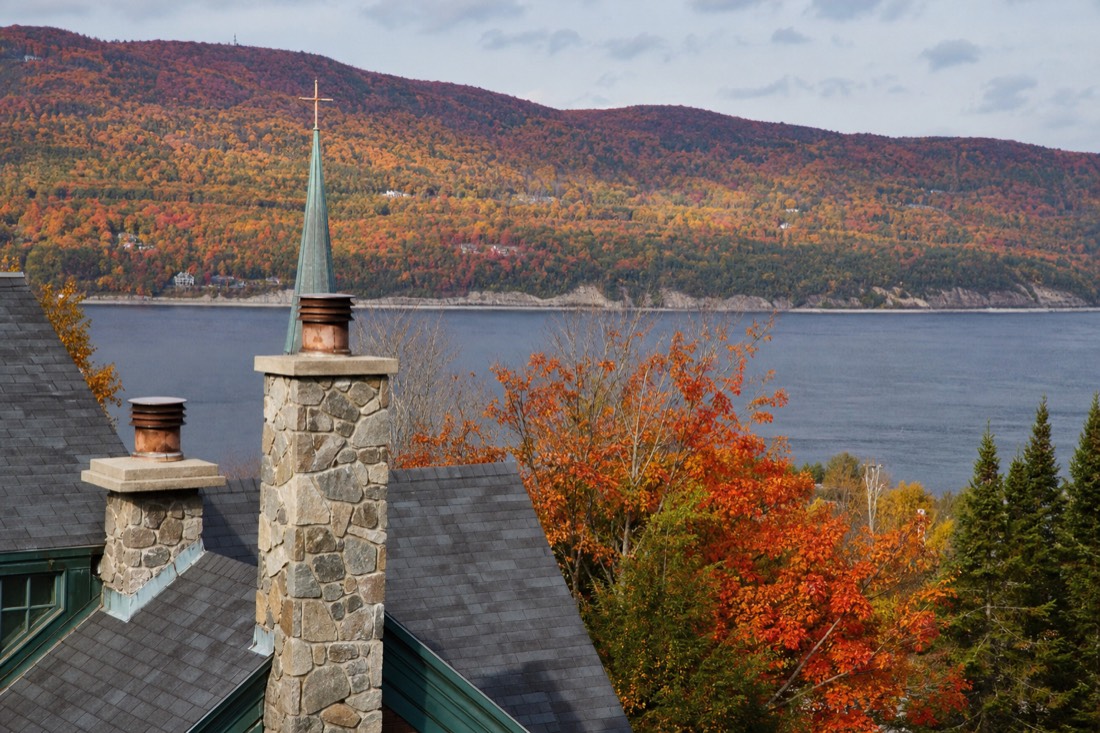
Late September into October for foliage, high summer into early fall for whales, and January through March for skiing. The train season brackets the warm half of the year, June 5 to November 1 in 2026, which means winter visitors are committing to a mountain highway in Quebec weather.
| Season | What draws people | Train de Charlevoix | Day trip or overnight |
|---|---|---|---|
| Late spring (June) | quiet roads, season opening | running from June 5 | day trip is easy |
| Summer (July to August) | whale season at Tadoussac, long daylight | running | overnight for Tadoussac |
| Fall (late Sept to Oct) | foliage on the crater hills | running until November 1 | overnight, and book early |
| Late fall (November) | bare hills, cheap rooms | closed after November 1 | day trip only |
| Winter (Jan to March) | downhill and cross-country skiing | closed | overnight, weather permitting |
Fall is when the region gets genuinely crowded, and it is also when it is at its best: the crater walls turn over all at once and the river goes steel grey behind them. If you are timing a trip around colour, the wider picture is in Quebec City in fall, and the closer alternatives, Canyon Sainte-Anne and the basilica at Sainte-Anne-de-Beaupré, sit twenty minutes from town for anyone who wants the season without the mileage. The regional tourist board publishes current seasonal information at Québec City tourism, which is worth a look for road and event conditions before you leave.
One last thing, said as someone who spends his days inside the walls. Charlevoix will not feel like Old Quebec, and that is the reason to go. Nobody is selling you anything on a cobblestone. The hills are old, the road is quiet, and the river is doing something enormous just off your right shoulder the entire way out.
Your Next Step
Choose Your Quebec Experience
General recommendation, before you add preferences. Confirm dates and participation requirements with the operator.
Have your travel date in mind? Explore the countryside around Baie-Saint-Paul on a guided one-hour horseback ride. Check the departure before arranging the rest of your day.
Arrange your own transport to 157 Chemin Saint-Ours, Baie-Saint-Paul. Ages 12+; riding restrictions apply. Allow about 4 hours including the drive from Quebec City; this is not a regional sightseeing transfer.
Departure schedule from Viator; final availability and price are confirmed on Viator.
Compare Options And Fit Your Plans
Explore the countryside around Baie-Saint-Paul on a guided one-hour horseback ride. Arrange your own transport to 157 Chemin Saint-Ours, Baie-Saint-Paul. Ages 12+; riding restrictions apply. Allow about 4 hours including the drive from Quebec City; this is not a regional sightseeing transfer.
Travel through Charlevoix by bus, then join a naturalist-led boat or Zodiac trip in the marine park. The listing gives 11 hours; keep a full day and a return buffer free. Choose the vessel at booking; sightings are not guaranteed.
Explore the marine park at water level with a bilingual naturalist on a Zodiac. 2 to 2.5 hours on the water; arrange your own journey to Tadoussac or Baie-Sainte-Catherine. Ages6+; no pregnancy, back-problem or wheelchair suitability. Waterproof outerwear included; sightings are not guaranteed. Allow a full day from Quebec City.
Affiliate links: we may earn a commission at no extra cost to you.