Sainte-Anne-De-Beaupré: A Visitor'S Guide To Quebec'S Pilgrimage Basilica
Two pillars just inside the door are stacked with crutches. That is the fastest way to understand what this building is for.
 Written with Jean-Pierre Tremblay, Quebec City tour guide & heritage specialist
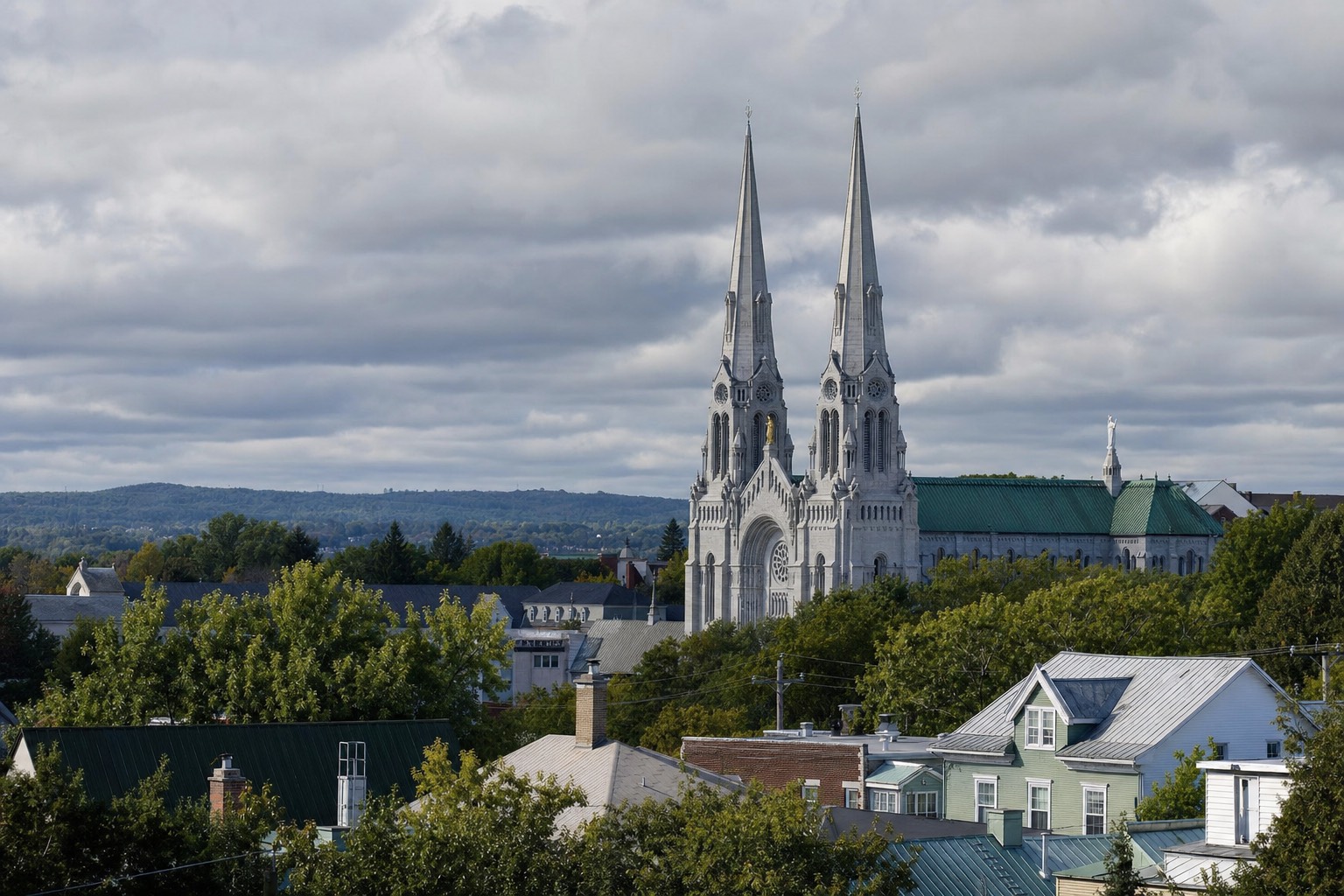
What is Sainte-Anne-de-Beaupré?
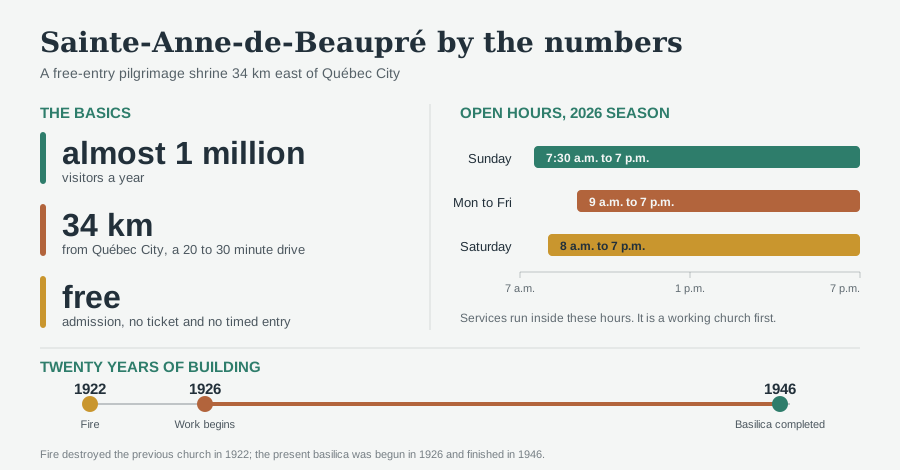
The Basilica of Sainte-Anne-de-Beaupré is a Catholic pilgrimage shrine about 34 km east of Quebec City, roughly a 20 to 30 minute drive. The church you walk into today was begun in 1926, after fire destroyed its predecessor in 1922, and completed in 1946. Admission is free, and almost a million people visit each year.
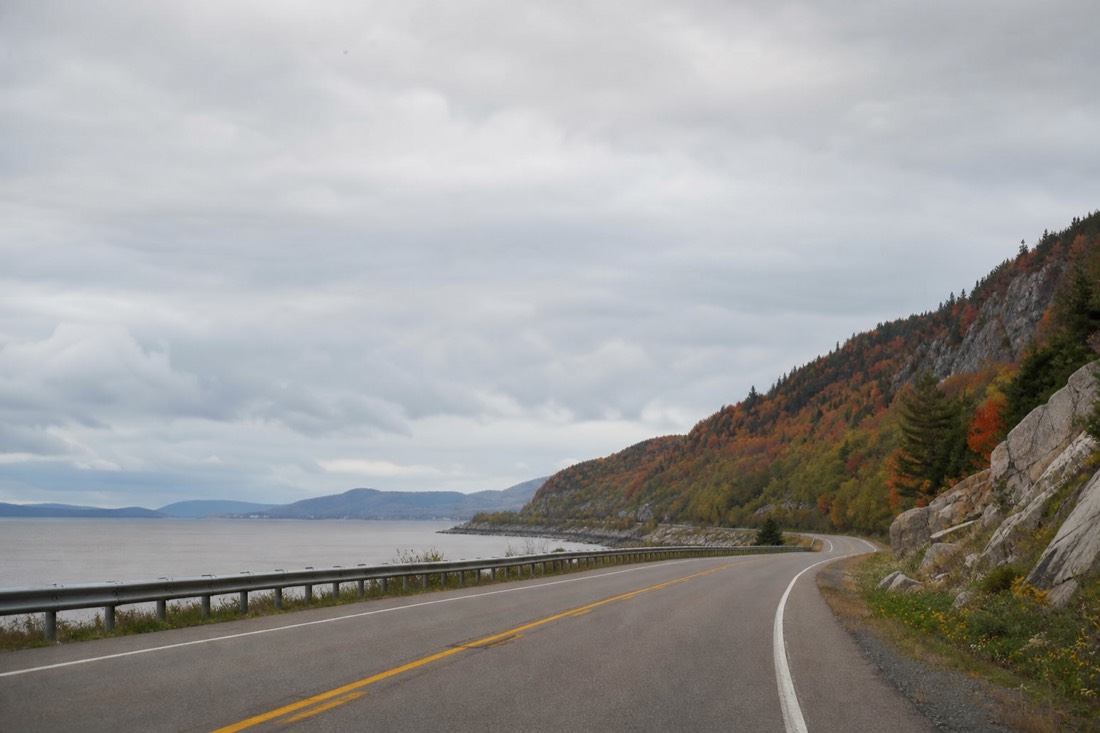
The thing that gets people is the scale, and it gets them through the windscreen. You drive east out of Quebec City along the shore, past clapboard houses and orchards and a roadside stand selling strawberries if the season is right, everything low and domestic and pitched at human size. Then two grey spires come up out of the village like somebody set a cathedral down in the wrong place. Guests always ask the same question in the same tone. Why is that here? The answer is standing just inside the doors, and a good part of it is made of crutches.
TL;DR: Sainte-Anne-de-Beaupré is a working Catholic pilgrimage shrine about 34 km east of Quebec City, a drive of roughly 20 to 30 minutes. Almost a million people come each year. The present basilica was started in 1926, after fire destroyed the church before it in 1922, and was finished in 1946. Admission is free. You do not need to be religious to find the visit worthwhile, but you are a guest in someone else's practice the whole time you are inside.
What Is The Basilica Of Sainte-Anne-De-Beaupré?
It is a Catholic pilgrimage shrine on the north shore of the St. Lawrence, roughly 34 km east of Quebec City. The present basilica was built between 1926 and 1946, replacing a church lost to fire in 1922. Almost a million visitors arrive each year, which is why a village church carries cathedral proportions.
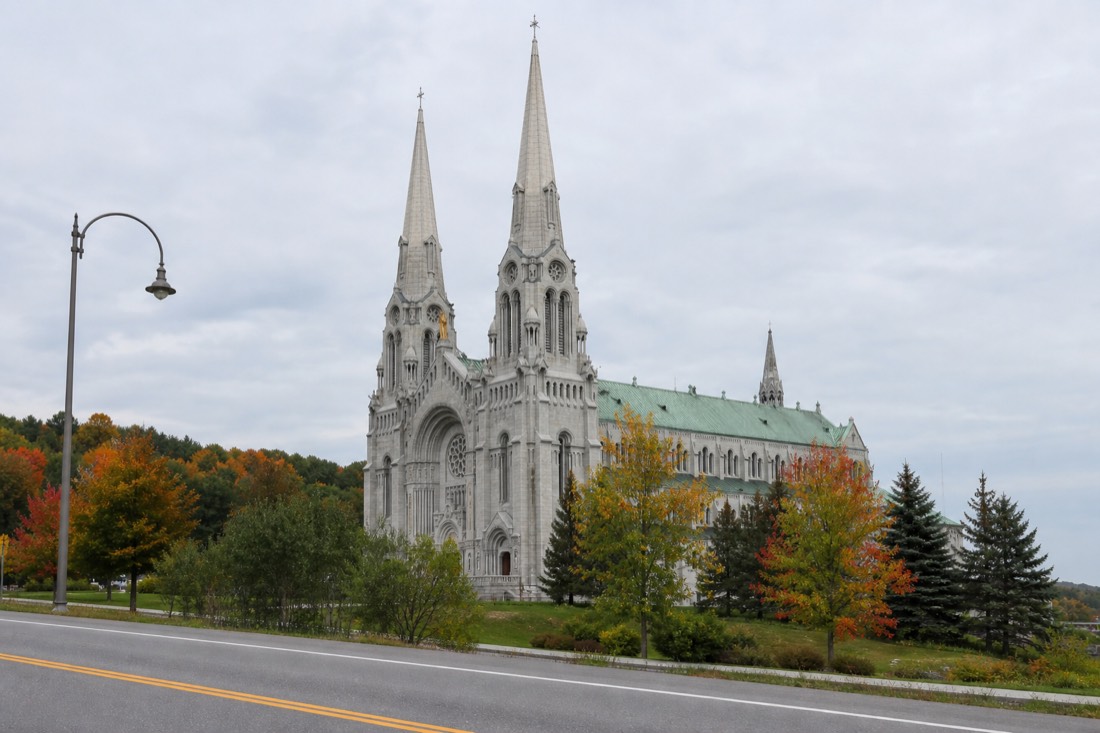
Pilgrimage explains the whole building. Nobody puts a structure this size on a village main road for the village. It went up because people kept coming, and they came for Sainte Anne, and the visitor numbers today still run close to a million a year in a community you could walk across in ten minutes. The provincial tourism office lists it plainly among Québec's landmark sites on its Sainte-Anne-de-Beaupré shrine page.
The current church is not the first on the ground. Fire took the previous one in 1922, work on the replacement began in 1926, and it was not finished until 1946. That is twenty years of construction spanning the Depression and a world war, which tells you something about how badly the site wanted its basilica back. When people ask me whether the building is old, the honest answer is that the tradition is old and the walls are not. Both of those facts sit in the same room.
What Is There To See Inside Sainte-Anne-De-Beaupré?
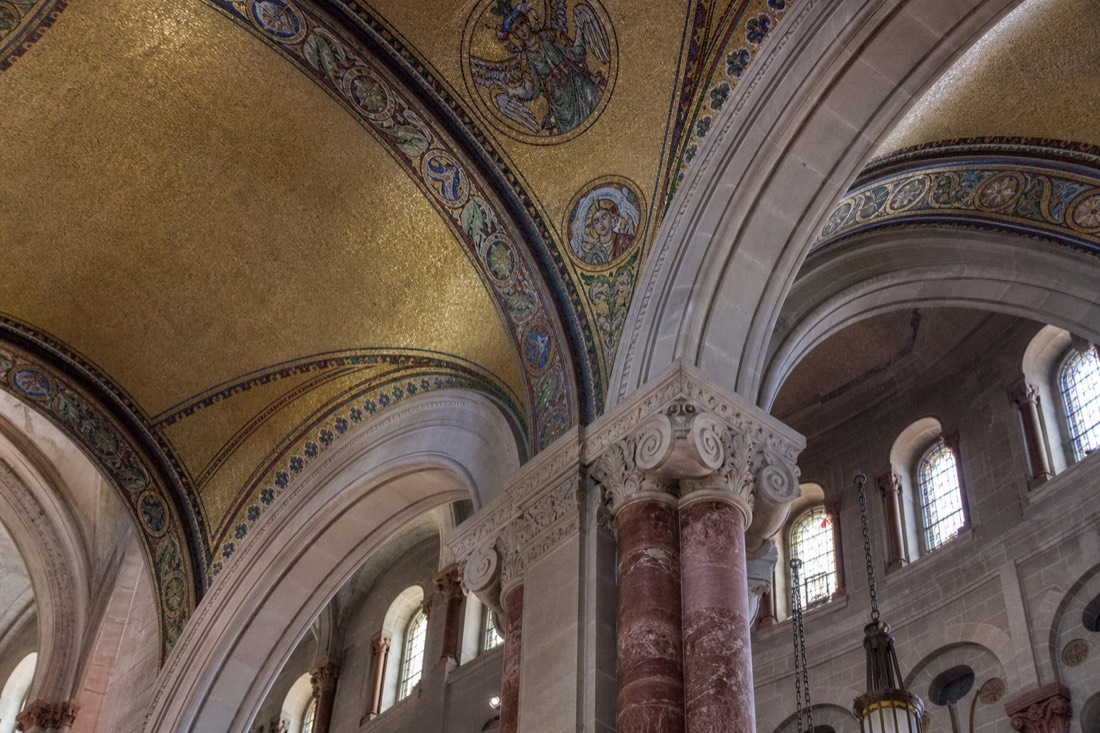
Mosaics underfoot, stained glass down both flanks, and a nave big enough to reset your sense of the village outside. Plus the two pillars near the entrance stacked with crutches and canes. The interior rewards a slow lap rather than a march to the altar, so give it forty minutes at least.
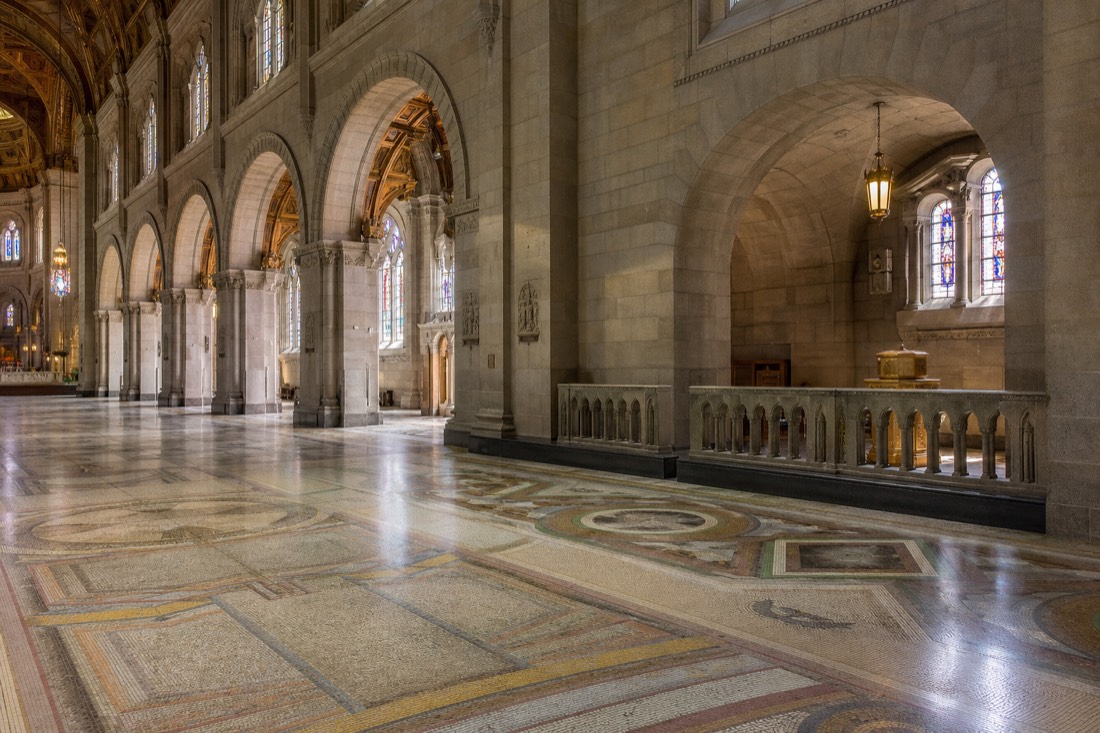
Most visitors walk straight up the centre aisle, take a photograph of the far end, and leave. That is the wrong shape for this building. The decoration here is horizontal and low as much as it is soaring: the floor mosaics carry pattern and figure work the length of the church, and you will miss all of it if your chin stays up. Look down for a minute, then look up, then walk the side aisles instead of the middle.
The glass is the other reason to come at a particular hour rather than whenever the bus arrives. Colour moves across the stone through the day, and a nave that reads cold and grey at ten in the morning can be a different room entirely by late afternoon. There is no trick to this and no ticket for it. You simply have to be standing there when the light is doing something.
| Inside the basilica | What you are actually looking at | Time to give it |
|---|---|---|
| The crutch pillars, near the entrance | Two columns filled with crutches, canes and braces left by pilgrims reporting healings | 5 minutes, and longer than you expect |
| The mosaic floor | Pattern and figure work running the length of the nave, easy to walk over without noticing | 10 minutes, looking down |
| The stained glass | Colour on both flanks that changes the temperature of the whole interior by the hour | 10 minutes, ideally not at midday |
| The nave and columns | The scale argument: cathedral proportions on a village road | 5 minutes from the back wall, facing forward |
| Side altars and chapels | Quieter corners off the main axis, frequently in use by someone praying | 10 minutes, quietly, or skip if occupied |
| The forecourt and grounds | The approach, the hillside above the road, and the view back down to the river | 15 minutes in fair weather |
What Are The Crutches At Sainte-Anne-De-Beaupré?
Two pillars near the entrance are filled with crutches, canes, braces and similar items left behind by pilgrims who reported being healed at the shrine. They are not a museum display in the usual sense. They are objects people carried in and then chose not to carry out, and they have been accumulating for a long time.
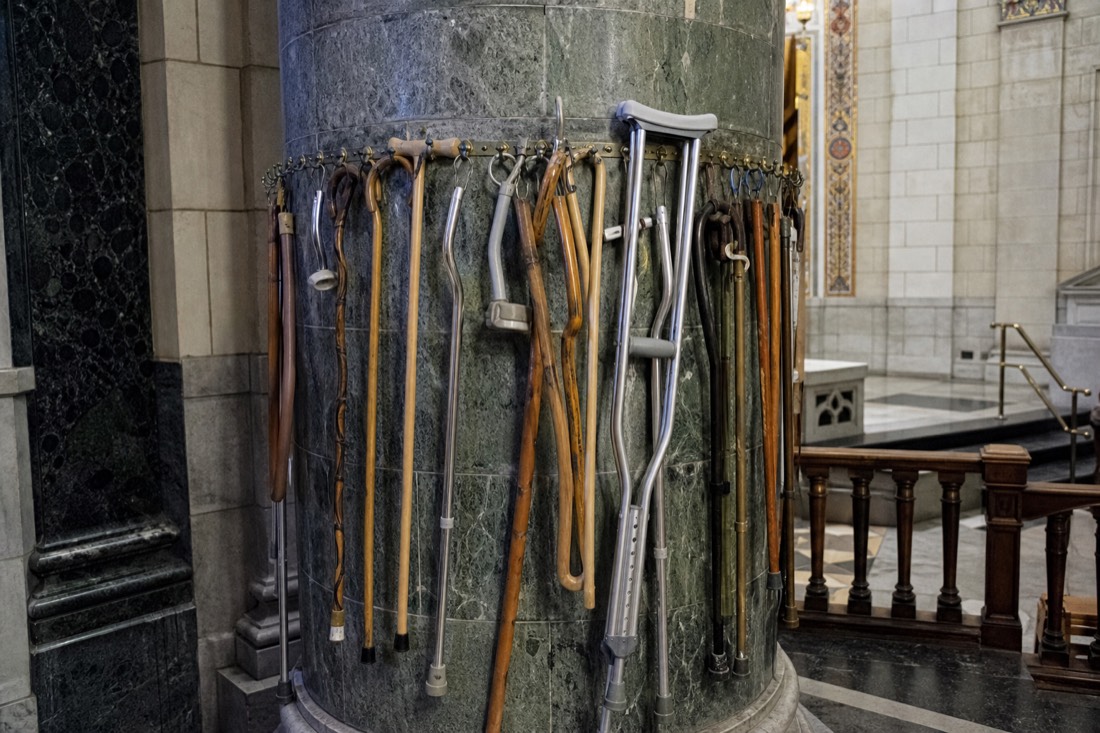
I am a guide, not a priest, and I do not tell anyone what to make of those pillars. What I can report is what they are and how people behave around them. Visitors who came for the architecture go quiet there. It is the one spot in the building where the abstract idea of a pilgrimage site turns into individual objects with wear on the handgrips, each one belonging to a specific person who made a specific decision.
Read them however you like. As evidence, as hope, as a folk record of two centuries of belief on this shore, the pillars work in all three registers. What they are not is theatre. Nothing about them is staged for the coach trade, which is precisely why they land harder than anything else in the church.
How Do You Get To Sainte-Anne-De-Beaupré From Quebec City?
Three practical options, in the order they tend to work: a half-day guided tour that pairs the shrine with Montmorency Falls, a car for the 34 km drive of about 20 to 30 minutes, or a taxi. Road transport is the straightforward option. A seasonal river shuttle has also linked Quebec City and Sainte-Anne-de-Beaupré; confirm its operating dates and return service before planning around it.
The tour is the default for a reason, and the reason is not laziness. The two things worth seeing on this stretch of shore, the waterfall and the shrine, sit on the same road in the same direction, and the combined product takes about five hours and fifteen minutes, with roughly 45 minutes at each main stop. Guests without a car ask me for this combination constantly. It is on the Montmorency Falls tours page, and you can check live availability & prices on Viator, where the half-day run holds 4.2 stars across 2,909 reviews from around $73. If you would rather build the whole day yourself, our getting around Quebec City guide covers the transport picture from the walls outward, and the bus tours page shows what else runs beyond the fortifications.
Driving is genuinely easy. It is a straight shot east along the shore, the distance is 34 km, and the drive runs about 20 to 30 minutes outside rush hour. The catch is that renting a car for a single half-day trip usually costs more than the tour once you count the rental, the fuel and the hour you spend collecting and returning the vehicle.
| Way to get there | What it involves | Time from Old Quebec | Works best for |
|---|---|---|---|
| Half-day guided tour (falls plus shrine) | From $73, rated 4.2 across 2,909 Viator reviews, driving and timing handled | Half a day, hotel area to hotel area | Anyone without a car, and anyone who wants both sights in one go |
| Your own or a rental car | 34 km each way, plus fuel and parking | About 20 to 30 minutes each way | Travellers already driving, or those continuing further east |
| Taxi or rideshare | Metered both directions; no fixed fare quoted here because it moves | 20 to 30 minutes each way | Small groups splitting a fare, or a tight schedule |
| Public bus | No route or timetable quoted here. Coverage this far out changes, and a wrong departure time is worse than no information | Varies | Only if you confirm the current service locally first |
What Do You Need To Know Before Visiting Sainte-Anne-De-Beaupré?
Admission is free, with no ticket and no timed entry. As of 2026 the site opens Sunday from 7:30 a.m. to 7 p.m., Monday to Friday from 9 a.m. to 7 p.m., and Saturday from 8 a.m. to 7 p.m. It is an active church, so services run inside those hours.
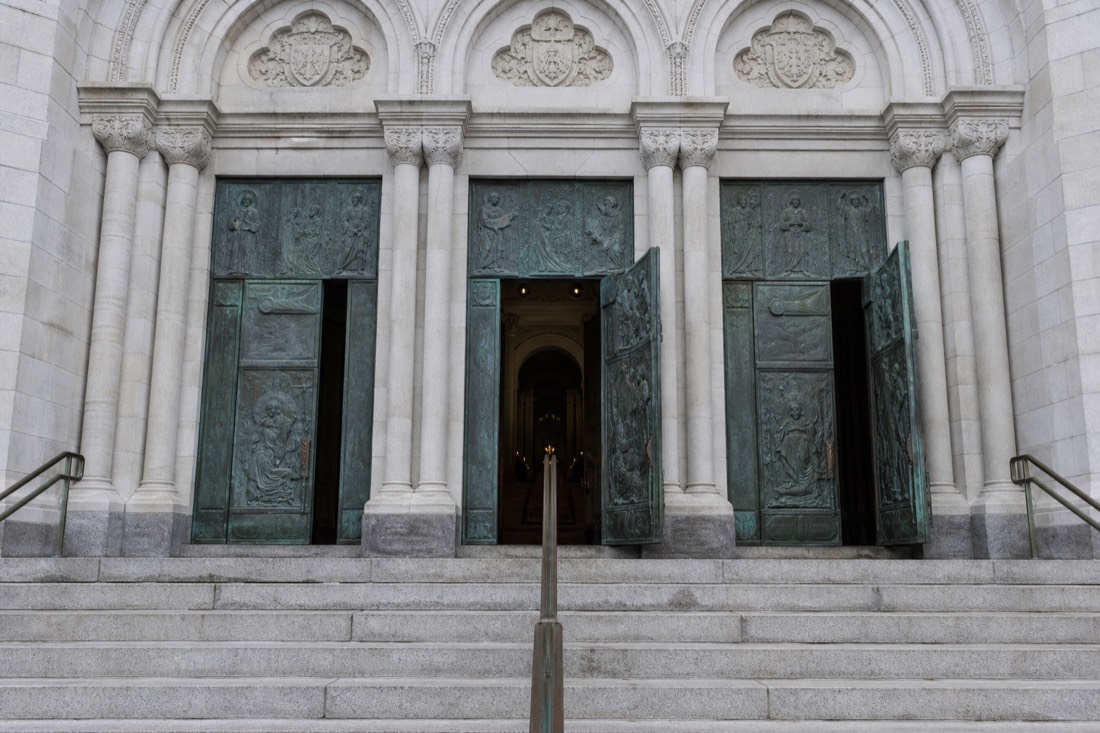
Free admission changes how you should plan the visit. There is no sunk cost pushing you to squeeze value out of an hour you paid for, which means the smart move is a short, well-timed visit rather than a long one. Weekday mornings after nine are the calmest window I have found. Sunday opens earliest at 7:30 a.m., and it is also the day the building is most in use as a church rather than a sight.
Check the hours the week you travel rather than trusting any page, this one included. The shrine publishes its own site schedule, and feast days, seasonal changes and service times all shift what you will find when you arrive.
| Practicality | The detail | What it means for your visit |
|---|---|---|
| Admission | Free | No booking, no queue for tickets, no reason to rush |
| Sunday | 7:30 a.m. to 7:00 p.m. | Earliest opening of the week, and the most active as a place of worship |
| Monday to Friday | 9:00 a.m. to 7:00 p.m. | The quiet window; aim for the first hour |
| Saturday | 8:00 a.m. to 7:00 p.m. | Middle ground on both crowd and activity |
| What to wear | Modest, covered clothing is the respectful default in a working church | Shoulders and knees covered saves any awkwardness |
| Conduct | Services take priority over sightseeing | If one starts, lower the camera and either sit or step to the side aisles |
| How long to allow | 45 to 90 minutes for the church and grounds | Add travel time both ways from the city |
Is Sainte-Anne-De-Beaupré Worth Visiting If You Are Not Catholic?
Yes, with one honest caveat. As architecture it is one of the most decorated interiors within reach of the city, and it costs nothing. As a social document the crutch pillars have no equivalent nearby. The caveat is that none of it is staged for visitors, and the people around you are not sightseeing.
I have taken plenty of secular travellers out here and almost none of them regretted the trip. What changes their experience is expectation. Arrive treating it as an attraction and the free admission, the lack of an audio guide and the absence of an obvious visitor circuit will read as thin. Arrive treating it as a working shrine you have been allowed to walk through and the same visit reads as unusually direct access to something most tourism keeps behind glass.
The people who do come away flat are the ones who wanted a medieval church. This is a twentieth-century building finished in 1946, and if age is what you are after, the older stone is back inside the walls of the old town rather than out here on the shore.
What Does A Half Day At The Falls And The Shrine Look Like Hour By Hour?
Leave the old town by mid-morning, spend an hour at Montmorency Falls 13 km east, drive the remaining 20 km or so to the basilica, give the church 45 to 90 minutes, and you are back inside the walls for a late lunch. This is an independent driving schedule. The guided tour takes about five hours and fifteen minutes and includes additional stops; follow the operator’s confirmed departure and return times.
The two stops sit on one road in one direction, which is why almost nobody does them separately. What people get wrong is the order and the clock. Falls first, shrine second, because the basilica opens at 9 a.m. on weekdays and the light through the glass gets better as the morning goes on, while the falls are at their least crowded early. Reversing that puts you at the church during the busiest coach window and at the waterfall in flat midday light.
Here is the timeline I sketch for guests who are driving themselves. The minutes are allowances, not a schedule anyone publishes, and they assume a weekday outside rush hour.
| Clock | Where you are | My allowance | The note that matters |
|---|---|---|---|
| 9:00 | Leaving Old Quebec | n/a | Weekday opening at the shrine is 9 a.m., so there is no reward for leaving earlier |
| 9:15 | Montmorency Falls | 60 to 75 min | 13 km out, about a 15-minute drive; adult access $6.95 CAD, cable car $14.95 CAD |
| 10:45 | East along the shore road | 20 to 25 min | The rest of the 34 km, past clapboard villages and orchards |
| 11:10 | Inside the basilica | 45 to 90 min | Crutch pillars first, then the mosaic floor, then the side aisles |
| 12:30 | Forecourt and grounds | 15 min | Skip it in rain, keep it in autumn |
| 12:45 | Driving back | 20 to 30 min | Back inside the walls for a late lunch |
The half-day guided version compresses the same route and takes the parking, the timing and the driving off your hands, which is why guests without a car default to it. It is rated 4.2 across 2,909 Viator reviews from around $73.
What Does A Visit To Sainte-Anne-De-Beaupré Cost?
The church itself costs nothing. What you pay for is transport. The half-day guided run with Montmorency Falls lists from $73 USD, a car adds fuel and your own time, and the only tickets on this stretch of shore belong to the falls park and, further east, Canyon Sainte-Anne.
Free admission is the fact that reframes the whole trip. There is no ticket to buy, no timed entry to book and no online reservation to forget, which means the cost question is really a transport question. That is where the arithmetic turns against the rental car for a single half day: the vehicle, the fuel and the hour spent collecting and returning it usually add up past the tour price for one or two people, and only start winning once there are three or four of you or you are continuing east anyway.
| Cost line | Amount | What it buys |
|---|---|---|
| Basilica admission | Free | No ticket, no timed entry; donations are the usual way to contribute |
| Half-day guided tour, falls plus shrine | From $73 USD | 4.2 across 2,909 Viator reviews, driving and timing handled |
| Montmorency Falls, adult access | $6.95 CAD | Fee schedule valid May 11 to November 1, 2026 |
| Montmorency cable car | $14.95 CAD | 2026-2027 season, optional either direction |
| Canyon Sainte-Anne, if you continue east | $15 CAD adult, $10 CAD ages 6 to 17 | 2026 season, 7 May to 25 October |
| Rental car for the half day | Varies | Rental, fuel, and the hour of collection and return |
| Taxi or rideshare | Metered, varies | 20 to 30 minutes each way, worth splitting between three or four |
| Parking at the shrine | Confirm on arrival | Not a figure worth freezing into a web page |
One honest note on the tour price: it is quoted in USD on the listing while the park fees along the road are Canadian, so do not read the numbers in that table as one running total. Check the current figure on the listing before you plan around it.
What Is Open On The Road East Through The Year?
The basilica's published 2026 hours run one Sunday to Saturday pattern rather than splitting into summer and winter versions, so it stays the reliable stop. Montmorency Falls is open year-round. Canyon Sainte-Anne is not: its 2026 season runs 7 May to 25 October. Winter driving is the real variable.
Shoulder weeks catch people out on this shore more than anywhere else near the city. The mental model to carry is simple: the shrine and the waterfall are the two year-round fixtures, and everything else east of them keeps a season. Turn up in late April expecting the canyon's suspension bridges and you will find a closed gate, having driven past two sites that were open the whole time.
Winter changes the drive rather than the destination. Highway conditions on the Côte-de-Beaupré in January, with the city averaging a high of -8 °C and 73 cm of snow for the month, are a different proposition from the same road in July, and that is the reason to hand the driving to a tour rather than a rental if you are visiting between December and March. The building itself is arguably better in winter: fewer coaches, colder stone, and the glass doing something you cannot see in a crowd.
| Period | On the shore road | What to expect |
|---|---|---|
| 7 May to 25 October | Everything open, including Canyon Sainte-Anne | The full day version: falls, shrine, canyon |
| 11 May to 1 November | Montmorency's posted fee schedule for the season | Park access at $6.95 CAD adult |
| May to October | Cruise season in the city, ships at Wharfs 21 and 22 | The old town is busiest at midday; the shore road is not |
| Late September into early October | Fall colour peaks in and around the city | The best-looking version of this drive |
| November to March | Shrine and falls open, canyon closed for the season | Snow and ice on the drive; 73 cm in January, 63 cm in February |
| 5 to 14 February 2027 | Carnival fills Quebec City | A good week to head east, because everyone else is staying in town |
What Else Is Near Sainte-Anne-De-Beaupré?
Montmorency Falls sits between the shrine and Quebec City, so almost nobody visits one without the other. Canyon Sainte-Anne is a short drive further east, and Charlevoix begins beyond that. With a car, the shrine plus the canyon fills a proper day rather than a half one.
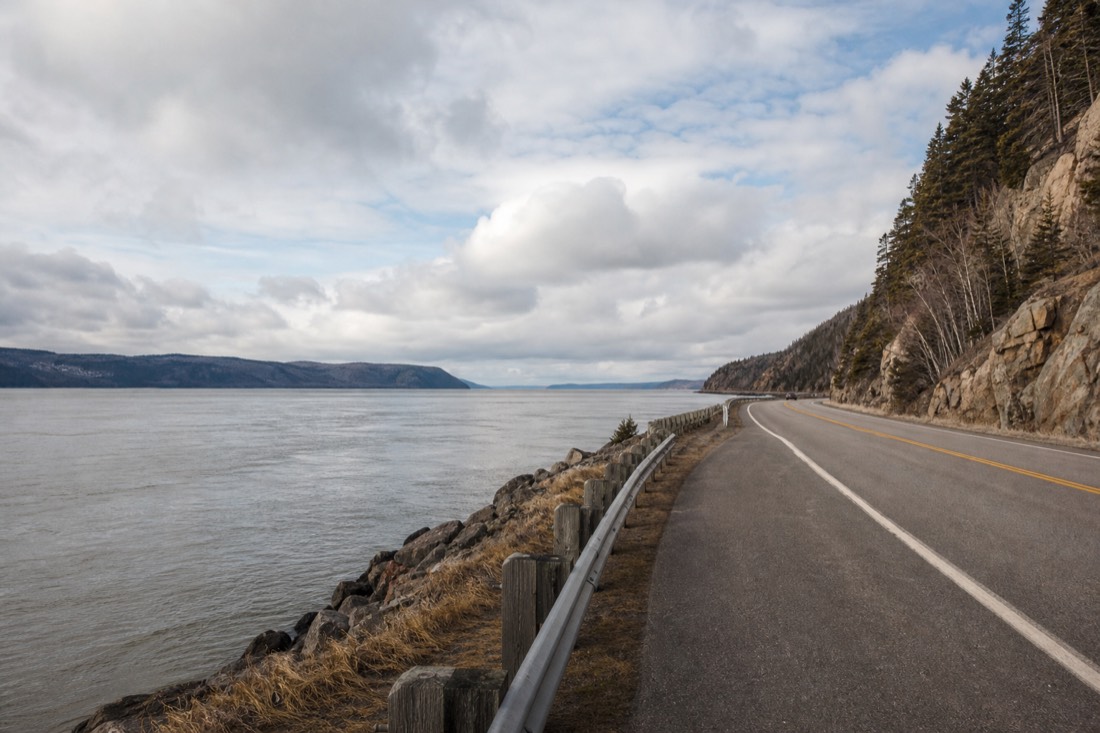
Think of this stretch of shore as one road with stops on it rather than a set of separate excursions. That is how the tours are built and it is how I would drive it. The waterfall is the obvious first stop, covered in the Montmorency Falls guide, and it is close enough to the city that people often do it alone and never continue east. Continuing east is the part most visitors skip and the part that pays off, whether that means the suspension bridges at Canyon Sainte-Anne or the longer run into Charlevoix. If you are still deciding how to spend the days you are not inside the walls, the day trips from Quebec City guide lays the options out side by side.
| Nearby stop | Where it sits | Why pair it with the shrine |
|---|---|---|
| Montmorency Falls | Between Quebec City and the shrine, on the same road | The standard pairing, and the one the half-day tour uses |
| Canyon Sainte-Anne | A short drive further east | Waterfall gorge and suspension bridges; turns a half day into a full one |
| The Côte-de-Beaupré shore road | The road you are already on | Villages, river views and roadside stands rather than a single destination |
| Charlevoix | Beyond the canyon, continuing northeast | A separate day at minimum, better as an overnight |
Is Sainte-Anne-de-Beaupré free to visit?
Yes. Admission to the basilica is free, with no ticket and no timed entry. Donations are the usual way visitors contribute, and any separate on-site attractions or services are their own matter.How far is Sainte-Anne-de-Beaupré from Quebec City?
About 34 km by road, which is roughly a 20 to 30 minute drive outside peak traffic. It is due east of the city along the north shore of the St. Lawrence, on the same road as Montmorency Falls.How long should I spend at the basilica?
Allow 45 to 90 minutes for the church and the grounds together. Forty minutes is enough for a slow lap of the interior including the crutch pillars and the mosaic floor; the rest is the forecourt, the hillside and the view back to the river.Can you visit Sainte-Anne-de-Beaupré without a car?
The realistic answer is a guided tour or a taxi. The half-day Montmorency Falls and Sainte-Anne-de-Beaupré trip is the common solution and covers both sights in one departure. Public transit this far out is not something to plan a day around without confirming current service first.What are the crutches on the pillars at Sainte-Anne-de-Beaupré?
They were left by pilgrims who reported being healed at the shrine. Two pillars near the entrance hold crutches, canes, braces and similar items, accumulated over a long stretch of the site's history as a pilgrimage destination.Go on a weekday morning if the choice is yours. The coaches have not arrived, the light through the glass on the east side is at its best, and the building is doing the thing it was actually built to do rather than performing for a crowd. Stand at the back for a minute before you walk up the aisle. Almost a million people a year pass through those doors, and the two pillars by the entrance are the record of what a fair number of them came for.
Your Next Step
Choose Your Quebec Experience
General recommendation, before you add preferences. Confirm dates and participation requirements with the operator.
Have your travel date in mind? Combine the falls, Sainte-Anne-de-Beaupré and a short island visit with transport from Old Quebec. Check the departure before arranging the rest of your day.
Allow 5 hours 15 minutes using the current duration listing. The itinerary lists a 45-minute falls stop; do not plan a full independent park visit.
Departure schedule from Viator; final availability and price are confirmed on Viator.
Compare Options And Fit Your Plans
Combine the falls, Sainte-Anne-de-Beaupré and a short island visit with transport from Old Quebec. Allow 5 hours 15 minutes using the current duration listing. The itinerary lists a 45-minute falls stop; do not plan a full independent park visit.
Plan a private four-hour route with a bilingual driver-guide; Wendake and the Ice Hotel are listed among customizable stops. Up to six passengers. Agree your chosen itinerary and admission requirements before booking; a listed stop is not a guarantee that every attraction fits or is open.
See the waterfall from above and below with the park’s cable-car visit. Park admission, round-trip cable car, terminal parking and local taxes included. Arrange your own transport. Zipline and via ferrata are separate. Allow three hours including your own city-to-falls return journey. This is a planning allowance, not a fixed ticket duration.
Combine the suspension-bridge paths with the Air Canyon aerial ride above the gorge. Park entry and Air Canyon included; via ferrata, zipline, food and drinks excluded. Ages 6 and up; restrictions apply, and weather can stop the ride. Allow four hours with your own return drive from Quebec City. This is a planning allowance, not a fixed ticket duration.
Affiliate links: we may earn a commission at no extra cost to you.