Is Tadoussac Whale Watching Worth It From Quebec City? The Honest Answer
A Quebec City guide runs the real math on Tadoussac whale watching: 217 km each way, a 12-hour day, up to 13 species in season. When the trip pays off, when to skip it, and zodiac vs big boat.
 By Jean-Pierre Tremblay, Quebec City tour guide & heritage specialist
Somewhere on Dufferin Terrace, most weeks, a guest points past the ferry lane at the widening river and asks me where the whales are. I have to break it to them gently. That water below the boardwalk is beautiful, but the whales hold court 217 km downstream, where the Saguenay meets the St. Lawrence at Tadoussac. Nobody sells that fact loudly enough, so I will: this is a three-hour drive each way, and pretending otherwise is how vacations get wrecked.
I guide the old town, not the zodiacs, so what follows is the honest math I give my own guests, built from the marine park's rules, the season data whale scientists publish, and what the people who take the trip consistently report back.
TL;DR: Tadoussac whale watching is genuinely worth it if you can spend a full day on it between June and early September. The estuary sees up to 13 cetacean species in season, and nothing about the trip is a tourist trap. But it is a 12 to 13 hour door-to-door day from Quebec City. With 48 hours or less in town, a queasy stomach, or an off-season date, skip it and take a river cruise instead.
Is Tadoussac Whale Watching Worth It From Quebec City?
Yes, if you can give it a full day inside the June-to-early-September peak. Tadoussac sits 217 km northeast of Quebec City, roughly three hours each way, but the estuary there hosts up to 13 cetacean species in season. On a tight itinerary, or in the off-season, the honest answer flips to no.
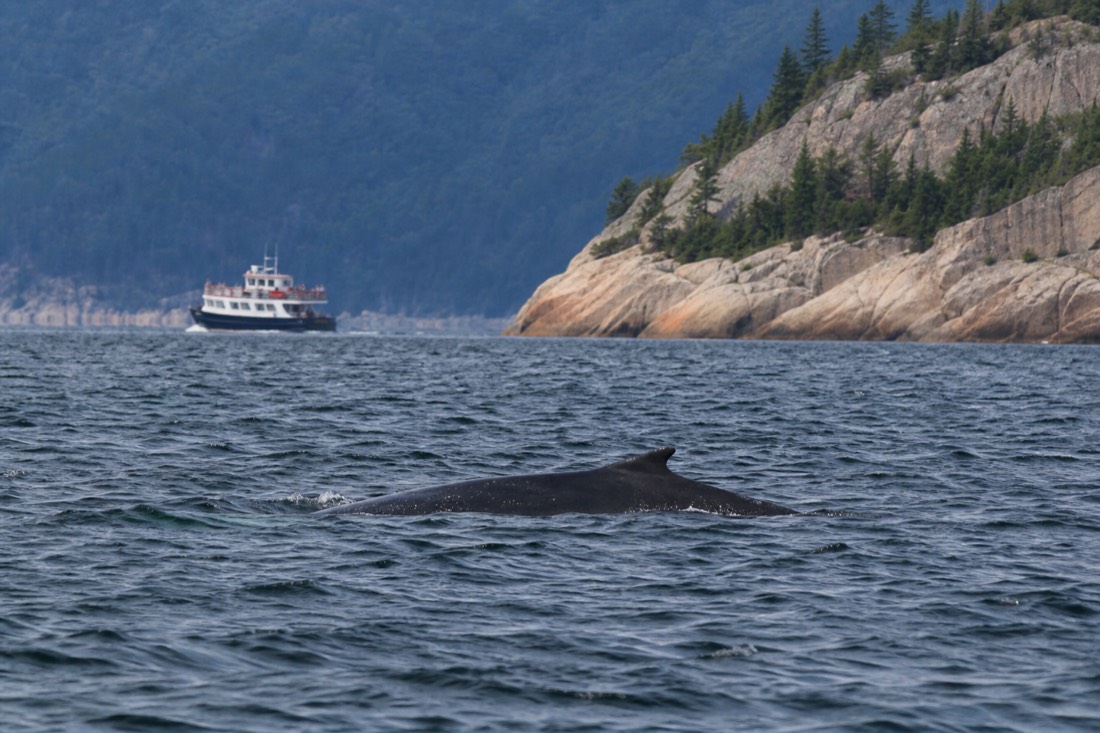
Here is why the trip earns its reputation despite the distance. The mouth of the Saguenay is one of the most reliable whale-feeding grounds in eastern North America, protected as the Saguenay-St. Lawrence Marine Park by Parks Canada and the Quebec government. Cold, food-rich water funnels up from the deep channel, and the whales follow it. Up to 13 species of cetaceans turn up seasonally in this stretch of salt water, from minke and fin whales up to the occasional blue.
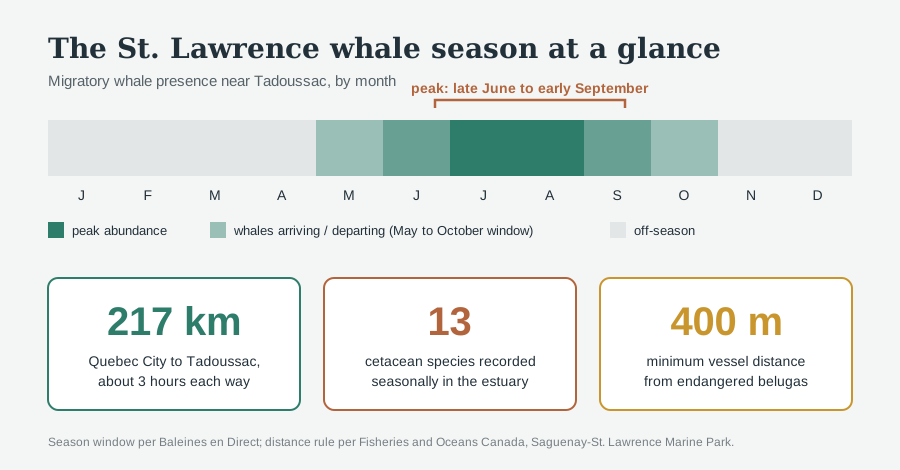
The word "seasonally" is doing real work in that sentence. This is not an aquarium; sightings shift week to week, and the operators are legally barred from chasing anything. Within the marine park, vessels must hold a minimum of 400 metres from belugas and every other endangered or threatened marine mammal, a Fisheries and Oceans Canada rule the captains take seriously. The St. Lawrence beluga population stood somewhere between 1,530 and 2,180 animals in the 2022 estimate, with the population's condition rated moderate to poor, so those white backs get admired from a respectful distance or not at all. A new aerial survey was scheduled for 2025 to refresh that count.
So the value question is never "are there whales." There are, in season, in numbers. The question is whether the day it costs you fits your trip, and that comes down to arithmetic.
How Long Does A Tadoussac Whale Day Actually Take?
Budget 12 to 13 hours door to door. The drive is 217 km each way, about three hours by Route 138 through Charlevoix, and the boat block adds several more with check-in and buffer time. Leaving Old Quebec by 7 am and rolling back in around 7:30 pm is the realistic shape of the day.
Nobody publishes this table, so here it is, the day as it actually unfolds:
| Leg of the day | Time | Notes |
|---|---|---|
| Depart Old Quebec | ~6:45 am | earlier is better; parking near the walls eats time |
| Route 138 through Charlevoix | ~3 h | 217 km, hills and villages, no realistic shortcut |
| Arrive Tadoussac, park, check in | ~10:00 am | the road ends with a short ferry hop across the Saguenay's mouth |
| Whale-watching departure | midday block | the listing shows the current running time; arrive early, layers on |
| Lunch and the village | 1 to 2 h | Tadoussac itself is small and pleasant |
| Route 138 back | ~3 h | the return always feels longer |
| Back in Old Quebec | ~7:00 to 7:30 pm | dinner reservation at 8, not 7 |
Two things follow from that table. First, this is the whole day, full stop. Do not book a food tour that evening, and do not plan it as "the morning activity." Second, the driving is not dead time if you treat Charlevoix as part of the trip, which I get to below.
Guests who bus in from cruise ships sometimes ask about doing it car-free. It exists as a coach-plus-boat package, but the day gets longer, not shorter. My full ranking of what is close and what is not lives in the day trips from Quebec City guide, and Tadoussac is the outlier there for a reason.
What Month Is Best For Whale Watching In Canada'S St. Lawrence?
Late June through early September is the peak. Migratory whales are generally present in St. Lawrence waters from May to October, and the researchers at Baleines en Direct publish sightings maps from June through October. July and August give the deepest species mix; late September trades some abundance for empty roads.
The month matters more than the operator you pick. Here is the season as the whale-science data describes it, month by month:
| Month | Migratory whale presence | What the season data says |
|---|---|---|
| May | Arriving | migratory species begin returning to St. Lawrence waters |
| June | Building fast | peak abundance begins in late June; sightings maps start publishing |
| July | Peak | the heart of the season |
| August | Peak | the heart of the season, and the heart of the crowds |
| September | Peak, then tapering | peak runs to early September before thinning |
| October | Departing | last month of published sightings maps |
| November to April | Largely absent | migratory whales have moved on; boats stop running the season |
The source for that window is Baleines en Direct, the observation arm of the GREMM research station based in Tadoussac itself, which is about the strongest authority you can ask for on this river. If your Quebec City dates are flexible, the same peak months are also the city's own high season; my best time to visit Quebec City guide walks through that trade-off.
Should You Book A Zodiac Or A Big Boat At Tadoussac?
Take the zodiac if you want to sit at water level and feel the estuary move under you; take a larger vessel if you need washrooms, indoor warmth, or a steadier ride. The AML zodiac departure serving this region rates 4.4 across 2,942 GetYourGuide reviews, from $106.
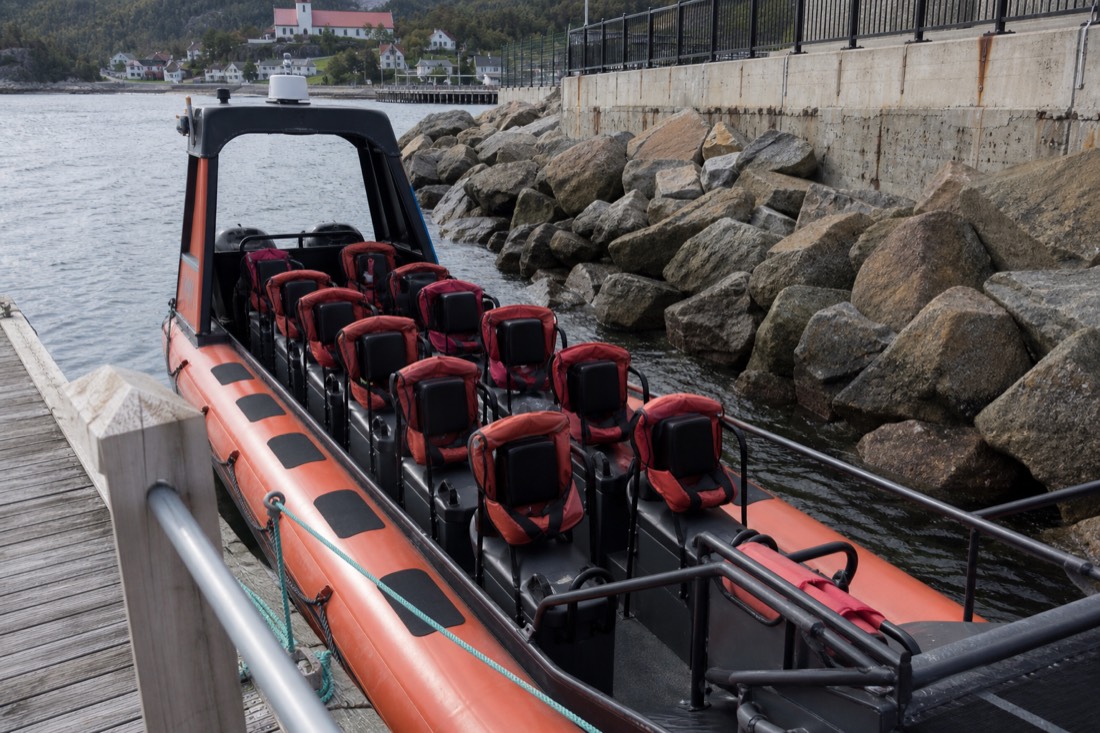
This is the one choice people agonize over, and it splits on temperament, not quality:
| Zodiac | Larger vessel | |
|---|---|---|
| Position on the water | low, at wave level | high observation decks |
| Ride | you feel every swell, plus spray | steadier, drier, gentler |
| Comfort | open air, bench seating, no washroom | indoor cabin and washrooms typical |
| Photography | dramatic water-level angle | elevated overview, easier to brace |
| Cold | real, even in July; dress for it | you can retreat inside |
| Best for | the visceral version of the trip | families, seasickness worriers, cold-haters |
| The bookable option | 4.4 across 2,942 reviews, from $106 | various operators, check current listings |
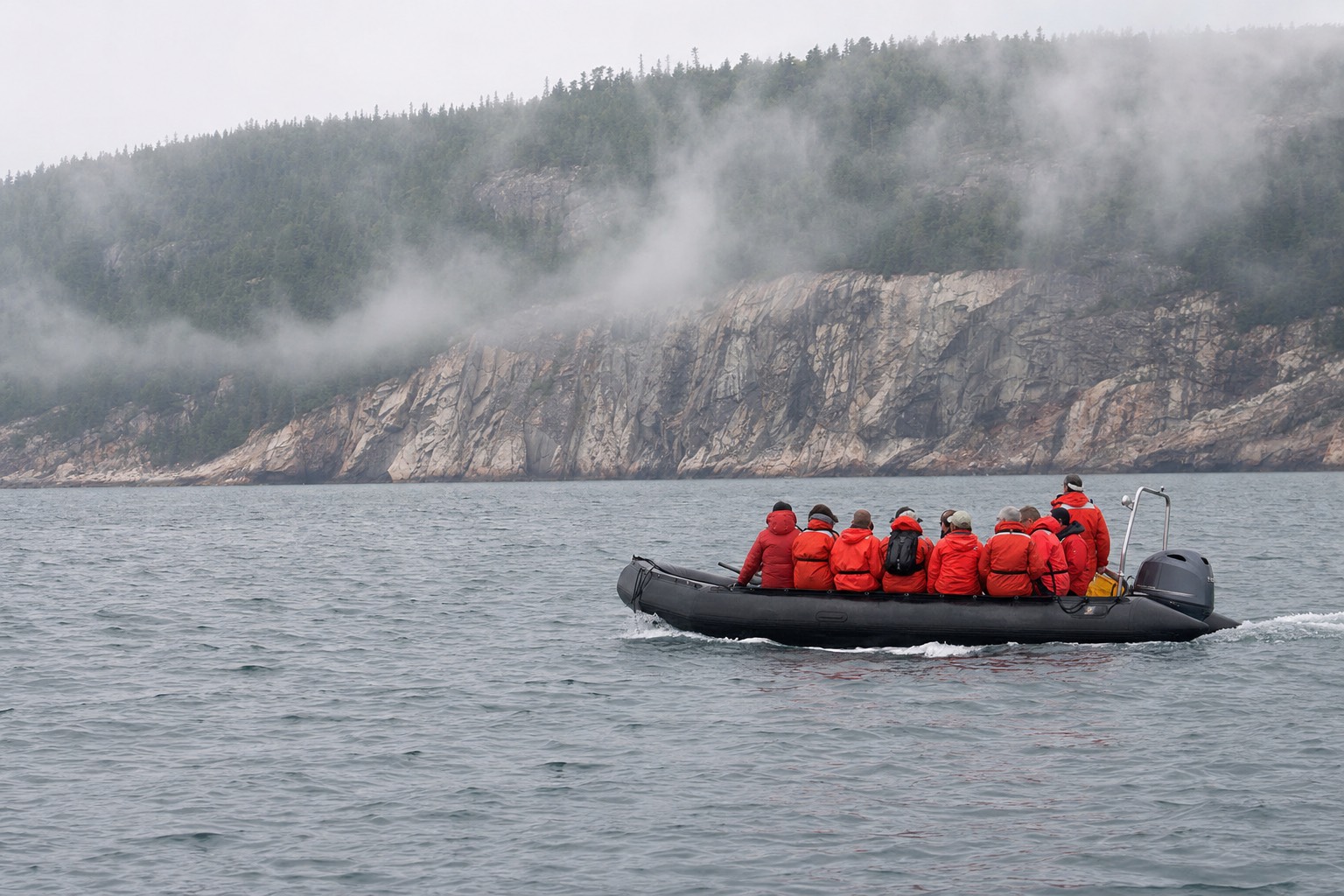
Reviewers of the zodiac trips describe the same arc again and again: cold hands, soaked spray gear, and no regrets. Being that low changes the scale of the animals. A minke surfacing thirty metres from a zodiac reads as enormous in a way it simply does not from an upper deck. That is the version anchoring our whale watching page, and you can check live availability & prices on GetYourGuide for your dates before you commit the day to it.
The big-boat version is the right call more often than zodiac people admit: small kids, bad backs, anyone who went pale on the last ferry. The whales do not know which deck you are standing on.
When Is Tadoussac Whale Watching Not Worth It?
Skip it with two days or less in Quebec City, with a stomach that hates open water, or with dates between November and April, when migratory whales have largely left and the season shuts down. Six hours of driving against a diminished chance of sightings is a bad trade, and no honest guide will sell it to you.
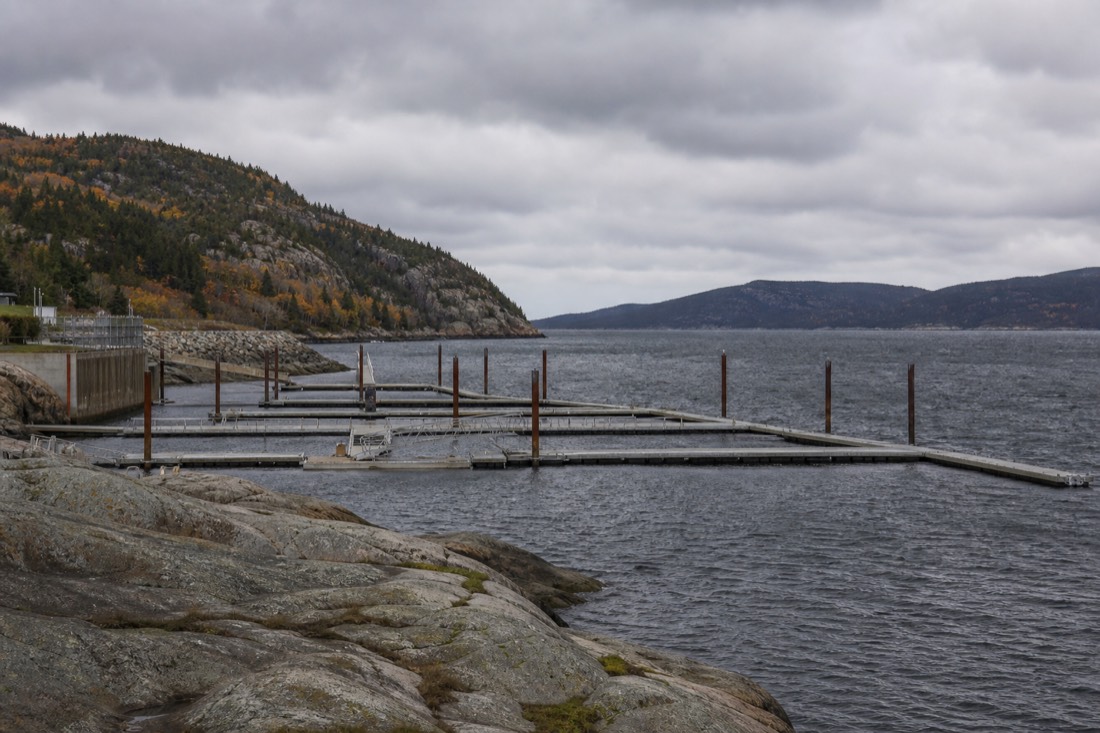
Three cases where I actively talk guests out of it.
The tight itinerary. If you have a weekend, Tadoussac consumes half of it. Old Quebec rewards slow hours, and burning six of them on Route 138 to save a bucket-list line is a poor swap; the things to do in Quebec City list will fill those days twice over. With three full days or more, the calculus changes, and my Quebec City itinerary shows where the whale day slots in without cannibalizing the old town.
The seasickness case. The estuary is open, cold, moving water. If ferries already bother you, a zodiac will be worse, and even the big boats roll. There is no shame in choosing the sheltered river cruise that leaves from the city instead; it is a different experience, not a consolation prize.
The off-season case. From November through April the migratory whales are gone and the sightings maps stop publishing. Winter visitors sometimes ask me about driving up anyway. The Charlevoix road is gorgeous under snow, but do not do it expecting whales.
And one soft warning for peak season: this is a wildlife trip inside a protected marine park, not a show. The 400-metre beluga rule means the most famous white whales will stay distant by law. Anyone promising close-up belugas is lying to you.
What Should You Wear On The Estuary, Even In July?
Dress for a cold, wet boat rather than a warm land day. This is open salt water and spray comes with the ride, so a windproof outer layer, a hat that stays on, gloves and a dry change of top matter far more here than they do on shore. Check the listing for what each operator issues.
Reviewers of the zodiac departures return to the same detail: they were colder than they expected, in July, in bright sun. Wind chill on a moving boat does that, and the estuary water is cold enough to chill the air sitting on top of it. Operator photos show flotation suits laid out on the bench seats, which handle the body but not the hands, the ears or the feet.
Two practical points that come up again and again. First, whatever you carry gets wet, so a phone belongs in a sealed bag rather than a coat pocket. Second, take motion-sickness medication before boarding if you are prone to it, because on the water is too late. The list below is a planning allowance rather than an operator kit list, so read it against what the confirmation email actually says is provided.
| Item | Why it matters on this water | Planning allowance |
|---|---|---|
| Windproof outer shell | Wind chill on a moving boat, in any month | One, over whatever the operator issues |
| Warm hat with a hood or chin tie | Nothing stays on your head at speed | One, plus a hood |
| Gloves | Hands are the first thing to go numb | One pair, expect them to get wet |
| Sunglasses with a strap | Open water, no shade, and spray | One pair, secured |
| Dry socks and a spare top in the car | Wet clothes make the three-hour drive back miserable | One change, left in the vehicle |
| Phone in a sealed bag | Spray reaches everything on an open boat | Any zip bag will do |
| Motion-sickness remedy | The estuary is open, moving water | Taken before boarding, not after |
| Binoculars | The 400-metre rule keeps belugas distant by law | Optional, but this is where they earn their place |
Can You Reach Tadoussac Without A Car, And Where Else Could You Sleep?
Yes, but going car-free makes the day longer rather than shorter. Coach-plus-boat packages exist and add pickup time to each end of a 217 km drive. The better fixes are structural: sleep in Charlevoix or Tadoussac and split the day in half, or drop the whale plan and take a cruise from the city instead.
The 12 to 13 hour figure assumes you drive yourself and leave Old Quebec early. Anything that adds hotel pickups, group boarding and a fixed return schedule stretches it. That is not an argument against the coach option, which exists precisely for people who cannot or will not drive Route 138 twice in a day, but it should not be sold as the easier version.
Splitting the trip is the fix that actually works. Charlevoix sits on the way, with Baie-Saint-Paul about 97 km from the city and La Malbaie roughly 150 km, so an overnight anywhere along that stretch turns one brutal leg into two pleasant ones. Sleeping in Tadoussac itself buys you a morning departure, which is the best light and the quietest water of the day. And if none of that fits, the city cruises are a real alternative rather than a consolation, sailing from the port with no driving at all.
| How you do it | Shape of the day | Who it suits |
|---|---|---|
| Self-drive, there and back | 12 to 13 hours door to door, 217 km each way | Drivers with a full spare day inside the season |
| Coach-plus-boat package | Longer than self-driving, but nobody has to drive | Non-drivers, solo travellers, anyone nervous about Route 138 |
| Overnight in Tadoussac | Two easy halves, plus a morning departure | Anyone with a spare night in the itinerary |
| Base in Charlevoix, Baie-Saint-Paul at 97 km or La Malbaie at about 150 km | Breaks the three-hour leg roughly in half | Drivers who want the corridor to count as part of the trip |
| Skip it: AML sightseeing cruise from the city | About 1 h 30, from $46, 4.4 across 3,211 GetYourGuide reviews | Two-day visits, queasy stomachs, off-season dates |
| Skip it: weekend brunch cruise | From $71, 4.6 across 148 reviews | A slow river morning with no driving at all |
What Will You Actually See, And How Close Will You Get?
Up to 13 cetacean species pass through the estuary in season, but the law sets your viewing distance. Vessels must hold at least 400 metres from belugas and other listed species, so the white whales are a horizon sighting by design. Minke whales are the ones reviewers describe surfacing close enough to startle them.
Expectation management is the whole game here. Photographs sold online rarely explain which animal is which or how far away the boat was, and the gap between a beluga at the legal minimum and a minke at close quarters is enormous. One is a white shape you need binoculars to enjoy. The other changes the scale of the day.
Sightings also move week to week, because this is a feeding ground rather than an exhibit. The peak window from late June to early September is when the mix is deepest, and observation maps run from June through October. Nothing in that guarantees a given species on a given afternoon, and no honest operator will promise one. What the estuary does offer is the odds: cold, food-rich water funnelling up a deep channel, thirteen species using it seasonally, and a research station in the village whose entire job is tracking who is out there.
| What you may see | How close it gets | When |
|---|---|---|
| Beluga | At least 400 metres, always, by law inside the marine park | Resident, but protected and distant |
| Minke whale | Reviewers describe surfacings around thirty metres from a zodiac | Peak late June to early September |
| Fin whale | Among the estuary's regulars, seen at working distance | Peak months |
| Blue whale | The occasional visitor, and the rarest headline of the trip | Peak months, with luck |
| The rest of the 13 species | Varies week to week; this is a feeding ground, not a show | May to October |
| Nothing much at all | A real outcome on any wildlife trip | Any date, and no operator can promise otherwise |
Is Charlevoix Worth Visiting On The Way To Tadoussac?
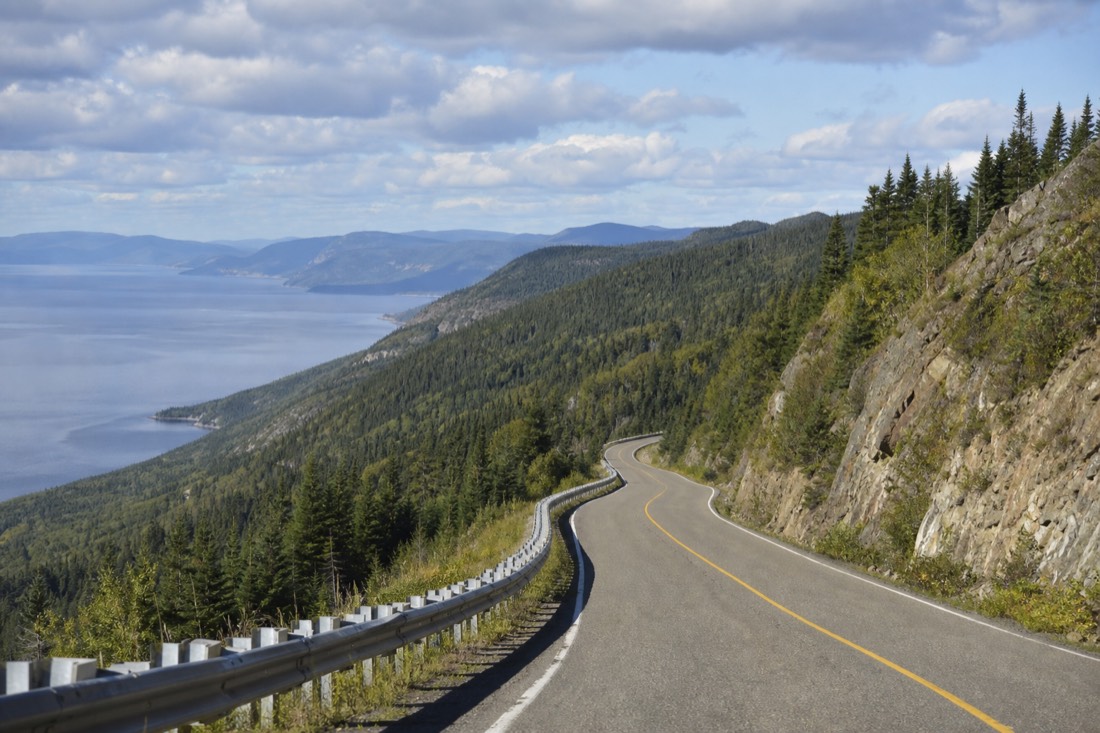
Yes, and it costs you nothing extra, because Route 138 runs straight through it. Baie-Saint-Paul's gallery streets and the long river views above La Malbaie turn the three-hour drive into part of the trip. An overnight in Charlevoix splits the whale day into two easy halves.
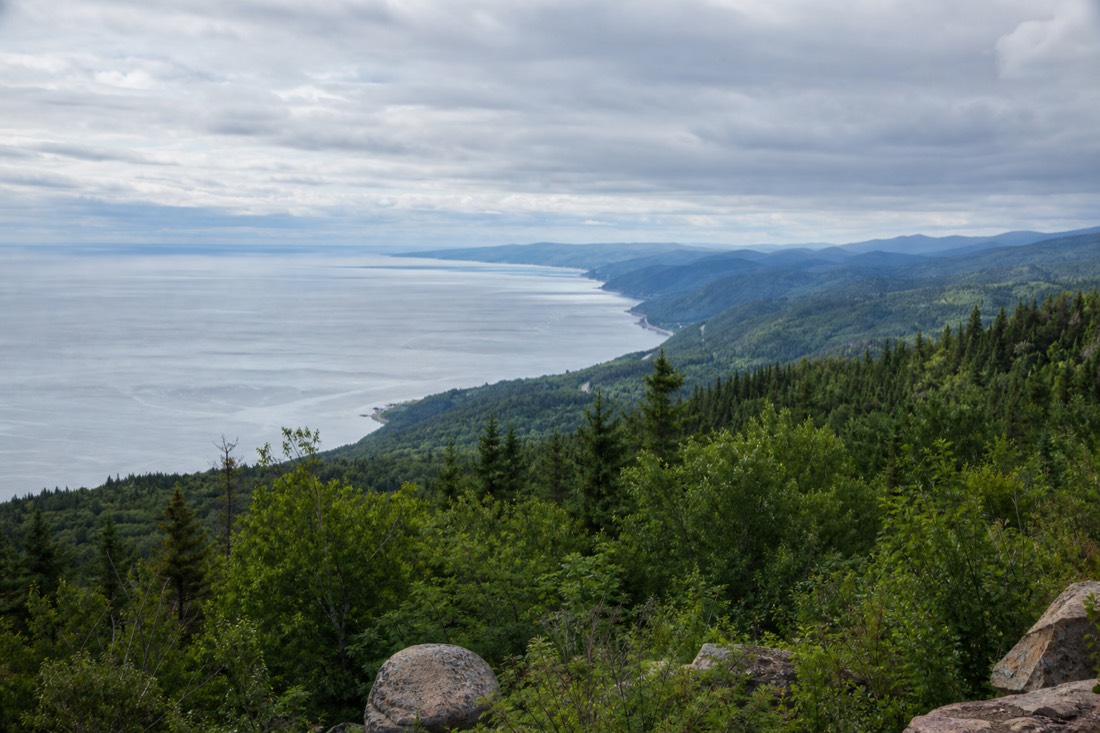
People search "is Charlevoix worth visiting" as if it were a separate decision. From Quebec City it is not; it is the corridor. The road climbs out of the Beaupré coast and into a landscape of dropped valleys and river panoramas that Quebecers themselves drive up for. Baie-Saint-Paul, about halfway, is the natural leg-stretch: a compact old main street thick with galleries and bakeries. Further on, the hills above La Malbaie open up the widest views of the trip.
Which suggests the upgrade I recommend whenever someone has the nights to spare: make Tadoussac an overnight rather than a day-trip. Drive up through Charlevoix at an unhurried pace, sleep near the water, take a morning departure when the light is low and the day boats have not yet filled the water, and drift back the next afternoon. The whale part costs the same. The day simply stops being a 13-hour endurance event.
So, worth it? If your dates land in the season and you can spend the day honestly, yes, emphatically. The 13-species estuary at the end of that road is the real thing. Just go in knowing exactly what the day costs, because the drive does not shrink for anyone.
Your Next Step
Choose Your Quebec Experience
General recommendation, before you add preferences. Confirm dates and participation requirements with the operator.
Have your travel date in mind? Travel through Charlevoix by bus, then join a naturalist-led boat or Zodiac trip in the marine park. Check the departure before arranging the rest of your day.
The listing gives 11 hours; keep a full day and a return buffer free. Choose the vessel at booking; sightings are not guaranteed.
Departure schedule from Viator; final availability and price are confirmed on Viator.
Compare Options And Fit Your Plans
Travel through Charlevoix by bus, then join a naturalist-led boat or Zodiac trip in the marine park. The listing gives 11 hours; keep a full day and a return buffer free. Choose the vessel at booking; sightings are not guaranteed.
Explore the marine park with a naturalist on a boat or Zodiac departure from Tadoussac or Baie-Sainte-Catherine. 2 to 3 hours on the water, plus your journey and check-in. Zodiac restrictions differ from the larger boat; sightings are not guaranteed. Allow about 11 hours from Quebec City including your own return drive and check-in; the cruise itself is about three hours.
Explore the marine park at water level with a bilingual naturalist on a Zodiac. 2 to 2.5 hours on the water; arrange your own journey to Tadoussac or Baie-Sainte-Catherine. Ages6+; no pregnancy, back-problem or wheelchair suitability. Waterproof outerwear included; sightings are not guaranteed. Allow a full day from Quebec City.
Affiliate links: we may earn a commission at no extra cost to you.