Quebec City In Fall: When The Colours Peak And Why October Is The Season Locals Keep
A Quebec City guide on the fall trip itself: week-by-week foliage timing, real September and October temperatures, where the colour is best, and what changes in the streets after Labour Day.
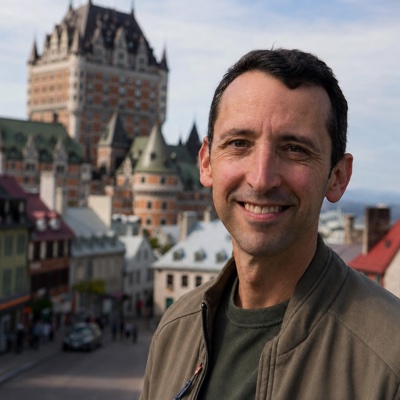 By Jean-Pierre Tremblay, Quebec City tour guide & heritage specialist
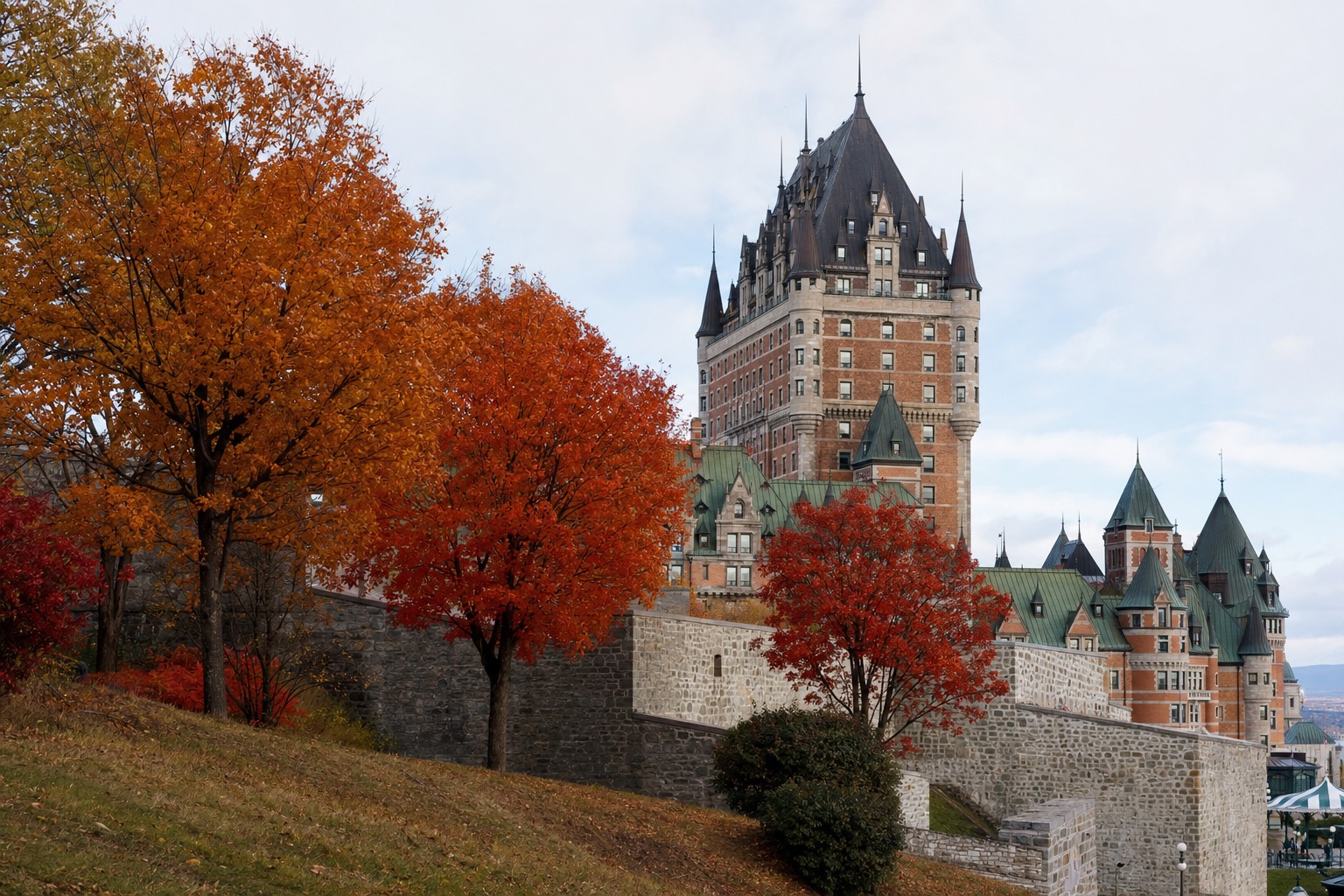
The change I notice first is not the trees. It is the sound. Somewhere in the week after Labour Day the tour groups on rue Saint-Louis stop overlapping, the cruise-ship surge settles into a rhythm instead of a flood, and I can talk to twelve people outside the Ursuline convent without raising my voice. Then the light drops a few degrees lower and the copper roofs turn the colour of a struck match around four in the afternoon. I have been guiding inside these walls since 2022, more than a thousand travellers by my own count, and fall is the season I quietly hope people book.
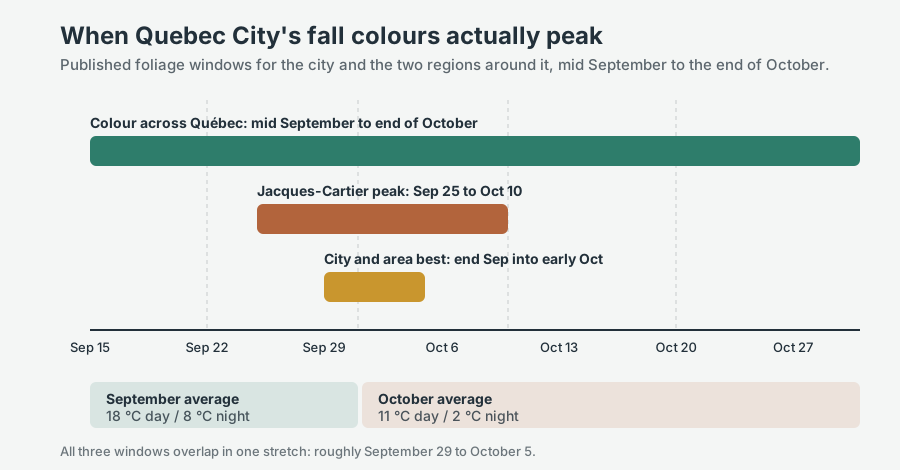
TL;DR: Colour appears across Québec from mid September and runs to the end of October, but the payoff window in and around the city is the end of September into early October. The Jacques-Cartier valley peaks September 25 to October 10. September averages 18 °C by day and 8 °C at night, October 11 °C and 2 °C. You trade warmth for quiet streets, harvest food and roughly a third off summer room rates.
When Do The Fall Colours Actually Peak In Quebec City?
Colour spreads across Québec from mid September to the end of October, and the sweet spot in and around the city is the end of September into early October. The Jacques-Cartier highlands north of town run slightly ahead, peaking between September 25 and October 10, so the region gives you two overlapping shots at it.
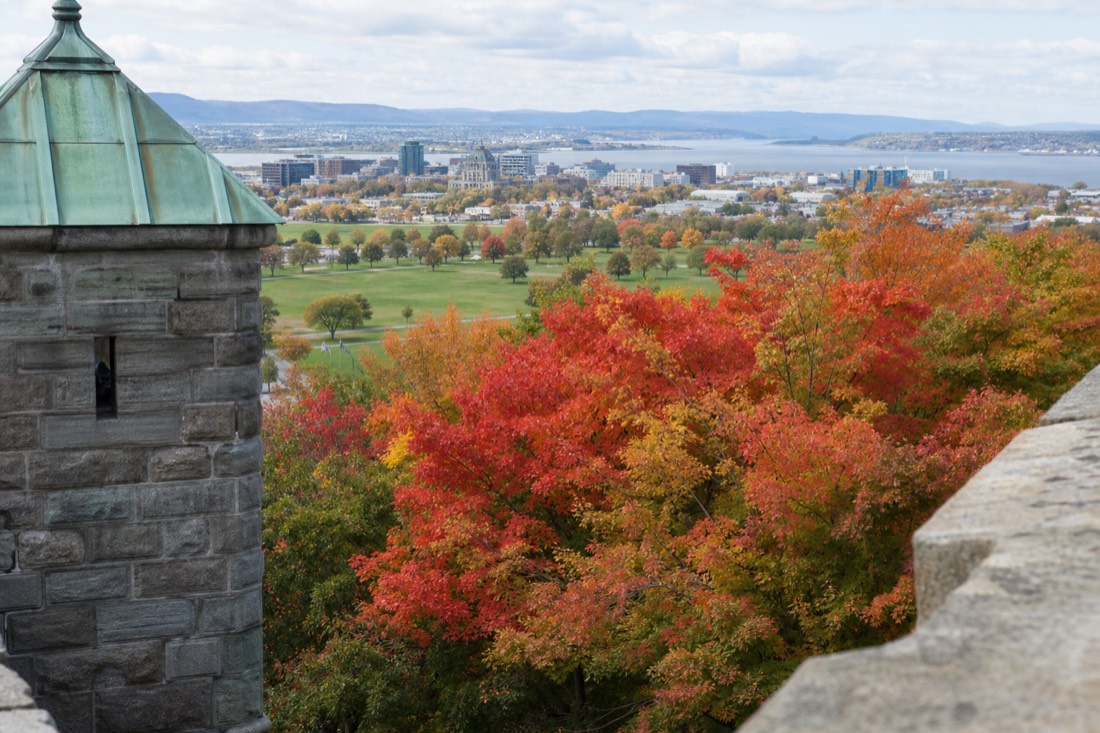
The official tourism office puts the city's best foliage at the end of September and early October, while the provincial tourism board tracks colour from mid September through the end of October across Québec as a whole. Those two windows are not in conflict. They describe a wave that starts in the hills, rolls down toward the river, and holds longest in the sheltered streets where the maples are warmed by stone.
| Week | What the trees are doing | Typical temperature band |
|---|---|---|
| Sep 15 to 21 | First turn in the surrounding hills, city still mostly green | September average 18 °C day, 8 °C night |
| Sep 22 to 28 | Colour building fast; the Jacques-Cartier peak window opens Sep 25 | September average 18 °C day, 8 °C night |
| Sep 29 to Oct 5 | The city and its outskirts hit their best | Crossover from September into October averages |
| Oct 6 to 12 | Highland peak closes Oct 10; city maples still loud | October average 11 °C day, 2 °C night |
| Oct 13 to 19 | Past peak upriver, colour thinning but present | October average 11 °C day, 2 °C night |
| Oct 20 to 31 | Last of the regional colour, branches going bare | October average 11 °C day, 2 °C night |
Read that as published windows rather than a promise. A hot dry September pushes everything later, a hard early frost strips it faster, and the year I remember best had leaves on the ground by the second week of October while the island across the water was still burning orange. If foliage is the whole reason for the trip, give yourself a flexible day at either end. Which month suits you overall is a separate question, and I answer it properly in the best time to visit guide.
What Does Quebec City Feel Like Once The Season Turns?
Emptier, slower and noticeably cheaper. September afternoons still reach an average high of 18 °C, warm enough for the terraces on rue Saint-Jean, while October settles to 11 °C by day and 2 °C at night. The crowd drop after Labour Day is the part visitors never plan for and always mention afterward.
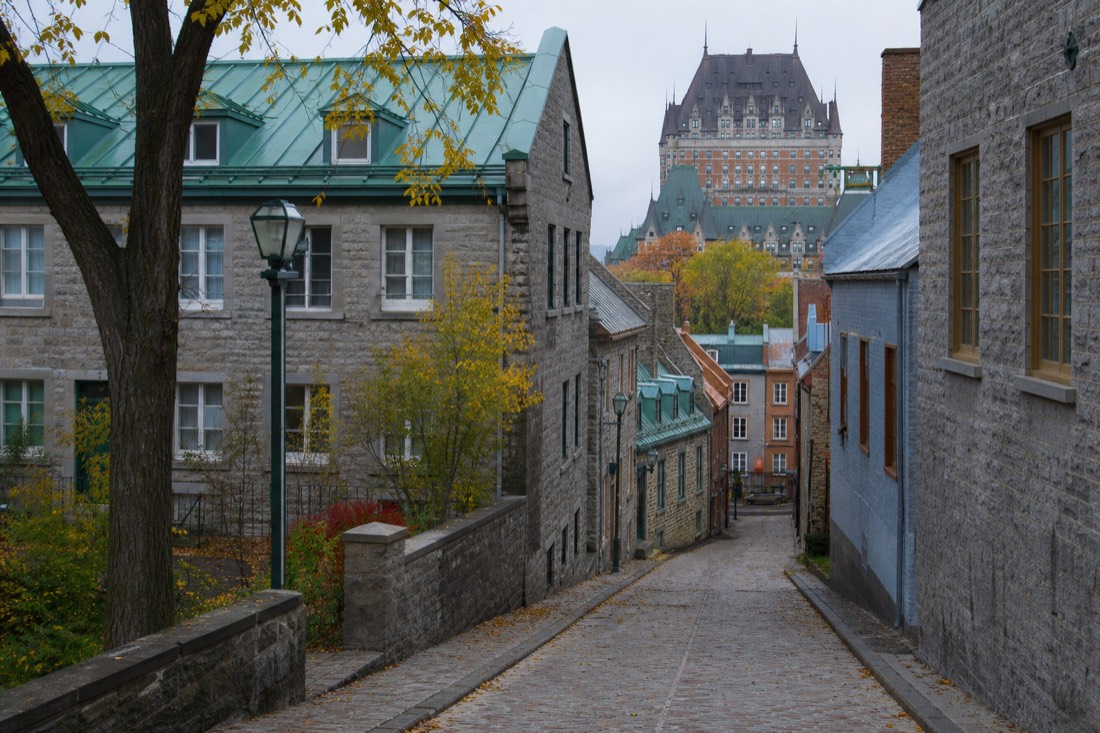
Here is what changes on my own routes. In August I stage groups carefully because the Casse-Cou stairs back up. In October I stop wherever the story is, halfway down, and nobody is pushing past. Dufferin Terrace, which in summer is a moving belt of people, becomes a place where you can lean on the rail for ten minutes and watch a container ship work upriver. Place Royale photographs without a single stranger in frame if you are there before nine.
The cold is the honest trade. Those October averages hide a real spread, and a clear night can leave frost on the ramparts by dawn while the afternoon feels like a good spring day. Pack a proper layer, not a jacket you are hoping to get away with. Two thin ones and a shell beat one thick coat, because you will be indoors, outdoors and climbing between Upper and Lower Town all day. The full walking list I hand people works exactly the same in fall as in summer, and it is laid out in what not to miss in Quebec City.
Where Do You Actually Go To See The Colour?
Four places, in rising order of effort: the city's own parks and ramparts on foot, Île d'Orléans across the bridge 15 km downstream, Parc national de la Jacques-Cartier at 30 minutes from Vieux-Québec, and Charlevoix, an hour to two hours northeast along Route 138. The park gives the most colour per hour of driving.
| Where | From Old Quebec | What the colour looks like | Timing |
|---|---|---|---|
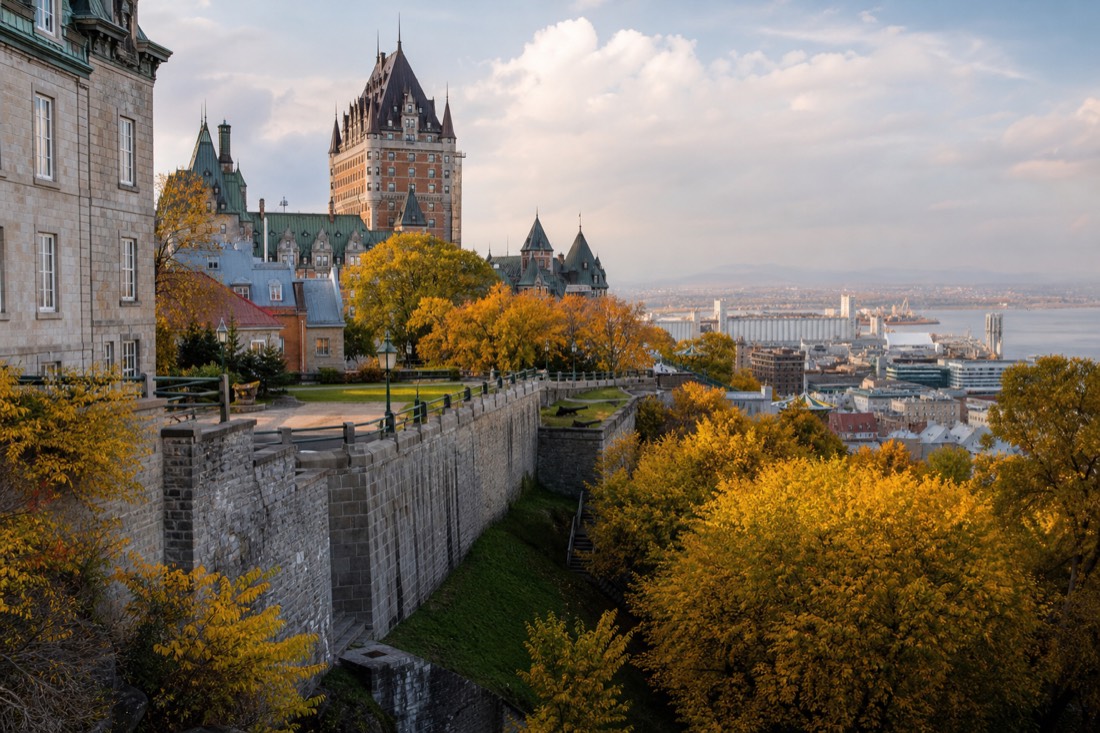
| City parks, ramparts, Plains of Abraham | On foot | Street maples against grey stone and copper | End Sep to early Oct |
| Île d'Orléans | Bridge access, 15 km downstream of downtown | Orchards and farm roads on a 75 km island loop | Same window as the city |
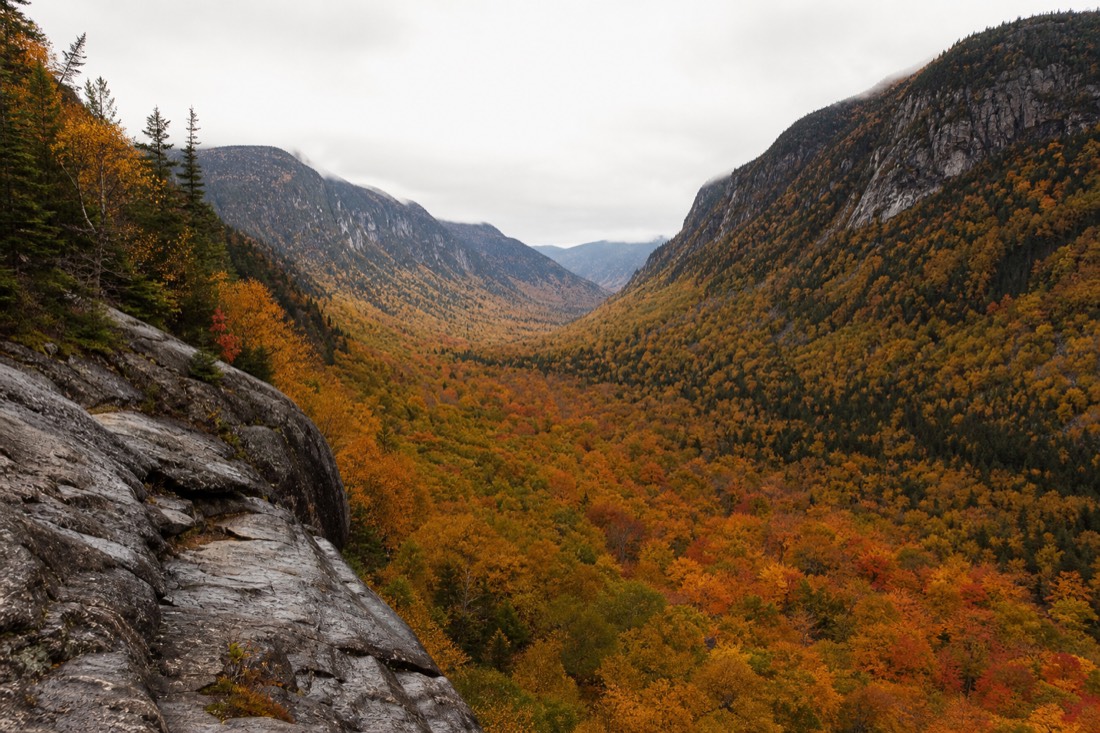
| Parc national de la Jacques-Cartier | 30 minutes | A glacial valley cut more than 550 m deep, 100+ km of trails | Sep 25 to Oct 10 |
| Charlevoix, Baie-Saint-Paul | 97 km, about 1 hour via Route 138 | Hills folding straight down into the St. Lawrence | Within the mid Sep to end Oct spread |
| Charlevoix, La Malbaie | About 150 km, roughly 2 hours | Same coast, deeper into the crater country | Within the mid Sep to end Oct spread |
If you only have one day outside the walls, take the park. The valley walls do something no roadside lookout manages: the colour stacks vertically above you, and the river runs green at the bottom of it. I go through access, trails and timing in the Jacques-Cartier park guide. Charlevoix is the bigger, slower day, worth it if you like driving and stopping, and it gets its own Charlevoix day trip guide. The island is the easy win, close enough to fold into a half day, and the Île d'Orléans guide covers the loop.
There is a fifth vantage point people forget, and it is the water. From mid river the whole north shore reads as one long band of colour under the Frontenac, which is why the cruises fill up on clear October afternoons. I guide on land, so I go by what reviewers report rather than my own deck time: AML's ninety-minute sightseeing run holds 4.4 across 3,211 GetYourGuide reviews from about $46, and autumn sailings are weather-dependent, so check live availability & prices on GetYourGuide for your exact dates before you build an afternoon around it.
Is Fall Better Than Summer In Quebec City?
For most trips, yes. Fall gives you colour, room to move and roughly 35 to 40 percent off summer accommodation rates in September. Summer wins on warmth, terrace evenings and the long festival calendar. Choose fall if photographs and quiet streets matter more than swimming weather.
| What matters | Summer | Late September to October |
|---|---|---|
| Crowds in Old Quebec | Peak, groups stacked on the narrow streets | Thinning from Labour Day, quiet by October |
| Room rates | Highest of the year | September runs about 35 to 40 percent below summer peaks |
| Daytime temperature | Warm enough for terraces all evening | 18 °C in September, 11 °C in October |
| The trees | Green | Mid September to end October colour, peaking end September |
| Walking comfort | Hot on the climbs between towns | Ideal, the hills stop being work |
| Booking pressure | Reserve well ahead | Easier, but clear autumn weekends still sell |
The trade-off table hides one practical detail. Cycling season and the colour season overlap almost perfectly, and the island roads in early October are the best riding of the year, flat, quiet and running past orchards. Riders will find the options on the bike tours page, and the wider list of what fits a fall day outside the walls sits in the day trips guide.
What Does An Autumn Day Here Look Like Hour By Hour?
Start in Lower Town before nine while Place Royale is still empty, walk the ramparts and the Plains through the low morning light, then eat late. The copper roofs turn the colour of a struck match around four in October, so save the last daylight hour for a viewpoint rather than a car seat.
This is the shape I use myself in October, and it is built around two facts. Photographers get the lower town to themselves before nine, and the good light comes back at the end of the afternoon. The middle of the day is for eating and for driving, because that is when the colour photographs flattest anyway.
One trip out of the city per day is the honest maximum if you also want time inside the walls. Île d'Orléans sits 15 km downstream over the bridge, and Parc national de la Jacques-Cartier is 30 minutes north, so either fits an afternoon without wrecking the evening. Charlevoix does not; that is its own day. Pick one, leave by half past one, and be somewhere with a view when the light drops. If you build the afternoon around a sailing instead, remember that autumn departures depend on the weather, so confirm the day before rather than the week before.
| Hour | Where you are | Why that hour |
|---|---|---|
| 7:30 to 9:00 | Place Royale and Petit Champlain | The lower town photographs without strangers in frame |
| 9:00 to 10:30 | Casse-Cou stairs, then Dufferin Terrace | Low light on the river, and the rail is yours in October |
| 10:30 to 12:00 | Ramparts and the Plains of Abraham | Street maples against grey stone and copper |
| 12:00 to 13:30 | A late lunch inside the walls | The tables you could not get in July have opened up |
| 13:30 to 17:00 | One trip out: the island at 15 km, or the park at 30 minutes | The concentrated colour block of the day |
| Around 16:00 | Wherever you chose above, on high ground | The light drops and the roofs go copper |
| After dark | Dinner in town | Game, squash and root vegetables are back on the menus |
What Does A Fall Trip Cost Compared With A Summer One?
September rooms run roughly 35 to 40 percent below summer peaks, and that is the one budget line the season genuinely moves. Tour prices do not fall with the leaves: AML's ninety-minute sightseeing cruise still starts around $46, the Île d'Orléans taste trail at $62, a four-hour e-bike rental at $44 USD.
Understanding where the saving sits changes how people plan. Accommodation is the largest single line of most Quebec City trips, so a third off it in September is worth more than any discount you will find on activities, which is why the shoulder-season maths favours a longer stay rather than a cheaper one. Add the night you save on the room and spend it on a day trip.
What does not change is the cost of the things you came to do. Operators price by product, not by month, and the autumn window is short enough that nothing goes on sale. Restaurant tables get easier to book without getting cheaper. Access to farms and parks varies with the calendar rather than the price list, and a good number of island businesses wind down for the year in late October, so confirm opening dates before committing an afternoon to a drive.
| Line item | Summer | Late September to October | Notes |
|---|---|---|---|
| Room inside or near the walls | Peak rates of the year | About 35 to 40 percent less in September | The saving that pays for the rest |
| Guided river cruise, about 1 h 30 | From about $46 | From about $46 | 4.4 across 3,211 GetYourGuide reviews; sailings are weather dependent |
| Île d'Orléans taste trail | From $62 | From $62 | 4.6 across 239 reviews, and harvest is its best window |
| Four-hour e-bike rental | From $44 USD | From $44 USD | The island roads are quietest in early October |
| Guided island e-bike with tastings | From $146 | From $146 | 4.9 across 160 reviews |
| Restaurant tables | Book well ahead | Easier, and the menus turn to game and squash | Clear autumn weekends still sell |
| Farm and park access | Varies, confirm before you go | Varies, confirm before you go | Island businesses start closing in late October |
What If You Arrive After Peak, In The Last Week Of October?
You lose the leaves and keep almost everything else. Regional colour runs to the end of October, so the final week is thinning rather than bare, but the city's own peak has passed. Farms and seasonal businesses begin closing for the year, cruise traffic has gone, and rates drop a second time.
Late October is the quietest good week of the Quebec City year, and it is underrated for exactly the reasons that make it a bad foliage bet. The old town belongs to residents again. Restaurant tables open up without a fight. The stone, the copper and the river do not need leaves to photograph well, and a grey day on the ramparts has an atmosphere that a golden one does not.
What you must not do is drive out expecting the picture you saw online. The highland window in the Jacques-Cartier valley closes around October 10, and by the last week the island orchards are past their best with a share of the stands shut for the season. Check opening dates before committing to the 75 km island loop. The valley itself still works as scenery, 550 m deep with more than 100 km of trails, and it does not stop being spectacular when the branches thin out.
| What you came for | Late October verdict | What to do instead |
|---|---|---|
| Peak city colour | Missed; the end-September to early-October window has closed | Walk for stone, copper and river light rather than leaves |
| Highland colour in the Jacques-Cartier valley | Peak closed October 10 | The 550 m valley and 100+ km of trails still deliver |
| Island orchards and farm stands | Thinning, and some close for the year | Check opening dates before driving the 75 km loop |
| A river sailing | Autumn departures are weather dependent | Confirm late-season dates on the listing |
| Quiet streets | Better than at peak, by some distance | Place Royale and Dufferin Terrace are effectively yours |
| A cheaper room | Lower again once the leaf traffic leaves | Book late and pay less than September |
| Warm afternoons | Gone; October averages 11 °C day and 2 °C night | Two thin layers and a shell, with frost possible at dawn |
What Is Fall Food Season Like Around Quebec City?
Harvest season and foliage season are the same weeks, which is the argument for coming now rather than in leaf-peeping isolation. Île d'Orléans works as farmland across nearly 95 percent of its territory, with 269 farms and more than 100 tourist businesses including orchards, cideries and farm stands open through the autumn harvest.
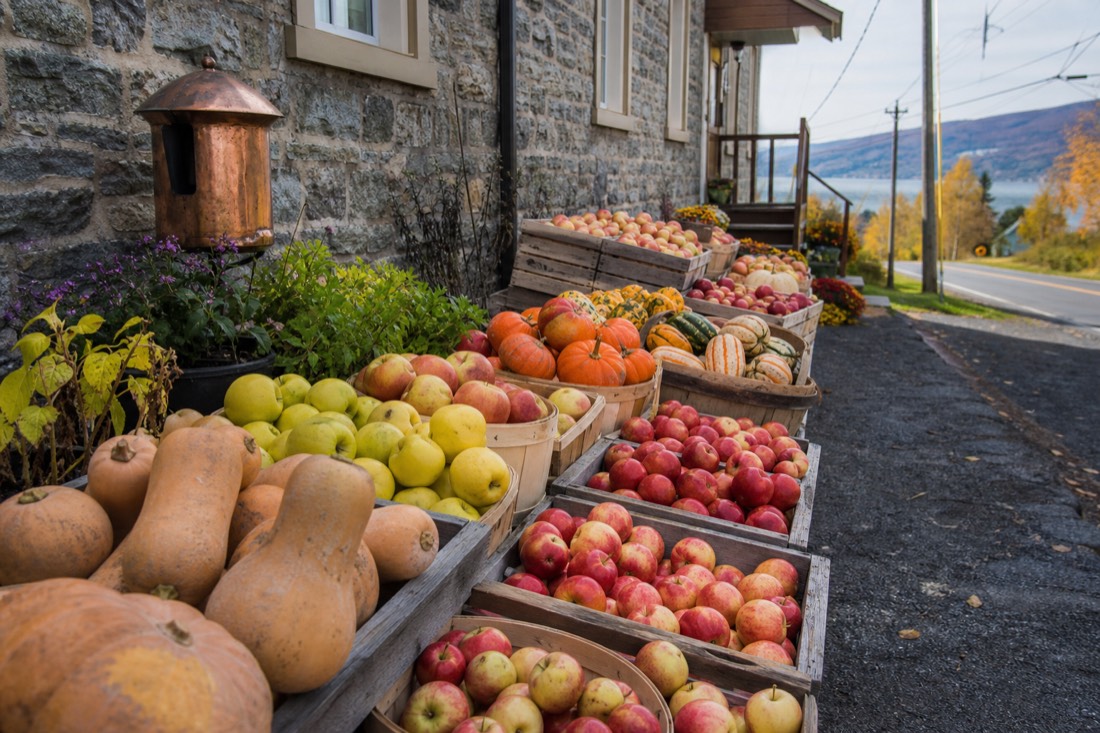
The island is fifteen kilometres downstream and feels like a different century. Six villages sit around a 75 km loop of Route 368, and in October the roadside stands are apples, squash and cider, with the city's towers visible across the water the whole time. That combination, colour plus food, is what I actually mean when I tell people fall is the local season. Nobody here goes leaf-hunting as a standalone activity. They drive out for apples and come back saying the trees were unbelievable.
Inside the walls the shift is on the menus. Game, squash, root vegetables and heavier stews come back once the terrace crowd goes home, and the tables you could not get in July open up again. If you want the restaurant version of that story, my walk through the places Anthony Bourdain ate in Quebec City covers the ones still worth the reservation. The official tourism office at quebec-cite.com keeps current opening dates for the island's farms and the seasonal attractions, which matters more in fall than in any other season, because a good number of them close for the year in late October.
That is the last honest warning I will give about the season. It ends abruptly. One week the ramparts are gold and the terraces are still trading, the next the branches are bare, the cruise ships have gone, and the city is waiting for snow. Come in the last week of September or the first week of October and you catch it at full volume. Come on the twenty-fifth of October and you may be walking a beautiful grey town instead, which has its own appeal, and costs even less.
Your Next Step
Choose Your Quebec Experience
General recommendation, before you add preferences. Confirm dates and participation requirements with the operator.
Have your travel date in mind? Trade the rental-car logistics for a guided national-park hike with Quebec City transport, park admission and lunch. Check the departure before arranging the rest of your day.
6 hours 30 minutes. Lunch cannot accommodate gluten-free, lactose-free or vegan diets according to the listing; hiking demands apply.
Departure schedule from Viator; final availability and price are confirmed on Viator.
Compare Options And Fit Your Plans
Trade the rental-car logistics for a guided national-park hike with Quebec City transport, park admission and lunch. 6 hours 30 minutes. Lunch cannot accommodate gluten-free, lactose-free or vegan diets according to the listing; hiking demands apply.
Ride from Old Quebec to island producers for small local tastings. 3 hours, English or French; meet at 18 Rue des Jardins. Hotel pickup and a full meal are not included. Mobility and dietary needs require confirmation.
Connect Place Royale, Petit Champlain and the upper town with a licensed guide and an included funicular ride. 2 hours; meet at 112 Rue Saint-Paul and finish near City Hall. Hotel pickup is excluded.
Affiliate links: we may earn a commission at no extra cost to you.