Petit Champlain, Quebec City: What To See, Buy And When To Go
The prettiest street in Quebec City is 260 metres long and holds more than 40 shops. Come at the wrong hour and you will shuffle. Come at the right one and it is yours.
 Written with Jean-Pierre Tremblay, Quebec City tour guide & heritage specialist
Quick answer
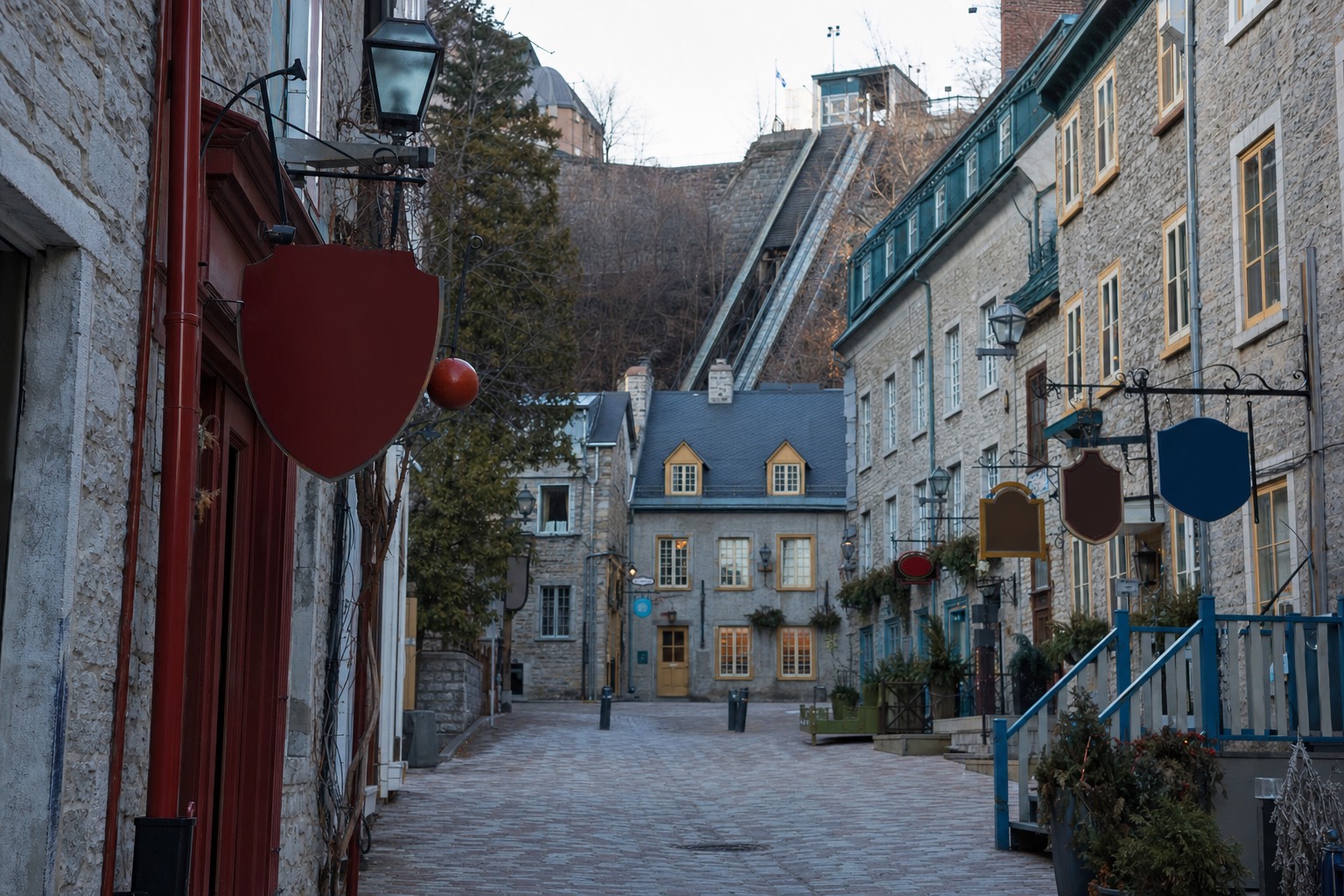
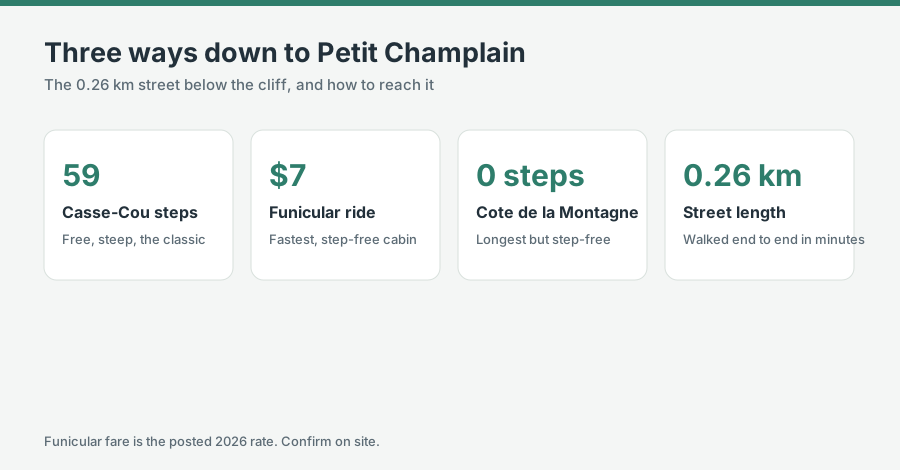
Quartier Petit-Champlain is the pedestrian district at the base of the Old Quebec cliff, built around rue du Petit-Champlain, a street of about 0.26 km lined with more than 40 shops and restaurants in 29 cooperative-managed stone buildings. Reach it by the 59-step Casse-Cou stairs, the $7 funicular, or the road grade of Côte de la Montagne, and go before 10 am or after 6 pm to see it without the crush.
Ten past eight, and the cobbles of rue du Petit-Champlain are still dark from the night wash. A shop owner drags a rack of wool sweaters into the doorway. Somebody's radio leaks out of an upstairs window in French, and the wrought-iron signs hanging over the street swing a little in the draught that always comes off the river down this lane. I walk this street most working days, and this is the hour I wish every visitor got: no shuffle, no umbrellas, no queue at the ice cream counter. By eleven it will be a different place entirely.
TL;DR: Petit Champlain is one short street, about 0.26 km, holding more than 40 shops in 29 old stone buildings under the cliff. Three ways down from Upper Town: the 59-step Casse-Cou stairs, the funicular at $7, or the ramp of Côte de la Montagne. Go before 10 am or after 6 pm. Festive lights run from the end of November to mid-February. Official sources call it one of the oldest commercial streets in North America, not the oldest, and I am not going to upgrade that for you.
What Is Quartier Petit-Champlain, And Why Does Everyone End Up There?
Quartier Petit-Champlain is the pedestrian district at the foot of Quebec City's cliff, built around one street of roughly 0.26 km. A cooperative manages 29 buildings and more than 40 stores that stay open year-round. Visitors all end up here because every route down from Upper Town lands at its doorstep.
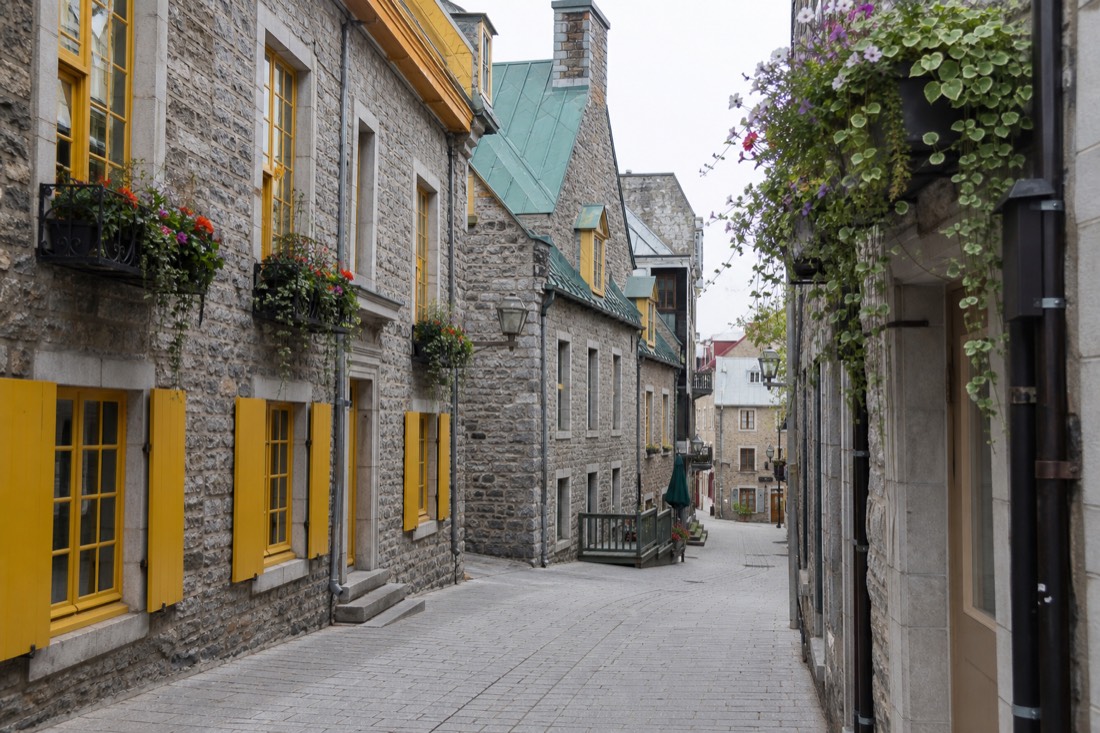
The scale surprises people. On a screen it looks like a quarter you could spend a day in; on foot it is 260 metres, walkable end to end in four minutes if nothing catches your eye, which nothing ever manages. The cliff face closes the street on one side, so the light arrives late and leaves early, and the buildings lean in over the cobbles until the whole lane reads like a corridor.
The buildings are not a film set, though they get called one. The cooperative that runs the quarter holds 29 of them and rents them to the merchants, which is the reason you are not walking past three phone-case kiosks and a chain coffee shop. That ownership model is the single most interesting fact about this street and almost nobody mentions it.
Two things I point out to every group before we start walking. First, the trompe-l'oeil fresco painted onto the wall at the foot of the stairs: stand back from it and the flat surface opens into windows and staircases that are not there. Second, the hanging signs. Each shop has one, forged iron and painted, and reading them in order is a better guide to the street than any list, because a shop that hangs a carved sheep over its door is telling you exactly what it sells.
Petit Champlain sits inside the wider Old Quebec district, two minutes from Place Royale and directly under Dufferin Terrace, and those three stops make the whole Lower Town half of a first day.
How Do You Get Down To Petit Champlain From Upper Town?
Three routes: the 59-step Escalier Casse-Cou, the funicular at $7 one way, or the road grade of Côte de la Montagne. The stairs take about two minutes going down, the funicular ride under two, the road six to eight at a stroll. All three set you within a block of rue du Petit-Champlain.
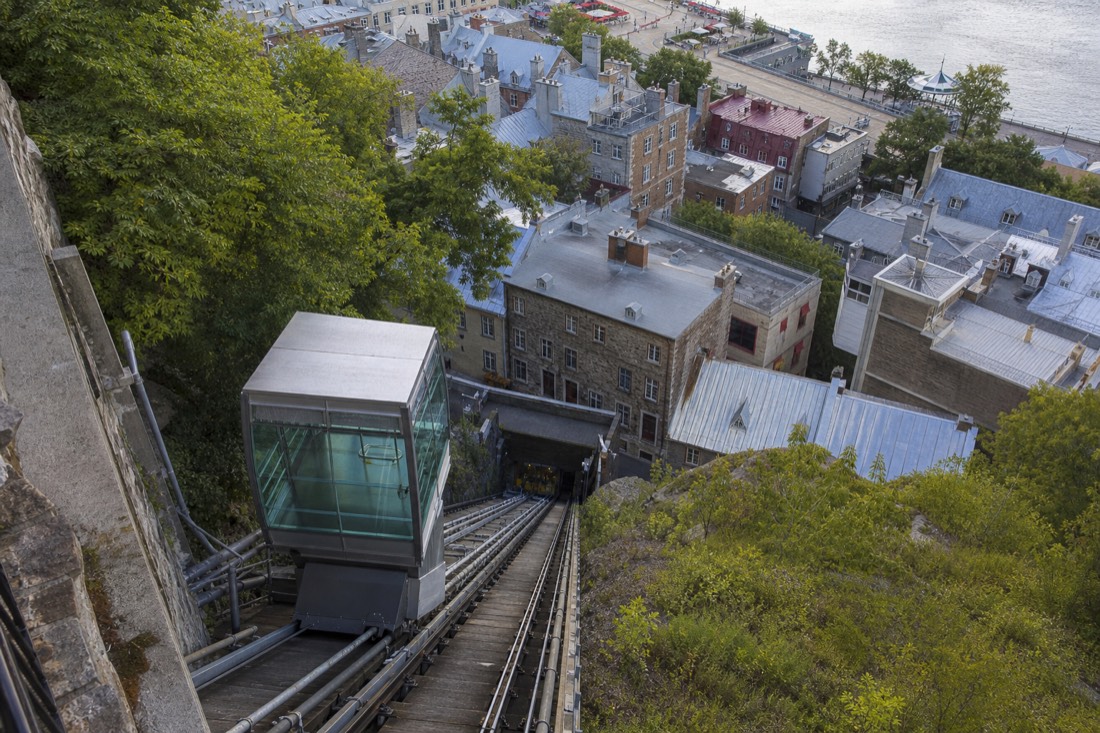
Geography decides your morning here. Upper Town sits on top of the cliff, Petit Champlain sits at the bottom of it, and the drop between them is the reason so many visitors arrive at the street already tired or already annoyed. Pick your route on knees and weather, not on price.
| Route down | Steps | My timing, door to door | Cost | Best for |
|---|---|---|---|---|
| Escalier Casse-Cou | 59 | About 2 min down, 4 to 5 min back up | Free | The fastest drop and the best photo of the street |
| Funicular | None | Ride under 2 min, plus 0 to 15 min queueing in summer | $7 one way | Knees, strollers, luggage, ice underfoot |
| Côte de la Montagne | None, steady grade | 6 to 8 min down, 10 to 12 up | Free | Step-free walking, wide pavement, far fewer people |
The pattern I use with almost every group: walk down the stairs while legs are fresh, ride the funicular back up at the end. The glass car turns the return climb into a viewpoint, and $7 buys back a half hour of grumbling. In January and February I move the descent to the funicular outright, because those treads ice over and the handrail is not a suggestion.
Côte de la Montagne is the route nobody tells you about. It is the old road down the cliff, no steps at all, a steady grade past the pedestrian gate, and it is quiet even in July. If you are pushing a stroller or walking with someone who counts stairs before committing, this is your way.
How Many Steps Are The Breakneck Stairs Above Petit Champlain?
Fifty-nine. The Escalier Casse-Cou, the Breakneck Stairs, is Quebec City's oldest stairway, dated by the city's tourism office to 1635, and it drops from Côte de la Montagne straight onto the top of rue du Petit-Champlain. Free, open all year, no ticket, no queue.
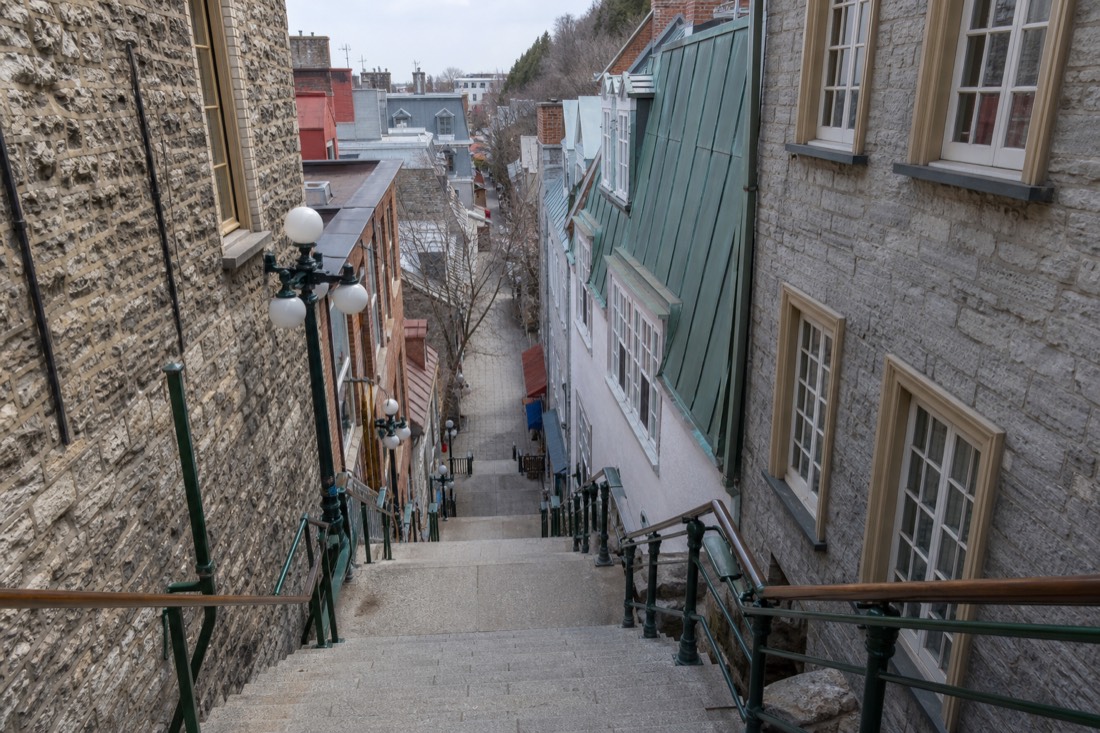
The name is not decoration. Escalier Casse-Cou means breakneck stairs, and the wooden treads run steep enough that people going down instinctively grab for the rail on the third or fourth step. Going up is a genuine, if short, workout. I have watched a fair number of visitors reach the top, turn around, and quietly decide the funicular exists for a reason.
What makes 1635 worth pausing on is what it predates. There was a stairway on this cliff before most of the streets above it were laid, because the cliff had to be climbed daily by people carrying goods off boats, and the line the stairs take is still the shortest route between the port and the town. You are walking a working shortcut, not a monument, which is why it is so much steeper than a monument would be.
Photograph it from the bottom, standing in the street and shooting up. The stairs, the stacked stone houses and the cliff all line up in one frame from there, and it is the picture most people came to Lower Town to take without knowing it.
What Is There To Buy And Eat On Rue Du Petit-Champlain?
More than 40 stores hold the street year-round: Quebec-made crafts, wool and fur, jewellery, art galleries, maple and local food, plus restaurants and terraces packed into the ground floors. No official source breaks that number into boutiques versus restaurants, so treat any precise split you read elsewhere with suspicion.
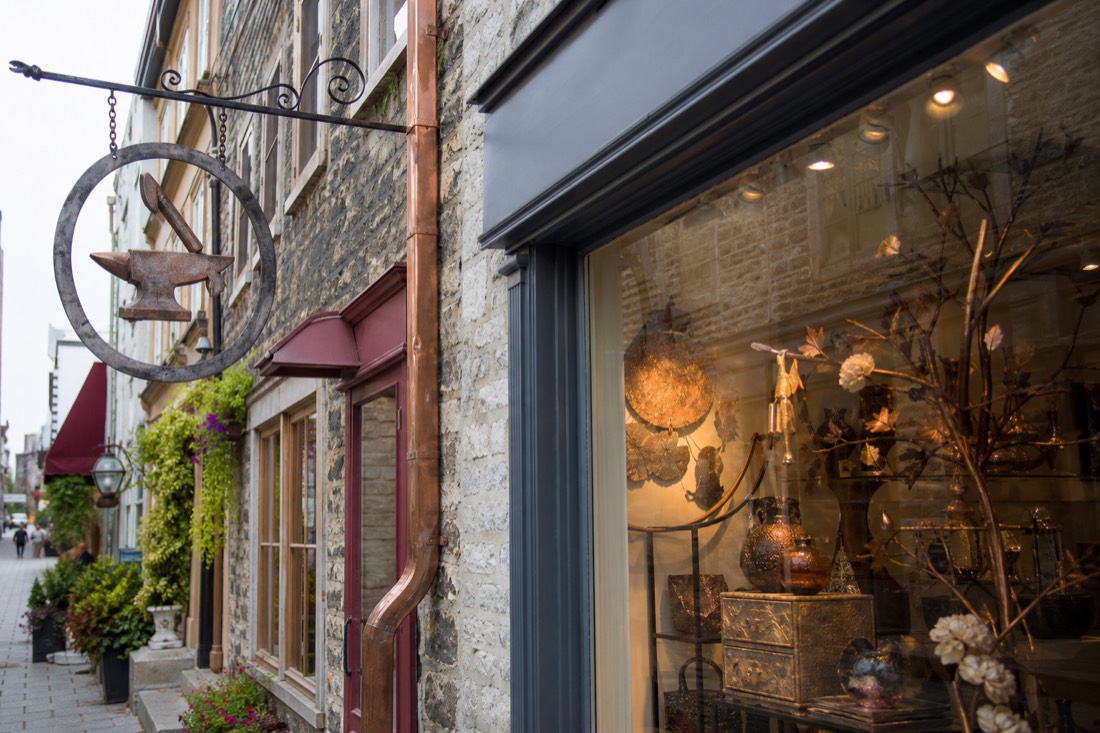
I spend more time answering shopping questions on this street than history ones, so here is the honest breakdown of what the doorways actually hold, and what is worth carrying home rather than buying because you are standing in front of it.
| What you find | What is worth buying | My note |
|---|---|---|
| Quebec artisan boutiques | Ceramics, wood, leather, small pieces by named local makers | The cooperative's rents favour these; look for the maker's name on the tag |
| Wool and knitwear | Hats, mitts, heavy sweaters | Real winter gear, priced like real winter gear, and useful the same afternoon |
| Art galleries and print shops | Original works and signed prints of the old town | Cheaper and better chosen than the tourist prints on the street above |
| Jewellery and silversmiths | Small silver, amber, stone-set pieces | Ask what is made on site; several workshops are behind the counter |
| Maple and local food | Syrup, butter, maple sugar, cider | Buy syrup in a tin, not glass, if you are flying home |
| Souvenir shops | Fridge magnets, flags, moose everything | The one category identical to every other tourist street on earth |
| Restaurants and terraces | Lunch, crêpes, ice cream in summer | Terraces are the reason the street clogs at midday; sit or keep walking |
Eating here is pleasant and rarely a bargain. The narrow ground floors mean small rooms, small kitchens and queues, and the terraces that spill into the lane in summer are half the reason walking gets slow between noon and two. If food is the point of your day rather than a break in it, the city's guided tasting walks cover a wider spread of the old town than this one street can, and the food tours page lays out what each one includes.
Should You Walk Petit Champlain On Your Own, Or Take A Guided Tour?
Walk it alone if you want to shop, photograph and linger, because the street reads itself and every plaque is bilingual. Take a guided walk if you want the cliff, the stairs, Place Royale and the Frontenac connected into one story, and the funicular ride handled for you rather than queued for.
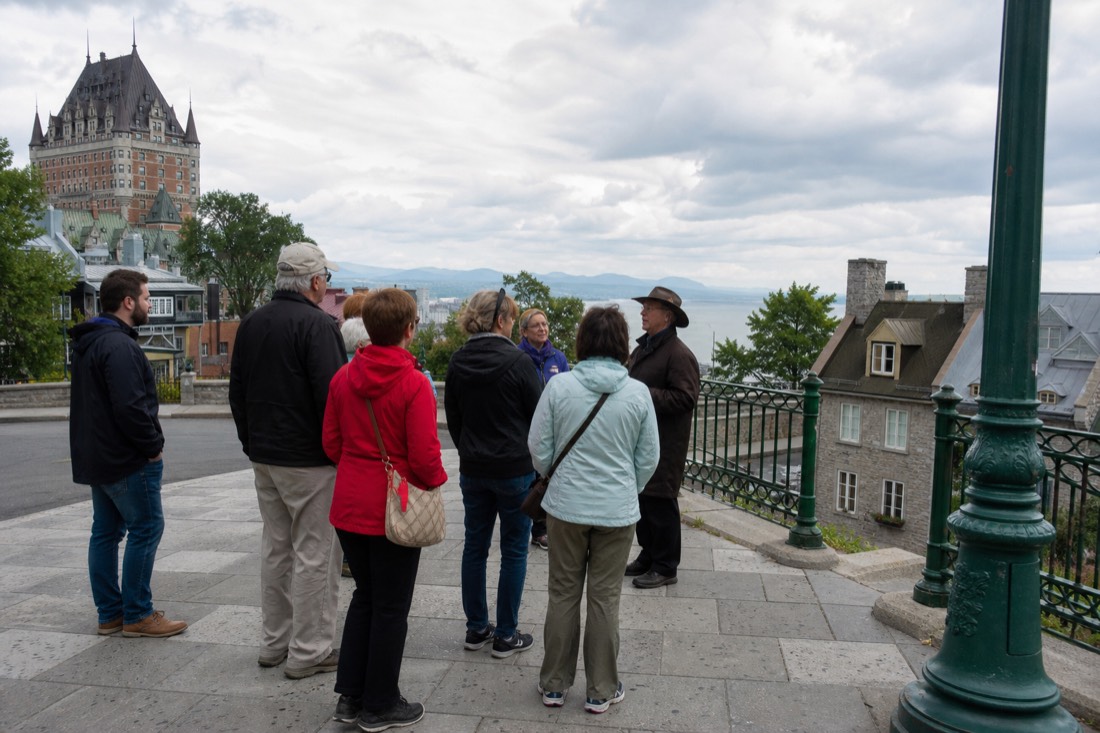
I lead these walks for a living and I will still tell you plainly: Petit Champlain does not require a guide. It is 260 metres of shopping under a cliff, and you cannot get lost on it. What a guide adds is everything around it, the reason the buildings survived, why the cliff has three separate routes cut into it, what the fresco is quoting.
| Your approach | Cost | Time | You get | You give up |
|---|---|---|---|---|
| Free wander | $0 | As long as you like | Shops at your pace, photos at any hour | Context, and the funicular queue is yours |
| My free Old Quebec route | $0 | About 3 hours | The street set inside a full loop of the old town | A voice answering questions |
| Classique guided walk | From $41 USD | 2 hours | Upper and Lower Town, funicular included, 4.9 across 1,538 reviews | Fixed departure time and a group's pace |
If you would rather build your own morning, my whole loop through the old town, this street included, is written out stop by stop in the free self-guided walking route. If you want the guided version instead, the field is compared on the walking tours page, and for the Classique walk that folds the funicular into the ticket, check live availability & prices on Viator before you commit a morning to it.
When Is The Best Time Of Day To Visit Petit Champlain?
Before 10 am or after 6 pm. The street fills from mid-morning as cruise passengers and tour groups come down the cliff, peaks between noon and 3 pm when the terraces are also full, thins after 5 pm, and by evening in summer it is lit, calm and half empty. Winter mornings are emptiest of all.
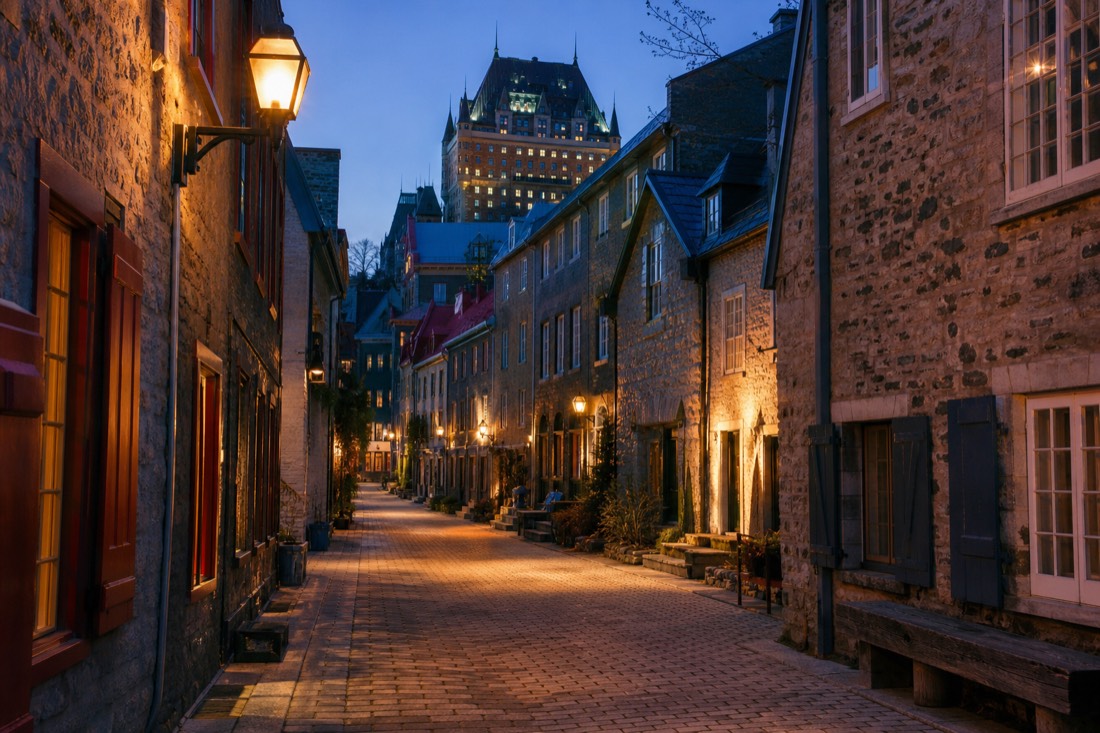
Crowding on this street is not really about season, it is about the hour. A 260-metre lane with terraces on both sides has a low ceiling for how many people fit comfortably, and that ceiling gets breached every single afternoon of the summer. Here is the day as I watch it play out, week after week.
| Time of day | What the street feels like | Worth doing |
|---|---|---|
| 8 to 10 am | Shops opening, deliveries, near-empty cobbles | Photography, the stairs, a quiet coffee |
| 10 am to noon | Filling steadily, first tour groups down | Shopping while stock is still tidy |
| Noon to 3 pm | Peak. Shoulder to shoulder, terraces full | Skip it, or accept the shuffle |
| 3 to 5 pm | Still busy, groups thinning | Browsing, ice cream queues shorter |
| 5 to 7 pm | Emptying fast, shops beginning to close | The best light on the stone in summer |
| After 7 pm | Quiet, lit, mostly diners and couples | Dinner, evening photos, the walk back up |
Season shifts the character rather than the pattern. The one date range worth planning around is the festive one, because the quarter goes fully decorated from the end of November to mid-February, which is a far longer run than the Christmas markets themselves and means a January visit still gets the lights. What that season looks like across the whole city sits in Christmas in Quebec City.
| Season | The street | Honest verdict |
|---|---|---|
| Late Nov to mid-Feb | Lights, garlands and trees the length of the lane | The prettiest it ever gets; dress for the cliff wind |
| Mid-Feb to April | Decorations down, quiet, some patchy ice | Emptiest walking of the year |
| May to June | Flowers out, terraces open, manageable crowds | My pick for a first visit |
| July to August | Peak everything, cruise days heaviest | Come at 8 am or forget it |
| September to October | Cooler light, cruise season still running | Excellent mornings, busy middays |
Staying inside the old town changes this calculation completely, because a 6 pm or 8 am walk is easy from a room five minutes away and a chore from a hotel across the river. The trade-offs by district are in my guide to where to stay in Quebec City.
What Should You Wear To Walk Petit Champlain?
Flat soles with grip, in every season. The street is cobbled end to end, the Casse-Cou treads are wooden and steep, and the cliff pushes a draught down the lane even in July. In winter add real traction, because those 59 steps ice over and the handrail stops being decorative.
I have a running count in my head of the things that go wrong on this street, and footwear leads it by a distance. Not injuries, mostly, just people cutting a morning short because heels and cobbles have had an argument. Cobblestone is uneven by design, the joints catch narrow soles, and the camber of the lane tips you toward the cliff side.
The wind is the other thing nobody plans for. A 260-metre lane with a rock face on one side and the river at the end of it channels air the way a corridor does, and it can feel noticeably colder down here than on the streets above the cliff. In February that draught is the whole reason people abandon the street after ten minutes.
What follows is my own kit list, worked out on the ground rather than taken from anybody's brochure. Treat it as a planning allowance, adjust it to your own tolerance.
| Season | Footwear | Also carry | Why |
|---|---|---|---|
| May to June | Trainers or flat leather soles | A light layer | Cobbles are dry, the lane is still cool |
| July to August | Trainers, nothing narrow-heeled | Water, sunglasses | You will stand more than you walk, the queues do that |
| September to October | Grippy soles, closed toe | A windproof layer | The draught off the river sharpens early |
| Late Nov to mid-Feb | Winter boots with real tread | Gloves, hat, ice grips if you have them | The stairs ice, the cobbles glaze, and the lights are worth the effort |
| Mid-Feb to April | Waterproof boots | A spare pair of socks | Slush collects between the stones |
| Any season, camera in hand | Anything you can stand still in for an hour | A small bag, not a rucksack | The lane is narrow; rucksacks clear shelves in small shops |
Is Petit Champlain Worth Doing With Children?
Yes, and it handles children better than most of Old Quebec, because the street is pedestrian, flat once you are on it, short enough to finish before patience runs out, and it ends in ice cream. The stairs and the cobbles are the two genuine obstacles, and both have a workaround.
Parents ask me this at the top of the cliff most days, usually while looking down the Casse-Cou and doing sums. The answer depends almost entirely on how you arrive. Come down the 59 steps with a pushchair and you have created a problem; come down Côte de la Montagne, which is a steady road grade with no steps at all, and the problem disappears before it starts.
Once you are on the lane, the good news is that it is closed to traffic and only 0.26 km long. Children can walk ahead of you without you flinching, which is not true of the streets above the cliff. The iron shop signs are also unexpectedly good with small kids: give them the job of finding the sheep, the fish and the boot, and the four minutes it takes an adult to walk the street stretches happily to forty.
Timing matters more with children than without. Between noon and three the terraces are full and the lane is shoulder to shoulder, which is when tired small people stop enjoying anything.
| Age | What works | What to skip | Getting down |
|---|---|---|---|
| Babies and toddlers in a pushchair | The level lane, the fresco, shop windows | The Casse-Cou stairs, both directions | Côte de la Montagne, step-free the whole way |
| Ages 3 to 6 | Hunting the iron signs, ice cream, the funicular | Long browsing in fragile-goods shops | Funicular down, so the glass car is the treat |
| Ages 7 to 12 | The 1635 stairway story, the trompe-l'oeil wall | Midday, when they will just be jostled | Stairs down, funicular back up |
| Teenagers | Shopping, photography, the evening light | An 8 am start they did not agree to | Either, they will not notice |
| Mixed-age group | 8 to 10 am, before the crush | Noon to 3 pm entirely | Funicular, at $7 it buys peace |
| Winter with kids | The lights, from the end of November | Icy stairs, without question | Funicular, no debate |
How Does Petit Champlain Fit With The Rest Of Lower Town?
Treat it as one stop of three, not a destination in itself. Place Royale is two minutes away, Dufferin Terrace sits directly overhead, and the basilica is about ten minutes uphill or a funicular ride plus five. Half a morning covers the whole cluster if you descend by the stairs and return by the funicular.
The most common way to waste this part of the city is to treat the street as the whole errand: come down, shop, go back up, done. Everything that explains the street is within a few minutes of it. Place Royale is where the colony actually began trading, and standing in it after walking the lane makes the lane legible in a way no plaque manages.
The order I use with groups almost never changes. Stairs down while legs are fresh, the street early and slowly, Place Royale next, then the funicular back up to the terrace so the climb becomes a viewpoint instead of a chore. Reverse that and you will spend your best energy on the ascent.
One caution on distances. Everything below is a walk, not a hike, but the times assume you are moving. Add browsing time honestly, because this is the one district where four minutes of walking reliably becomes an hour of standing still.
| From the top of rue du Petit-Champlain | Time on foot | Route | Pair it with |
|---|---|---|---|
| Place Royale | 2 min | Level, cobbled | The oldest square in the city, right after the lane |
| Dufferin Terrace | Directly above | Funicular under 2 min, or 59 steps and a climb | River views, best at the end of the morning |
| Notre-Dame de Québec Basilica | About 10 min uphill, or funicular plus 5 | Upper Town streets | Do it before you come down, if you can |
| Côte de la Montagne, back to Upper Town | 10 to 12 min up | Steady grade, no steps | The step-free return, and quiet even in July |
| The Old Port quays | A few minutes north, level | Flat waterfront walking | Air and space when the lane gets crowded |
| Escalier Casse-Cou, from below | On the street itself | 59 steps | Photograph it from the bottom, then decide |
Is Petit Champlain Really The Oldest Commercial Street In North America?
Official tourism sources call it one of the oldest commercial streets in North America. They do not call it the oldest, and neither will I. The verified record here is narrower and more interesting: a stairway dated to 1635, 29 cooperative-held buildings, and a merchant street that survived when comparable ones did not.
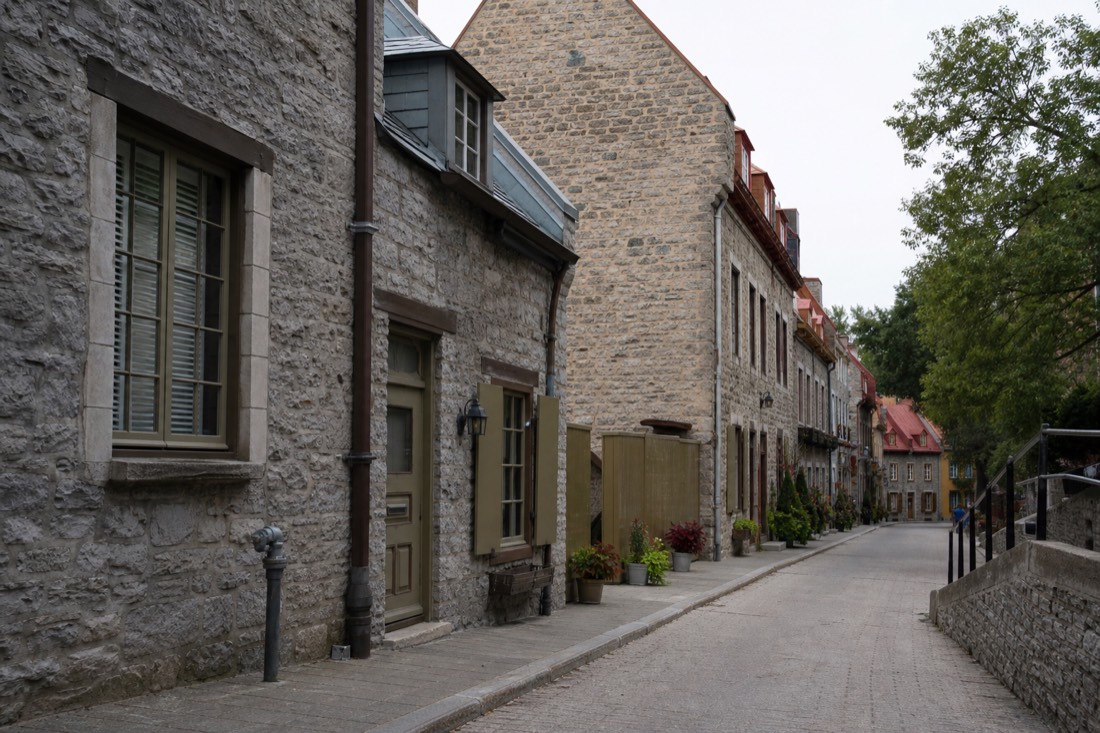
You will hear the superlative version on this street daily, from guides, from blogs, from a plaque somebody half-remembers. When I go looking for the source, what I find on the official page for Petit Champlain is the careful wording: one of the oldest commercial streets on the continent. That is a real claim and a defensible one. "The oldest" is a claim nobody has shown me the paperwork for, and a guide who inflates the easy facts should not be trusted with the hard ones.
The same caution applies to the counts you will read online. The cooperative publishes "more than 40 stores"; it does not publish a breakdown of how many are boutiques and how many are restaurants. Any article giving you an exact split of shops versus places to eat made that number up, and once you notice how often those numbers appear you start seeing the pattern everywhere.
None of which makes the street less remarkable. A merchant lane at the base of a cliff, rebuilt after fire and near-demolition, then bought and held collectively by the people trading in it, is a better story than a superlative. Walk up to the Citadelle afterwards and the contrast lands: the fortress was built to defend the colony, and this street is what the colony actually was, people selling things to each other under a rock.
How long do you need on rue du Petit-Champlain?
Forty-five minutes to an hour if you intend to go into shops, which most people do. The street itself is only 0.26 km, walkable in four or five minutes, but the doorways slow everyone down. Budget more in December, when the lights and the window displays stop people every few metres.Is Petit Champlain free to visit?
Yes. It is a public pedestrian street with no ticket, no gate and no opening hours, and the Casse-Cou stairs down to it are free too. The only thing you can pay for on the way in is the funicular, at $7 one way.Can you visit Petit Champlain with a wheelchair or stroller?
Partly. The street is level once you are on it, but it is cobbled throughout, so wheels rattle and small castors struggle. Come down by the funicular or by Côte de la Montagne rather than the stairs, and give yourself more time than the distance suggests.Is Petit Champlain open in winter?
Yes, all year. The shops stay open, the decorations run from the end of November to mid-February, and the street is at its quietest and arguably its best in the cold months. Watch the stairs for ice and wear something with grip.One last piece of advice, and it is the same one I give at the top of the stairs every morning. Do not walk this street once, on your way somewhere. Walk it early, empty, when the shopkeepers are still setting out, and then again after dinner when the iron signs are throwing shadows and the cobbles are lit. Same 260 metres, two completely different streets.
Your Next Step
Choose Your Quebec Experience
General recommendation, before you add preferences. Confirm dates and participation requirements with the operator.
Have your travel date in mind? Connect Place Royale, Petit Champlain and the upper town with a licensed guide and an included funicular ride. Check the departure before arranging the rest of your day.
2 hours; meet at 112 Rue Saint-Paul and finish near City Hall. Hotel pickup is excluded.
Departure schedule from Viator; final availability and price are confirmed on Viator.
Compare Options And Fit Your Plans
Connect Place Royale, Petit Champlain and the upper town with a licensed guide and an included funicular ride. 2 hours; meet at 112 Rue Saint-Paul and finish near City Hall. Hotel pickup is excluded.
Combine guided Lower Town stories with a round-trip ferry crossing and views from Lévis. 2 hours in English or French; meet at the Wolfe-Montcalm Monument, 7 Rue des Carrières. Ferry fare is included; this is a walking outing with a river crossing.
Explore the decorated streets with a period-costumed guide and a small hot chocolate. 2-hour walk; choose English at booking. Market entry is free and is not the ticket being sold.
Affiliate links: we may earn a commission at no extra cost to you.