Place Royale, Quebec City: The Square Where French North America Started
One small square at the foot of the cliff, holding the spot where Quebec City began in 1608. Here is what stands on it, how to see it in half an hour, and when the light is yours.
 Written with Jean-Pierre Tremblay, Quebec City tour guide & heritage specialist
Quick answer
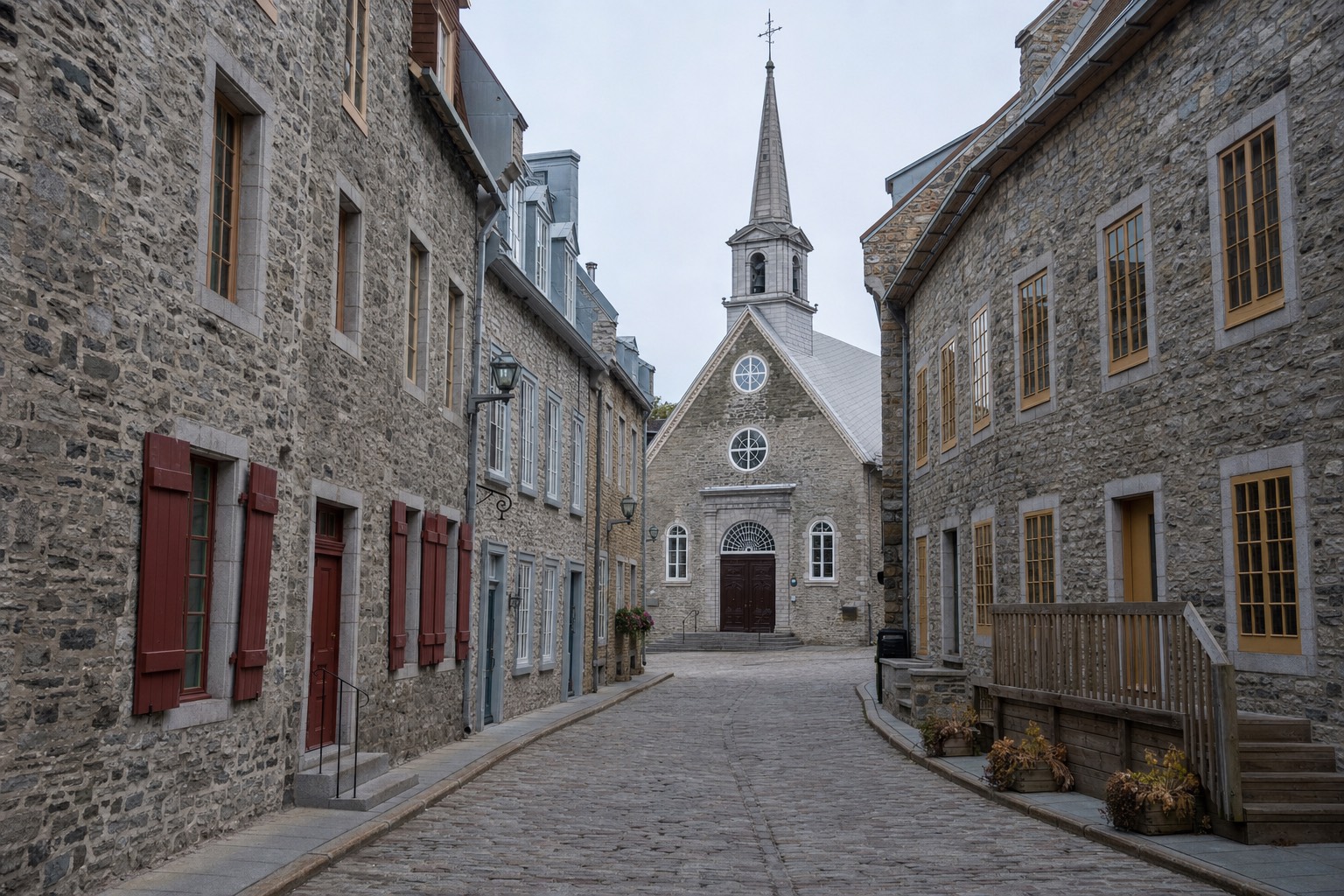
Place Royale is the cobblestone square in Old Quebec's Lower Town built on the site of Samuel de Champlain's 1608 habitation, ringed by 17th and 18th-century stone houses and anchored by Notre-Dame-des-Victoires, one of the oldest stone churches in North America. It is free, open air, walkable in 30 minutes, and included in nearly every guided walk of the old town.
The first thing I do when I bring a group into Place Royale is stop talking. You come down off the cliff, the lane narrows, and then the stone opens out into a square barely bigger than a tennis court, with a church at one end and a bronze king in the middle. People look up. Somebody always says it feels like France. I have walked more than a thousand visitors onto these cobbles since 2022, by my own count, and the pause happens nearly every time.
TL;DR: Place Royale is the birthplace of French North America, the exact ground where Champlain built his 1608 habitation. It is small, free, and open to the sky. Notre-Dame-des-Victoires holds the south side, the Fresque des Quebecois mural sits two minutes away, and the square works as the hinge of every Lower Town walk. Give it 30 minutes, go before 9 am or after 6 pm, and let the guided tours handle the storytelling if you want the layers.
What Is Place Royale In Quebec City?
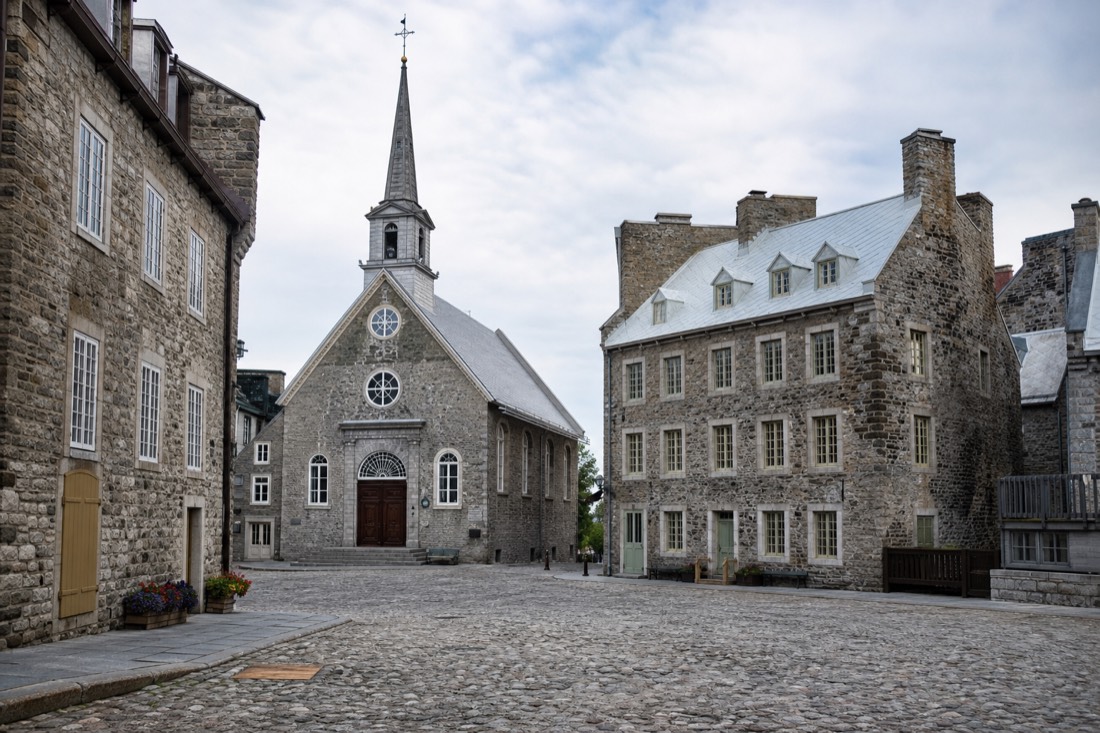
Place Royale is the small cobblestone square at the foot of the cliff in Old Quebec's Lower Town, standing on the ground where Samuel de Champlain planted his habitation in 1608. Stone merchant houses from the 17th and 18th centuries close it in on three sides, and the church of Notre-Dame-des-Victoires holds the fourth.
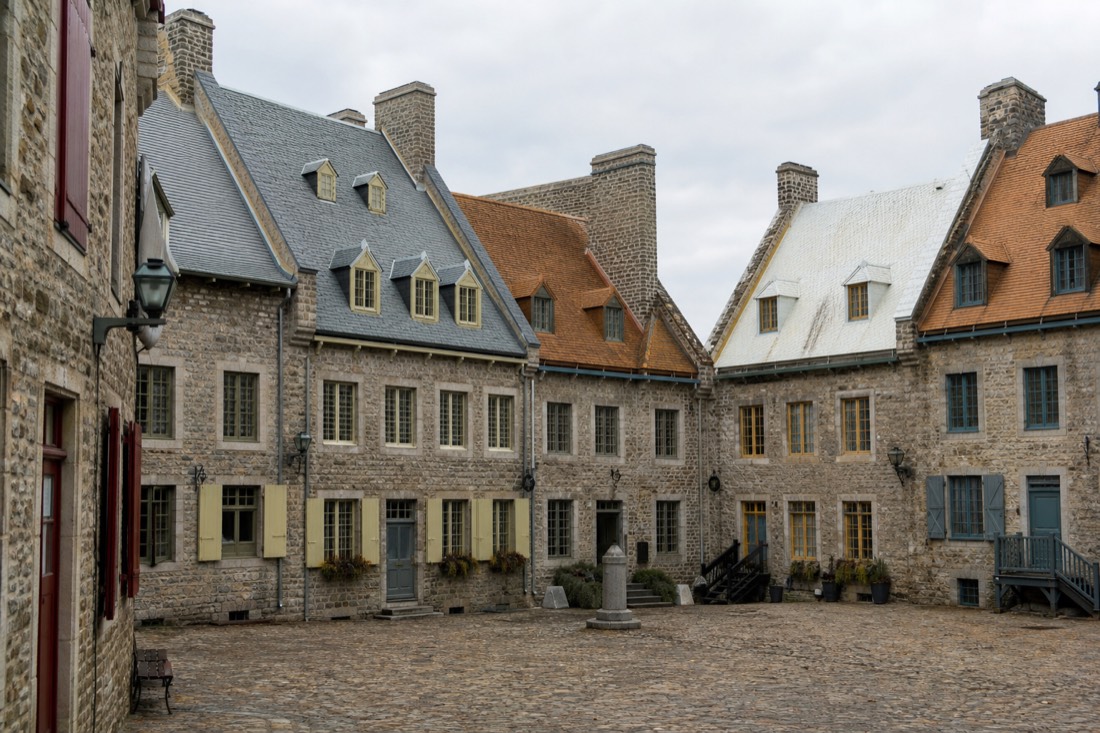
Scale surprises people. This is not a grand plaza, and it was never meant to be one: it was the market square of a fur-trading port squeezed between a cliff and a river, so it is tight, irregular, and shaped by the buildings around it rather than by any planner's compass. That tightness is exactly why it photographs well and why a guide can hold thirty people in it without shouting.
Everything worth seeing is within about two minutes' walk of the well in the middle. Here is the square laid out.
| On or beside the square | What it is | Time to give it | Cost |
|---|---|---|---|
| Notre-Dame-des-Victoires | Stone church begun in 1688 on Champlain's habitation site | 10 to 15 min | Free, donation box inside |
| Bust of Louis XIV | The bronze king at the centre, the "royale" in the name | 2 min | Free |
| Merchant houses | 17th and 18th-century facades, steep roofs, stone firewall gables | 10 min | Free, exteriors only |
| Place-Royale interpretation centre | Museum space on the square, run by the Musees de la civilisation | 30 to 45 min | Ticketed |
| Fresque des Quebecois | Trompe-l'oeil mural, 2 min away on the Cote de la Montagne side | 10 min | Free |
| Rue du Petit-Champlain | The boutique lane, one block south | 30 min | Free to walk |
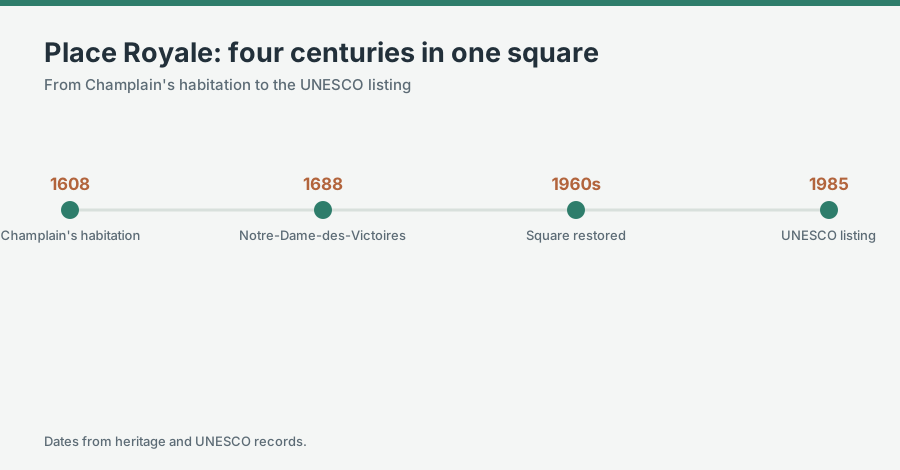
Add those up and you have a comfortable hour, or the 30-minute version further down when your day is tight. The square also sits inside the district that UNESCO inscribed in 1985, which is the formal reason the facades around you look the way they do.
Why Is Place Royale Called The Birthplace Of French North America?
Because Champlain chose this exact patch of shoreline in 1608 for his habitation, the fortified trading post that became Quebec City and, from there, New France. The permanent French presence on the continent starts on the ground you are standing on, not on the cliff above it.
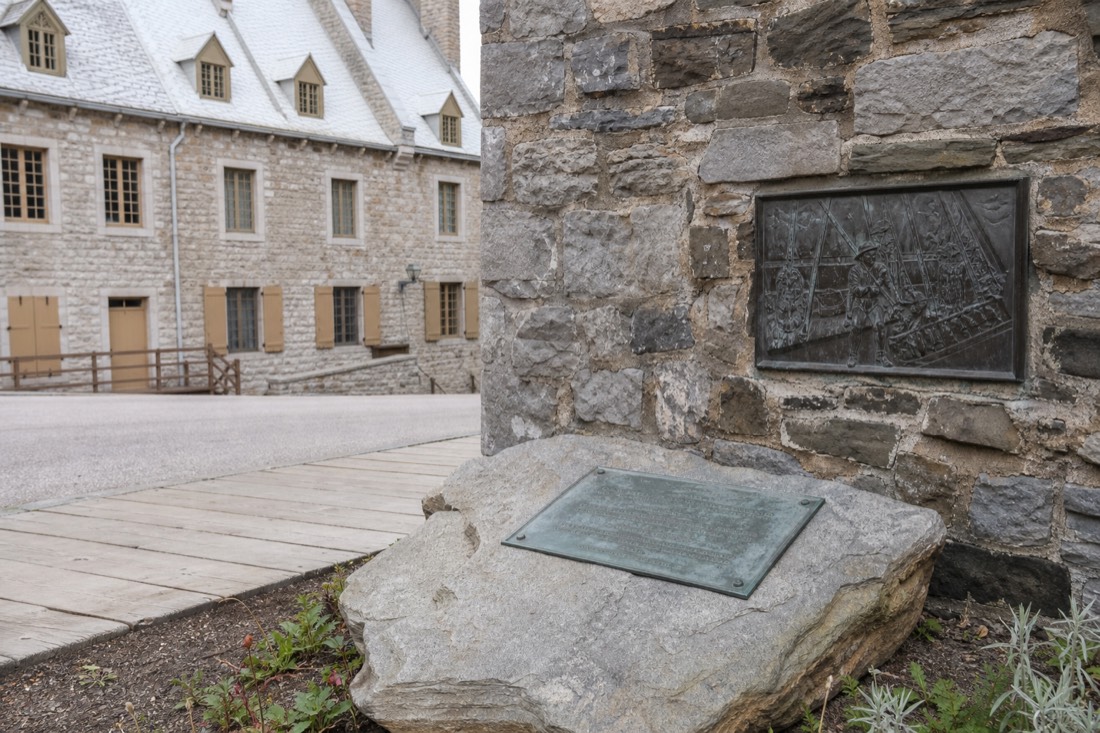
The logic was river logic. Ships could anchor here, the cliff at your back was a wall you did not have to build, and the St. Lawrence narrows at this point, which is what the Algonquian word kebec describes. Champlain's people built low, close to the water, and traded. The Upper Town came later, with the governors, the religious orders and eventually the ramparts, which is how Quebec ended up as two cities stacked on top of each other.
I say this to groups because it changes how the day reads: the Chateau Frontenac may be the postcard, but the story runs the other way. Start low, then climb. If you want that sequence as a walking plan, my free self-guided route through Old Quebec uses it, and the wider Old Quebec hub sets out how the two levels fit together. The square itself carries the whole idea in one view: water at your back, cliff overhead, a French square in between.
What Is Notre-Dame-Des-Victoires Church?
The small stone church on the square, begun in 1688 on the footprint of Champlain's habitation, and counted among the oldest stone churches in North America. Its name comes from two French escapes from British fleets, in 1690 and 1711. It is still an active parish church, and entry is free.
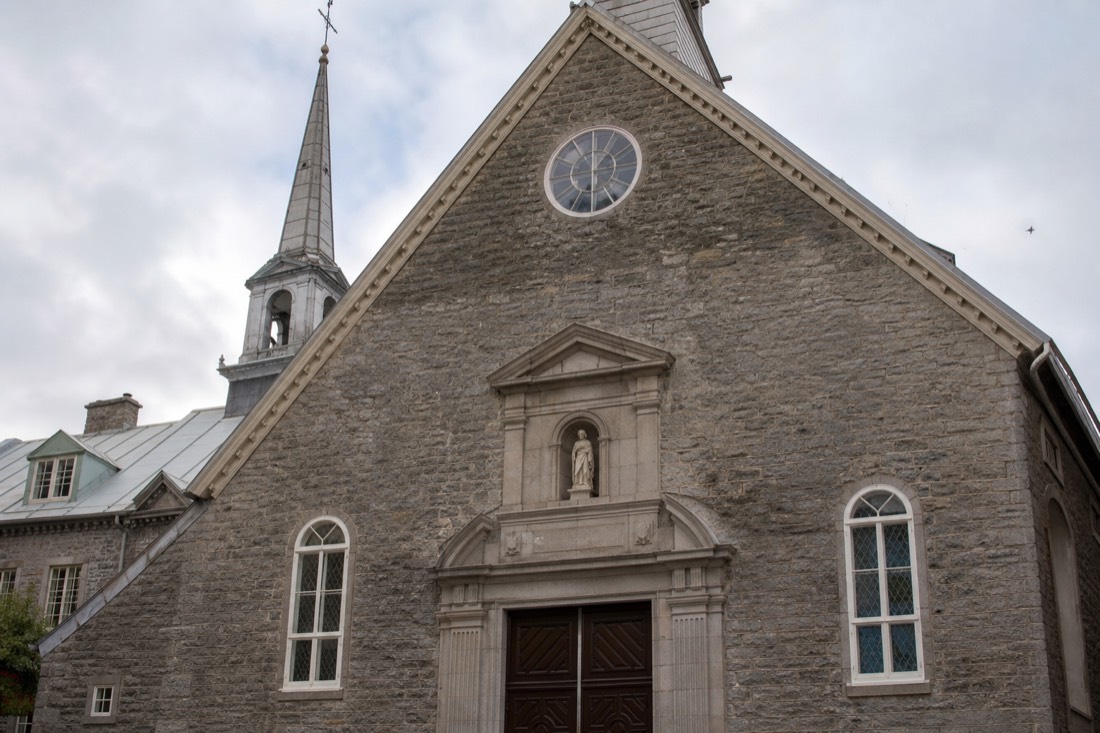
Step inside and give your eyes a minute to adjust. The interior is modest by European standards, which is the point: this was a merchants' and sailors' church, not a cathedral. Hanging above the nave is a model ship, the kind of votive offering seafarers left in thanks for a safe crossing, and it is the detail my guests remember longest.
The church has been rebuilt more than once. British guns firing across the river during the 1759 siege wrecked much of the Lower Town, this building included, and what you walk into today is the result of repair and reconstruction over centuries. That is honest history, not a flaw. For the grand version of Quebec Catholicism, with the Holy Door and the gilded interior, the Notre-Dame de Quebec basilica-cathedral is the counterpart up in the Upper Town, and seeing both in one morning shows you the gap between a port parish and a seat of the archdiocese.
Where Is The Fresque Des Quebecois Mural, And What Does It Show?
On a blank end wall a two-minute walk from the square, at the Cote de la Montagne edge of the Place-Royale district. The trompe-l'oeil fresco covers roughly 420 square metres of wall with a painted Quebec streetscape, stacking four centuries of local figures, Champlain and Jacques Cartier among them, into one facade.
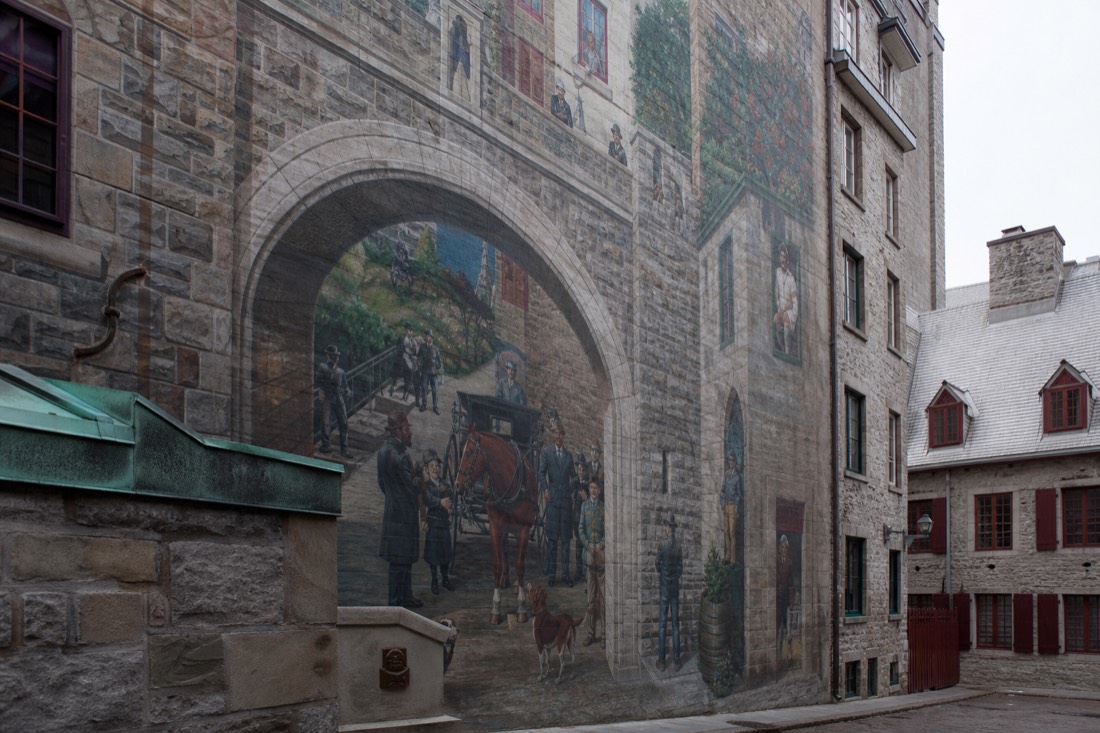
It is a magic trick played on a firewall. Painted windows sit where there are no windows, a staircase climbs a wall that has no staircase, and the seasons change as your eye moves across the surface, because each floor of the painted building is set in a different time of year. Stand back to the far side of the street before you judge it. From two metres away it is paint. From fifteen it is a building.
Groups tend to split here: half want the history quiz, half just want the photo. Both work. My tip is to come when the sun is off the wall, since direct light flattens the illusion and throws glare into every phone camera pointed at it. Cloudy days are the mural's best days, one of the few times I say that about anything in this city.
How Was Place Royale Restored To Look Like New France?
By a long public restoration campaign that began in the 1960s. The Quebec government bought and rebuilt the square's houses, stripping later alterations and returning roofs, dormers and stonework to their New France appearance. The result is real heritage fabric, carefully reconstructed, rather than a square left untouched since 1700.
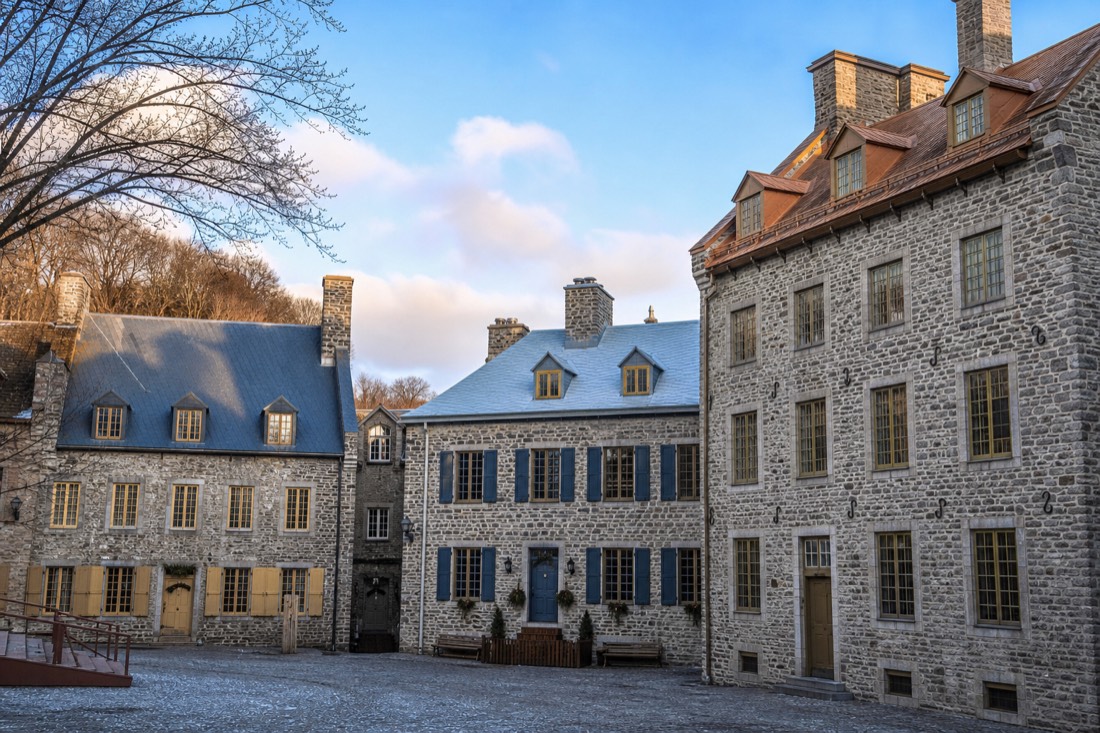
I tell people this on purpose, because the alternative is letting them believe a fairy tale and then finding out later. By the mid-20th century the Lower Town was a working, worn-down port district: warehouses, signage, later floors added on top of old walls, a fair amount of neglect. The restoration reversed much of that, and it was argued about at the time, as reconstructions always are.
What you get today is a square that reads coherently. Roof pitches match, the firewall gables between houses step up the way they did when fire was the city's great terror, and the modern street furniture is kept low and quiet. That coherence is also why film crews keep showing up. Look at the whole Lower Town and the same story repeats along the Petit Champlain lane next door, where restoration and a merchants' cooperative turned a declining street into the most photographed block in Canada.
How Do You See Place Royale In 30 Minutes?
Come down by the funicular or the Casse-Cou stairs, take the square itself first, then the church, then the mural, and finish looking back up at the cliff. Half an hour covers all four at an unhurried pace. Add 30 minutes if you go into the interpretation centre.
This is the compressed version I use when a cruise group has a hard sailing time. It works on foot in any weather, and nothing in it needs a ticket.
| Minutes | Where | What to do there |
|---|---|---|
| 0 to 3 | Arrival from the funicular or the stairs | Walk in through the lane, do not cross the square yet |
| 3 to 10 | Centre of the square | Circle the bust, read the plaques, look at roof shapes |
| 10 to 18 | Notre-Dame-des-Victoires | Go in, find the votive ship above the nave |
| 18 to 25 | Cote de la Montagne wall | The Fresque des Quebecois, viewed from across the street |
| 25 to 30 | Back at the square's river side | Look up at the cliff and the Frontenac's roofline above it |
If your legs are fresh, roll straight on: rue du Petit-Champlain starts one block south, and the Old Port quays are five minutes east. The square is also the natural first stop of a longer day out of the things to do in Quebec City list, since almost everything else in the old town is within a 15-minute walk of this spot.
Which Walking Tours Include Place Royale?
Nearly all of them. Every major guided walk of Old Quebec routes through this square, because it is where the city's origin story is physically located. The differences are group size, duration and whether the funicular ride is included, not whether you get to Place Royale.
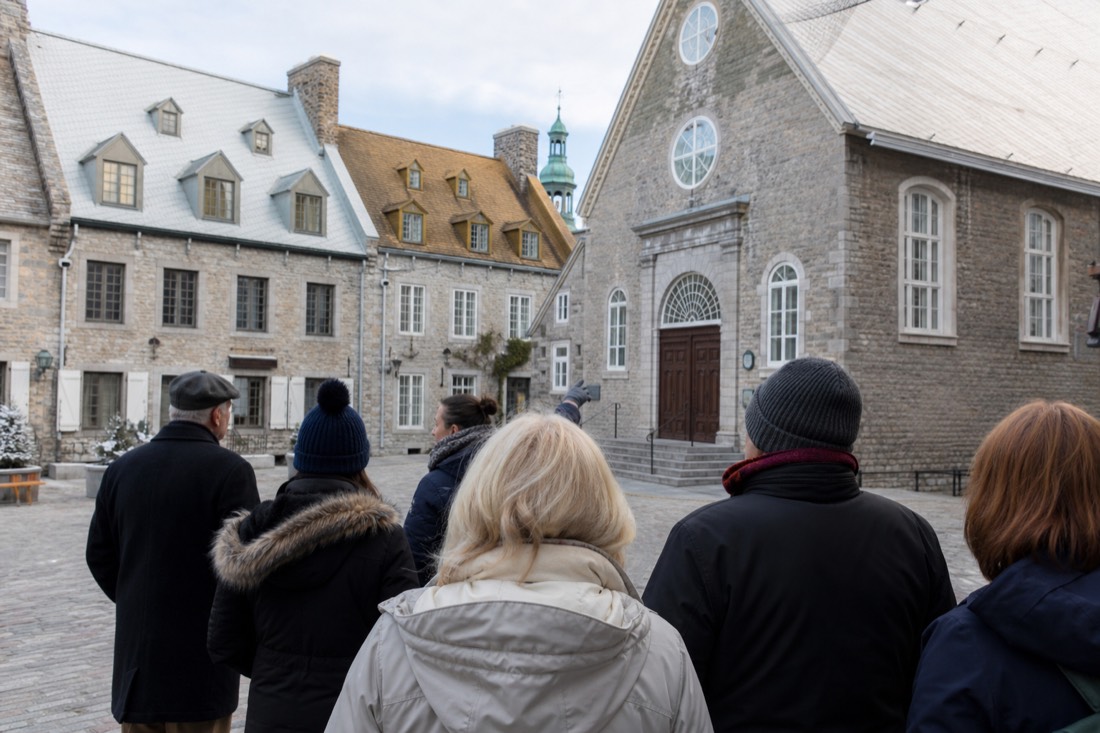
I work in this trade, so here is the plain comparison rather than a sales pitch. All four options below put you on these cobbles; the choice is really about pace and company.
| Option | Rating and reviews | From | Length | Best for |
|---|---|---|---|---|
| Classique walking tour with funicular | 4.9, 1,538 Viator reviews | $41 USD | 2 h | First visits, the cliff descent handled for you |
| Tours Voir Quebec Upper and Lower Towns walk | 4.8, 4,995 Viator reviews | Price on the listing | 2 h | The busiest walk in town, broad coverage |
| Urban Horizons certified local guide walk | 5.0, 158 Viator reviews | Price on the listing | 2 h 15 | Smaller sample, longer format |
| Self-guided audio tour | Newer listing | $6 USD | Your own pace | Independent walkers who still want narration |
The Classique walk is the one I point most first-timers toward, mainly because it folds the funicular into the ticket and lands you in the Lower Town without arguing with the Casse-Cou stairs. Compare the full field on the walking tours page, and when you have your date, check live availability & prices on Viator before the morning departures fill.
There is also a food angle. Several of the tasting walks work these same lanes between the square and the Old Port, so if you would rather learn the district over cheese and cider than over dates, the food tours page covers those. The official city tourism site keeps its own overview of guided tours if you want to cross-check what is running this season.
How Do You Get Down To Place Royale From The Château Frontenac?
Three ways off the cliff, and they are not equal. The funicular costs $7 one way and runs daily from 9 am to 9 pm, landing you two minutes from the square. The Casse-Cou stairs are free and count 59 steps. Côte de la Montagne is the long road grade, and the only route down without steps.
Guests ask me this at the top of the terrace every working day, usually while looking over the railing at a drop they had not budgeted for. The honest answer depends on knees, weather and how much of a hurry you are in. The funicular is the one I put families and anyone carrying a bag into: the glass car does the descent in under two minutes and the view on the way down is part of what you paid for. The stairs are quicker in dry weather and free forever, but they are steep, and the city's oldest stairway was built for porters hauling goods off boats rather than for people in holiday footwear.
Côte de la Montagne is the route almost nobody uses and the one that saves the day for a fair number of visitors. It is the old cart road, a steady curved ramp with no steps anywhere on it, which makes it the answer for strollers, wheeled luggage and anyone whose descent plan has to avoid stairs entirely. It takes longer. It also passes the Fresque des Québécois, so the detour pays you back.
| Route down | What it is | Cost | My time allowance | Watch for |
|---|---|---|---|---|
| Funicular from Dufferin Terrace | Glass car down the cliff face, 9 am to 9 pm daily | $7 one way | About 10 min with the queue | Queues bunch the moment a tour group arrives |
| Escalier Casse-Cou | 59 steps, the city's oldest stairway, dated to 1635 | Free | About 8 min at a careful pace | Ice in winter, slick stone after rain |
| Côte de la Montagne | The old road ramp, steady grade, no steps at all | Free | About 15 min downhill | Narrow pavement with traffic beside it |
| Straight from the Old Port wharfs | Flat waterfront walk into Lower Town | Free | Officially described as within walking distance | Check which berth your ship is using |
Those minutes are my own planning allowances, not published times, and they assume you are stopping to look at things, because you will. If you want the same comparison for the rest of the city, including buses and parking, it sits in my getting around Quebec City guide.
What Does A Morning At Place Royale Actually Cost?
Nothing, if you want it that way. The square, the church and the mural are all free and open air. Everything else is optional and stacks in a clear ladder: $7 for the funicular ride down, a ticketed interpretation centre on the square, or a guided walk from $41 USD as listed on Viator.
The cheapest version of this visit is also a good version, which is not true of many famous places. You walk down, you stand in the square, you go into a church that has been open to sailors and merchants since 1688, you look at a painted wall, and the city has taken nothing from you but time. I send budget travellers off with exactly that plan and no guilt about it.
The ladder above it is short. Seven dollars buys you the funicular instead of the stairs, which for some visitors is the difference between doing this at all and skipping it. Six dollars buys narration on your own phone. Forty-one buys a human being who answers questions, and that is the rung most first-timers should be standing on, because the square looks like a pretty courtyard until somebody tells you what is under it.
| Line item | What it is | Price as listed |
|---|---|---|
| Place Royale itself | The open square, no gate, no closing hour | Free |
| Notre-Dame-des-Victoires | Entry to the church | Free, donation box inside |
| Fresque des Québécois | The outdoor mural, two minutes away | Free |
| Funicular, one way | Glass car up or down the cliff | $7 CAD |
| Funicular both ways | Down in the morning, up at the end | $14 CAD, or $7 if you walk one leg |
| Place-Royale interpretation centre | Museum space on the square | Ticketed, rate on the official site |
| Self-guided audio walking tour | Narration you carry, no fixed start | $6 USD as listed |
| Classique guided walk, funicular included | Two hours, both towns, live guide | $41 USD as listed |
Two of those prices are listed in US dollars on Viator and the rest in Canadian dollars, so do not add the column up and expect a clean total. Check the currency your own booking screen shows before you commit.
Is Place Royale Hard To Walk With A Stroller Or Bad Knees?
The square itself is flat and step-free, which surprises visitors who have just fought their way down the stairs. The difficulty is everything around it: cobblestones that grab small wheels, and the cliff standing between you and Upper Town. Arrive by funicular or by Côte de la Montagne and the visit is easy.
I watch this play out constantly, because Lower Town collects the people who have underestimated the terrain. The mistake is almost never the square. It is the approach. Someone comes down 59 steps with a pushchair, arrives sweating and swearing, and then discovers the flat cobbled square they wanted was reachable by a road with no steps on it the whole way.
Cobbles deserve their own warning. They are real stone, laid unevenly, and they are the surface of the entire district rather than a decorative patch in the middle. Small stroller wheels catch in the joints. Walking sticks find gaps. Anyone using a wheelchair will manage the square, since it is flat and firm, but should expect the vibration and plan a route rather than wander. In winter add ice on top of all of it, which is when I stop recommending the stairs to anyone at all.
| Element | Surface and gradient | With a stroller | With limited mobility |
|---|---|---|---|
| The square itself | Flat cobblestone, no steps | Rough ride, entirely passable | Firm and level, uneven joints |
| Escalier Casse-Cou | 59 steep steps | No | No |
| Côte de la Montagne | Road ramp, no steps | The step-free route, use it | The step-free route, use it |
| Funicular | Cliff lift, glass car, $7 one way | Ask staff at the door about folding | Confirm access with the operator before you rely on it |
| Rue du Petit-Champlain | 260 m of narrow, sloped, cobbled lane | Slow and crowded in season | Crowds are the limiting factor, not the gradient |
| Notre-Dame-des-Victoires | Church entrance off the square | Confirm on arrival | Confirm on arrival |
Nothing in that table is an operator promise. It is what I see happen on these stones week after week, and the two rows marked "confirm" are marked that way because I would rather you ask on the day than trust a page written months earlier.
When Is Place Royale Quietest, And Where Are The Best Photos?
Before 9 am and after 6 pm in summer. Mid-morning to mid-afternoon is when cruise passengers, bus groups and walking tours all converge, and the square is small enough that forty people fill it. For photos, shoot the church from the square's north-west corner and the houses from the church steps.
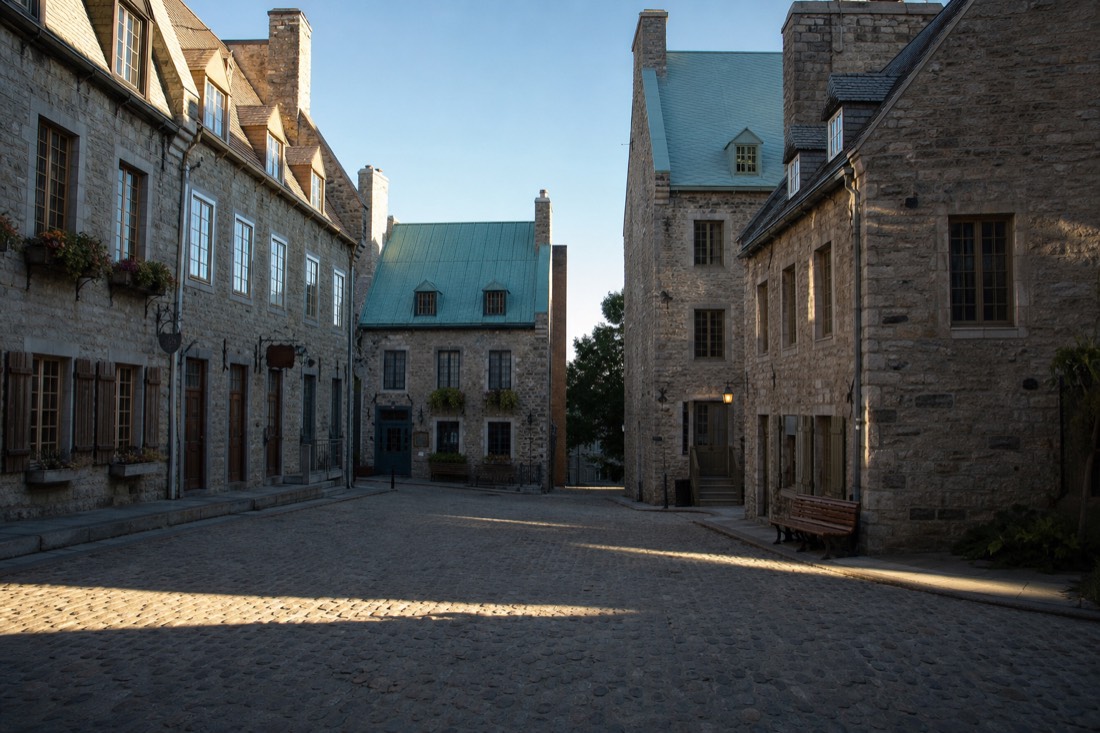
Light down here behaves oddly and it took me a season of guiding to work it out. The cliff blocks the early sun from the east side, so the square wakes up in shade, then the light drops in from above like a lid lifting, hits the church front, and slides across the facades through the afternoon. In the last hour before sunset the stone goes warm and the shadows between the houses stretch across the cobbles. That is the hour I would choose if I had one.
| Shot | Where to stand | Best time | Why |
|---|---|---|---|
| Classic church portrait | North-west corner of the square | Late afternoon | Sun on the facade, square in front of you |
| Houses and roofline | The church steps, looking back | Morning | Even shade, no glare off windows |
| Cliff and Frontenac above | River side of the square | Mid-morning | The upper town rises straight out of the frame |
| The mural, undistorted | Across the street from the wall | Overcast or shaded | Direct sun flattens the illusion |
| Empty cobbles | Anywhere in the square | Before 9 am | The tour groups have not come down yet |
Two practical notes. Winter changes the arithmetic: the square is genuinely lovely under snow and far emptier, though the cobbles ice and the light goes early. And if you want the square with a Christmas market atmosphere, that is the Lower Town's December speciality, one of several reasons the tourism board's visitor planning pages push the cold months harder than they used to. Either way, take one lap before you take one photo. The square gives more when you have already walked it once.
Your Next Step
Choose Your Quebec Experience
General recommendation, before you add preferences. Confirm dates and participation requirements with the operator.
Have your travel date in mind? Connect Place Royale, Petit Champlain and the upper town with a licensed guide and an included funicular ride. Check the departure before arranging the rest of your day.
2 hours; meet at 112 Rue Saint-Paul and finish near City Hall. Hotel pickup is excluded.
Departure schedule from Viator; final availability and price are confirmed on Viator.
Compare Options And Fit Your Plans
Connect Place Royale, Petit Champlain and the upper town with a licensed guide and an included funicular ride. 2 hours; meet at 112 Rue Saint-Paul and finish near City Hall. Hotel pickup is excluded.
Combine guided Lower Town stories with a round-trip ferry crossing and views from Lévis. 2 hours in English or French; meet at the Wolfe-Montcalm Monument, 7 Rue des Carrières. Ferry fare is included; this is a walking outing with a river crossing.
Follow a guided walking route through Old Quebec and put the streets and fortifications into historical context. Meet at the departure point on your confirmation. Allow two hours; check walking demands before booking.
Affiliate links: we may earn a commission at no extra cost to you.