Notre-Dame De Québec Basilica: The Holy Door, The Crypt, And Where The AURA Show Actually Is
The basilica is two minutes from Place d'Armes and most visitors give it four. Give it thirty and the whole colony opens under your feet.
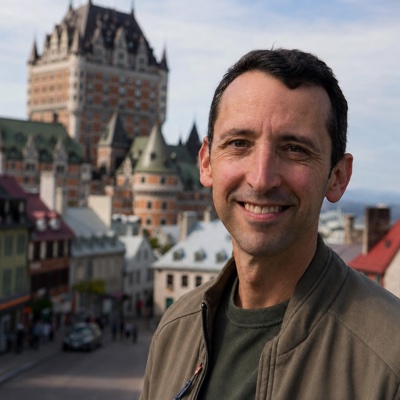 Written with Jean-Pierre Tremblay, Quebec City tour guide & heritage specialist
Quick answer
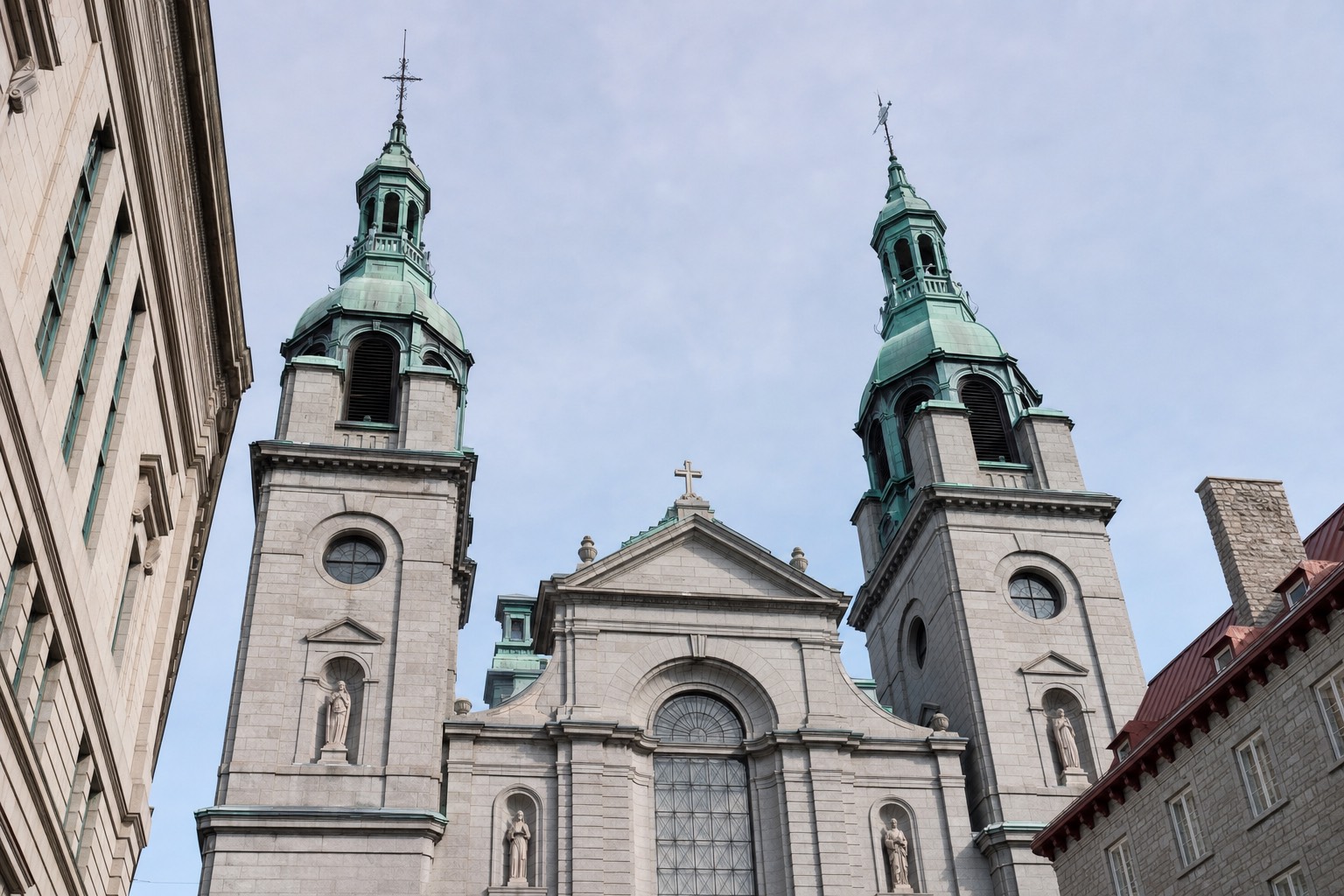
Notre-Dame de Québec Basilica-Cathedral stands on rue De Buade in Old Quebec, on a site whose first stone church was built in 1647. Its Holy Door is one of seven in the world and the only one outside Europe, and more than 900 tombs lie in the crypt below. The AURA light show is not staged here.
Rain turns the stone on rue De Buade the colour of wet slate, and that is my favourite hour to stand in front of the basilica with a group. The facade goes dark, the gulls give up on the square, and people stop taking pictures long enough to actually look. I have brought more than a thousand visitors to this doorway since 2022, by my own count, and the pattern almost never changes: four minutes outside, a photo of the towers, then off toward the funicular. That is a mistake, and this guide is my attempt to fix it.
TL;DR: The Notre-Dame de Québec Basilica-Cathedral sits a short block off Place d'Armes in Old Quebec. Its site carried a stone church as early as 1647, its Holy Door is one of only seven in the world and the sole example outside Europe, and its crypt holds more than 900 tombs including four governors of New France. The AURA immersive show that thousands of people search for here is not in this building. Montréal's Notre-Dame Basilica has one, and Québec City's own AURA production is staged at Église Saint-Roch, outside the walls.
What Is The Notre-Dame De Québec Basilica-Cathedral?
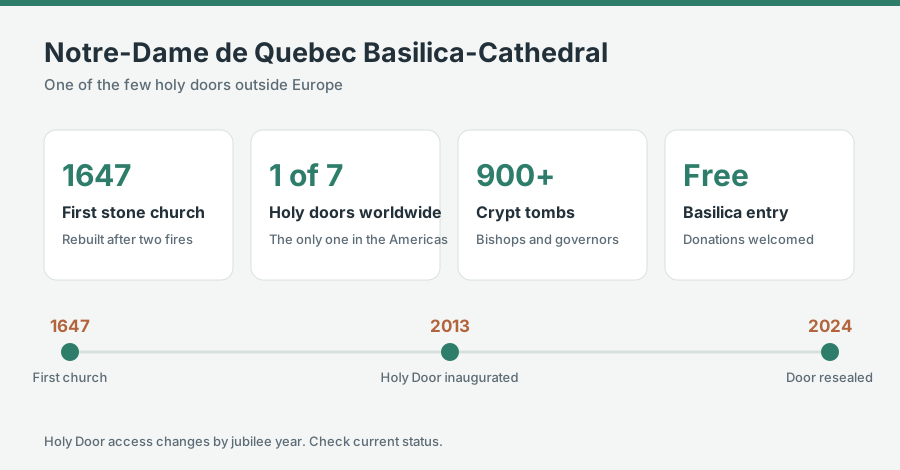
It is the cathedral church of Québec, standing in Old Quebec on a site where the first stone church went up in 1647. Two features set it apart from every other church in the old town: a Holy Door, one of seven in the world and the only one outside Europe, and a crypt holding more than 900 tombs.
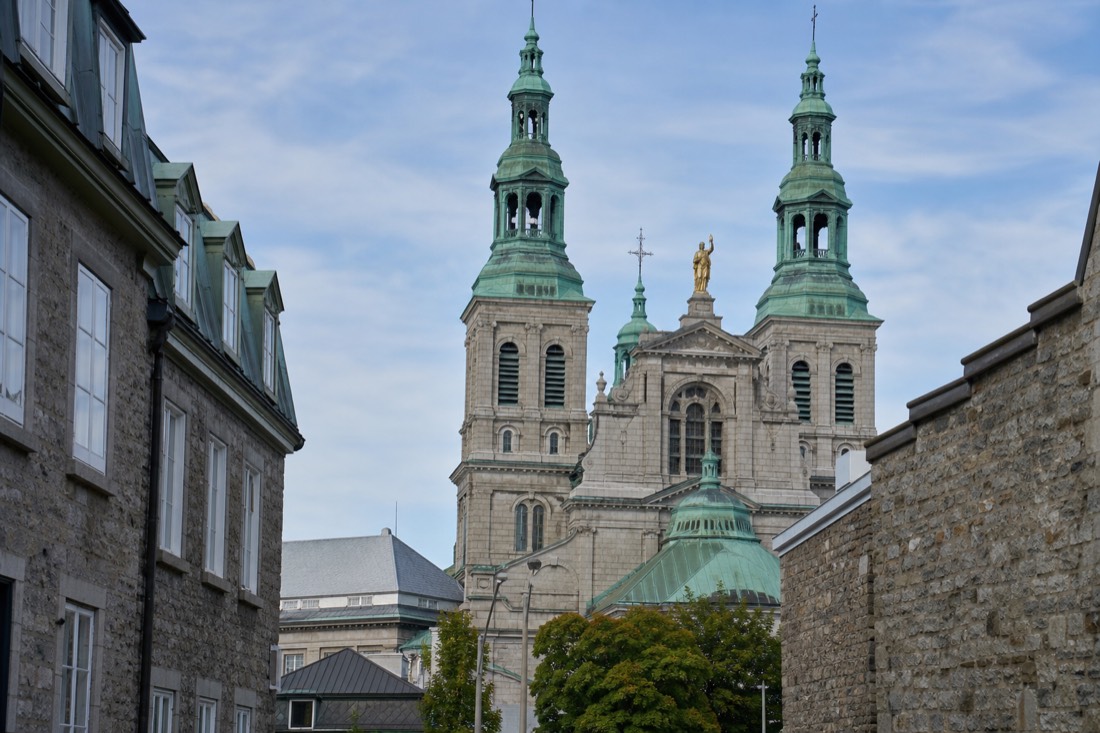
The building you photograph today is not the building of 1647, and nobody pretends otherwise. Fire, siege and rebuilding have worked this corner repeatedly. What survives is the site: a continuous line of worship on one plot of ground going back to a stone church raised in the earliest years of the colony, when the settlement around it was a few hundred people clinging to a cliff.
That continuity is why the basilica reads differently from the postcard landmarks along the terrace. The Château Frontenac is a hotel from the 1890s doing an excellent impression of a castle. This is the older thing, plainer from the street, and considerably stranger once you know what is underneath it. Visitors who walk the whole Old Quebec district usually pass it twice without registering that they have.
Is There An AURA Light Show Inside Notre-Dame De Québec?
Not in this basilica. AURA, the Moment Factory immersive production, plays inside Montréal's Notre-Dame Basilica, roughly three hours west. Québec City's own AURA experience is staged at Église Saint-Roch, in the Saint-Roch district outside the walls, not at the cathedral on rue De Buade. Check the current schedule before planning an evening.
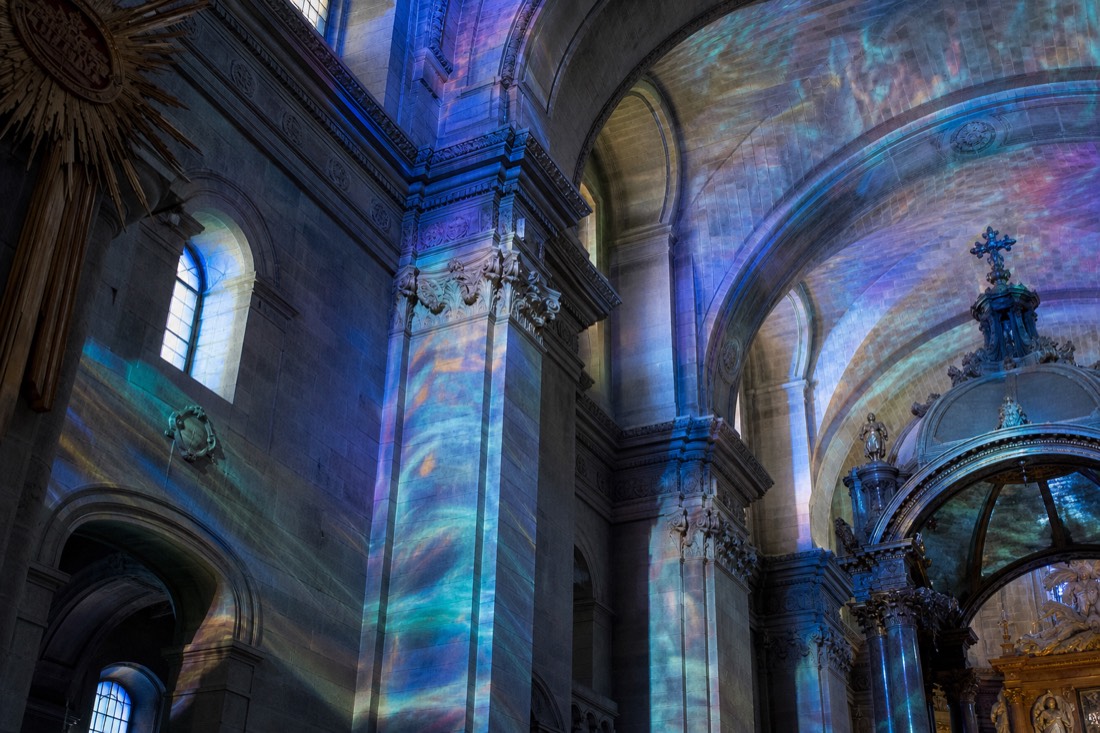
This mix-up costs people evenings, so it is worth spelling out. Two provinces, two Notre-Dames, one very famous light show. Montréal's basilica hosts the original immersive production, it is heavily marketed to Québec visitors, and the images travel far ahead of the address attached to them. Search results then fold the two cathedrals together, and travellers arrive on rue De Buade at seven in the evening looking for a ticket window that does not exist.
Québec City is not without its own version of the idea. An AURA experience runs at Église Saint-Roch, a twenty-minute walk down the hill from the old town into the Saint-Roch district, which is a different neighbourhood, a different church and a different booking page. Show runs and times change with the season, so check the current schedule on the operator's own site rather than trusting a screenshot from a travel roundup.
None of which is a reason to skip the cathedral. It simply means the reason to walk in is the building, not a projection. Nothing gets dimmed, nothing gets narrated over the top, and on a weekday morning in shoulder season you may have the nave largely to yourself.
What Does It Cost To Visit, And When Is It Open?
In four years of walking groups up rue De Buade I have never once had to send a visitor to a ticket window to step inside. It is a working parish church, so visiting hours bend around masses, services and the season. Anything ticketed, including light shows and special programming, is separate. Check the current schedule the day before.
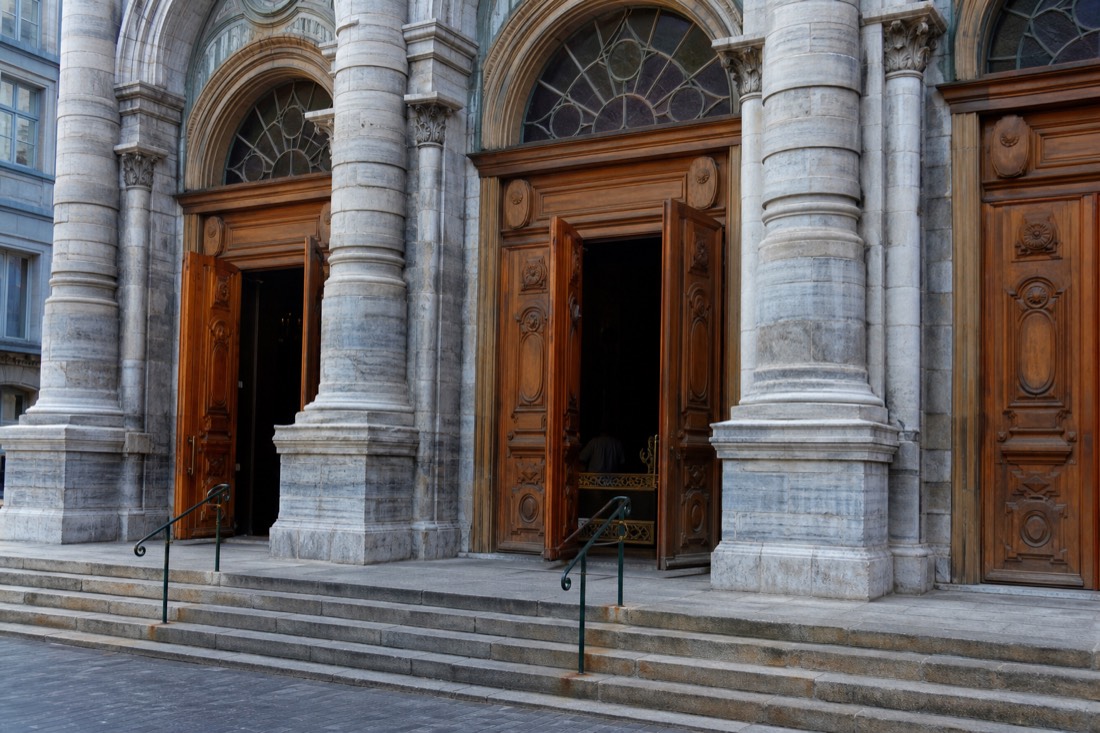
Guests arrive expecting the attraction model they have used all week: buy a timed slot, join a queue, follow a rope. Churches do not work that way, and this one least of all. It answers to a parish calendar first and to tourism second, which is a feature rather than a nuisance once you plan around it.
| What you want | Ticket needed? | When it happens | How to confirm |
|---|---|---|---|
| Step inside, sit, look up | No ticket window on the street | Daytime visiting hours, shaped by the mass schedule | The official basilica listing |
| Walk through the Holy Door while open | No | Designated holy years only; sealed again in December 2024 | Tourism office Holy Door page |
| Crypt and its tombs | Depends on what the parish is running | Not a guaranteed walk-in | Check the current schedule with the parish |
| The AURA light show | Yes, and not at this address | Montréal's basilica, or Église Saint-Roch here in Québec | The show's own booking page |
| A guided walk that includes the basilica | Yes, tour ticket | Scheduled departures, typically 2 hours | Operator listing |
Two practical notes from the pavement. Sunday mornings belong to the congregation, and a tour group shuffling through with cameras up is poor form, so I route groups elsewhere until services end. And the light inside changes the visit completely: late morning is worth planning for, when the windows do the work no projector needs to.
What Should You Look For Inside The Basilica?
Three things carry the visit. The Holy Door, inaugurated in 2013 for the parish's 350th anniversary. The floor under your shoes, which covers a crypt of more than 900 tombs. And the site itself, occupied by a stone church since 1647, older than almost anything standing above ground around it.
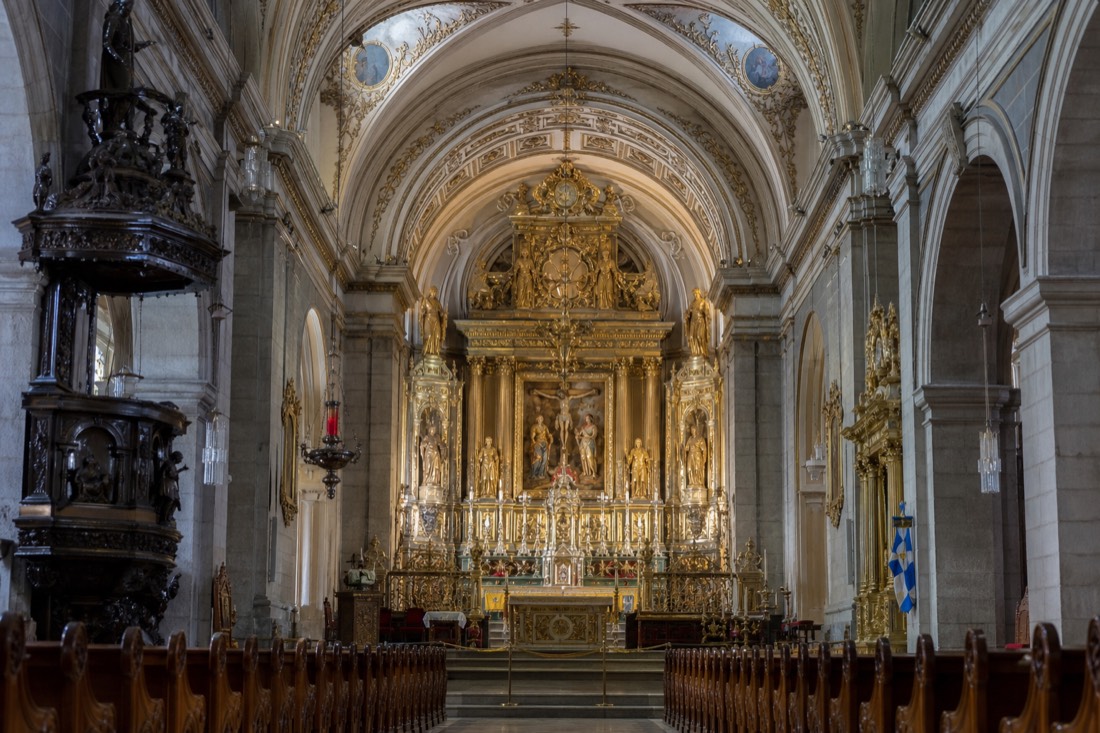
Most visitors do a slow lap of the nave, photograph the altar, and leave without finding the two features that make this church genuinely unusual on this continent. Both are easy to miss, because one is a door and the other is the ground.
| Look for | What it actually is | Why it matters |
|---|---|---|
| The Holy Door | One of seven in the world, the only one outside Europe | Every other one is on the far side of the Atlantic |
| Its 2013 inauguration | Marked the parish's 350th anniversary | The newest holy door in the set, in the oldest parish here |
| The seal | Reopened in 2024 for the diocese's 350th, sealed again that December | Passing through it is a rare, dated event, not a daily option |
| The floor of the nave | The lid of a crypt holding 900-plus tombs | You are standing on four centuries of the colony |
| Four governors of New France | Buried below, along with bishops and archbishops | The civil and religious leadership of the colony in one room |
| Thomas Baillairgé | Also interred in the crypt | A name every heritage guide in this city knows |
If you take one thing from this section, take the door. Holy doors are ceremonial thresholds opened only in designated holy years, and the fact that the entire Americas hold exactly one of them, here, on a street most cruise passengers walk down without looking up, is the sort of detail that reorders how you see the neighbourhood.
Who Is Buried In The Crypt Beneath The Church?
More than 900 tombs lie under the basilica floor. The crypt holds bishops and archbishops of Québec, Thomas Baillairgé, and four governors of New France. It is one of the densest concentrations of the colony's leadership anywhere in North America, sitting silently below a nave full of people photographing the ceiling.
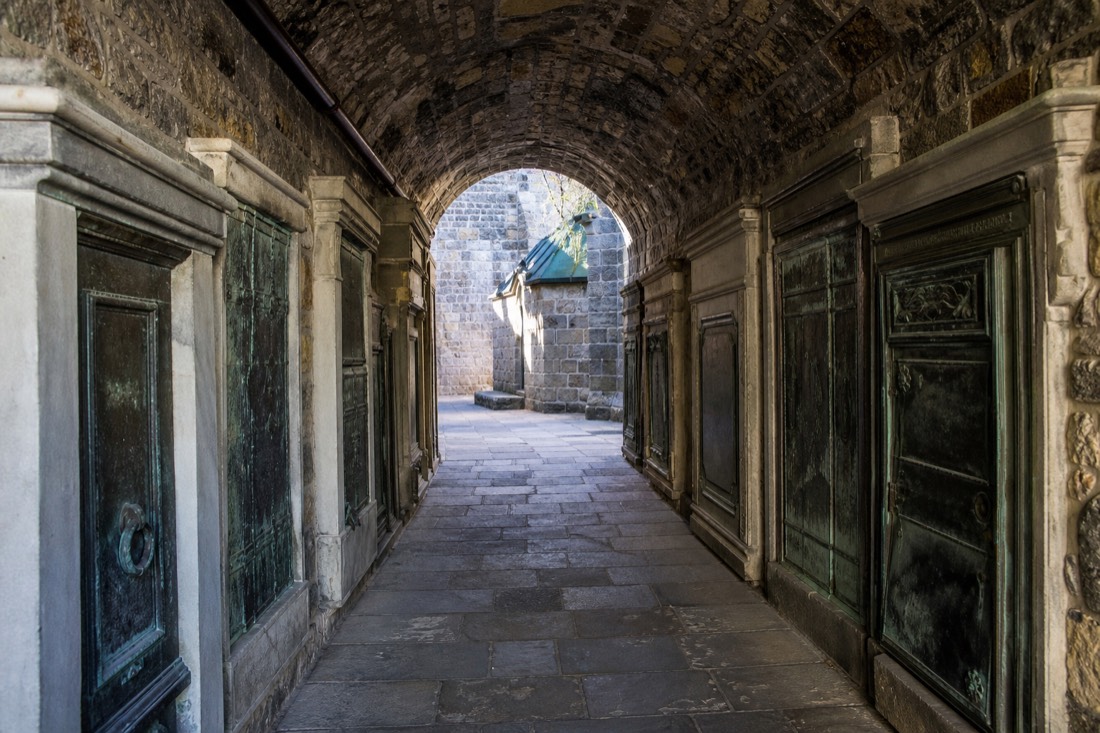
The number does the persuading here. Not a handful of founders under commemorative slabs, but more than 900 tombs accumulated across the centuries the parish has been burying its own. Governors of New France are down there. So are the bishops who ran the church across the colonial period and after it.
I tell groups to stand still in the nave for thirty seconds and think about the vertical arrangement: tour buses idling on rue De Buade, a working congregation at floor level, and beneath both, the people who governed all of this when the streets outside were mud. Old Quebec has a habit of stacking its history rather than spreading it out, which is exactly what makes the self-guided walking route through this district reward slow feet.
Where Does The Basilica Fit Into A Walking Day In Old Quebec?
Slot it between Place d'Armes and the cliff descent. It is roughly two minutes from Place d'Armes, five from Dufferin Terrace, and about ten uphill from Petit Champlain. Thirty minutes covers it properly, which makes it the natural pause between the Upper Town squares and the drop to Lower Town.
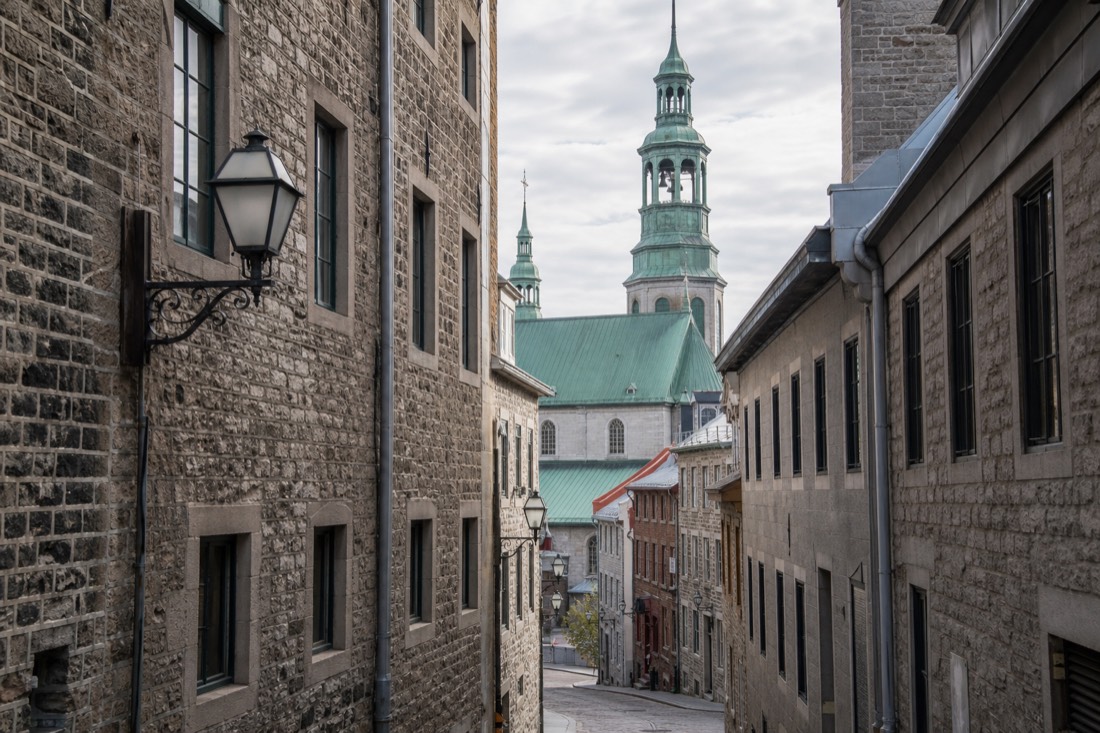
Geography does the planning for you in this district. Everything above the cliff is within a ten-minute walk of everything else above the cliff, and the basilica sits close to the middle of that circle.
| Coming from | Walking time | Pair it with |
|---|---|---|
| Place d'Armes area and rue du Trésor | 2 min | The art alley first, then the cathedral, in one loop |
| Dufferin Terrace | 5 min | River views, then thirty quiet minutes indoors |
| Petit Champlain | 10 min uphill, or funicular plus 5 | Do the basilica before you descend, not after |
| Old Port quays | 15 min, uphill | Better as a morning stop than an end-of-day climb |
| Citadelle of Quebec | 20 min | Fortress first, church second, lunch between them |
The ordering matters more than people expect. Once you go down the cliff into Lower Town, the pull of rue du Petit-Champlain is strong and the climb back up feels longer than it is, so the basilica gets postponed into nonexistence. Put it before the descent. Half an hour of stone and silence is also a decent reset before the crowds down there.
For a first visit I would rather hand you a guide than a map. A licensed guide gets you the crypt context, the door's significance and the parish's timeline in the order that makes sense, which is not the order the building presents them in. The walking tours page lays out every option in town, and for the Classique two-hour walk that folds in the funicular ride and holds 4.9 across 1,538 Viator reviews, check live availability & prices on Viator before you fix your morning. If your day is already booked around eating, the food tours run this same quarter and pass the cathedral on the way.
When Is The Basilica At Its Quietest?
Weekday mornings outside service times, and the earlier the better. The nave fills from mid-morning as cruise passengers and tour groups work their way to Place d'Armes, thins again after four, and belongs to the congregation on Sunday mornings. In shoulder season a nine o'clock weekday visit can be near silent.
Crowding in this building is not seasonal in the way people expect. It is hourly, and it is imported. The basilica sits a two-minute walk from Place d'Armes, which means it inherits whatever the square is doing, and the square runs on ship arrivals and departure times. I plan my own routes around that rhythm, and it is the single most useful thing I know about visiting here.
The other pattern is quieter and more interesting. The light inside changes what the visit is. Late morning is when the windows carry the room, and a group that arrives then stays twice as long as a group that arrives at three. Nobody puts that in an opening-hours listing, because it is not an opening-hours fact.
Sunday deserves its own line. Services come first, a working congregation is not an exhibit, and a tour group filing through with cameras raised is bad manners in any language. I route groups elsewhere until services end and come back afterwards.
| Time of day | Who is inside | Worth it for |
|---|---|---|
| Just after opening, weekday | Almost nobody, plus the parish | Silence, and the crypt context without a queue behind you |
| Mid to late morning | Steady visitors, best interior light | The Holy Door and the nave properly seen |
| Noon to 3 pm | Peak, tour groups and cruise passengers | Skip it, or accept the shuffle |
| 3 to 5 pm | Thinning, light going flat | A short stop rather than the full thirty minutes |
| Sunday morning | The congregation, rightly | Come back later, not now |
| Any weekday in shoulder season | Often near-empty at any hour | The whole visit, taken slowly |
Is The Basilica Step-Free, And Does It Work With A Stroller?
The approach is the obstacle, not the church. Rue De Buade is cobbled, and Upper Town sits on top of the cliff, so arrive from Place d'Armes on the level rather than climbing up from Petit Champlain. Confirm interior step-free access with the parish before you build a morning around it.
The mistake I watch people make is a routing mistake. They do Lower Town first, fall in love with Petit Champlain, then try to come back up to the cathedral with a stroller and a tired child. That climb is roughly ten minutes uphill, or a funicular ride plus five, and it is the point where the day tips over. Do the basilica before you descend and none of that happens.
Once you are on rue De Buade, the ground is cobbled but level and the distances are short: two minutes from Place d'Armes, five from Dufferin Terrace. Anything below the cliff adds the cliff. Anything from the Citadelle adds twenty minutes of Upper Town streets, which are pleasant and not smooth.
For the interior itself I will give you the honest answer rather than a confident one. I bring groups here constantly and I am not the right person to certify a threshold or a ramp. Ask the parish directly, ahead of the day, and ask specifically about the crypt, since access to it depends on what is running.
| Coming from | Surface and slope | Step-free? | My note |
|---|---|---|---|
| Place d'Armes | Cobbled, level, 2 min | Yes on the approach | The route I would use with wheels |
| Dufferin Terrace | Boardwalk then cobbles, 5 min | Yes on the approach | Easy, and the nicest walk of the five |
| Petit Champlain | 10 min uphill, or funicular plus 5 | Funicular at $7, then level | Do it before you go down, not after |
| Côte de la Montagne | Steady road grade, no steps | Yes, slow | The step-free way off the cliff in either direction |
| Casse-Cou stairs | 59 steps | No | Not an option with wheels or a suitcase |
| Citadelle | 20 min of Upper Town streets | Mostly, all cobbled | Fortress first, church second |
| Inside the building | Confirm with the parish | Confirm before you go | Crypt access depends on the day's programme |
What Does A Basilica Morning In Upper Town Actually Cost?
Nothing, if all you want is the door, the floor and half an hour of quiet. There is no ticket window on rue De Buade. The costs in an Upper Town morning are the things around it: the $7 funicular, a two-hour guided walk from $41 USD, and lunch wherever you end up.
This surprises people who have spent a week buying timed slots. The most historically remarkable interior in Old Quebec is the one thing on your list with no admission attached, and the money in your morning goes on movement and on context instead. That is a good trade, and it is worth seeing itemised before you assume a church visit needs a budget line.
The only genuine decision in the table below is the guided walk. Everything else is small. A licensed guide gets you the door's significance, the crypt's occupants and the parish timeline in an order the building itself does not offer, and the two-hour walks in this city are short enough that they leave your afternoon intact.
Treat the figures as the from-prices currently shown on the listings, not as a quote. Platforms move them, and the currency mix on this corridor is genuinely confusing.
| Line item | From-price | Do you need it? |
|---|---|---|
| Stepping inside the basilica | No ticket window on the street | This is the visit |
| Rue du Trésor art alley, two minutes away | Free to walk | Yes, it is on the way |
| Funicular, if you are coming up from Lower Town | $7 one way | Only if you routed the day backwards |
| Old Quebec Classique guided walk, 2 hours, funicular included | $41 USD | The best value add-on for a first visit |
| Upper and Lower Towns guided walk, 2 hours | On the listing | The alternative if the Classique time does not suit |
| Old Quebec food tour, 10+ tastings | $125 USD | A different day, not this morning |
| Lunch nearby | Varies | Eat before noon or after two |
How Much Time Should You Give It, And What Do Most People Get Wrong?
Thirty minutes, not four. The common mistakes are treating it as a photo stop from the pavement, arriving during Sunday services with cameras up, and coming here at night expecting a light show that plays in a different city. Plan it as a mid-morning stop inside your Upper Town loop.
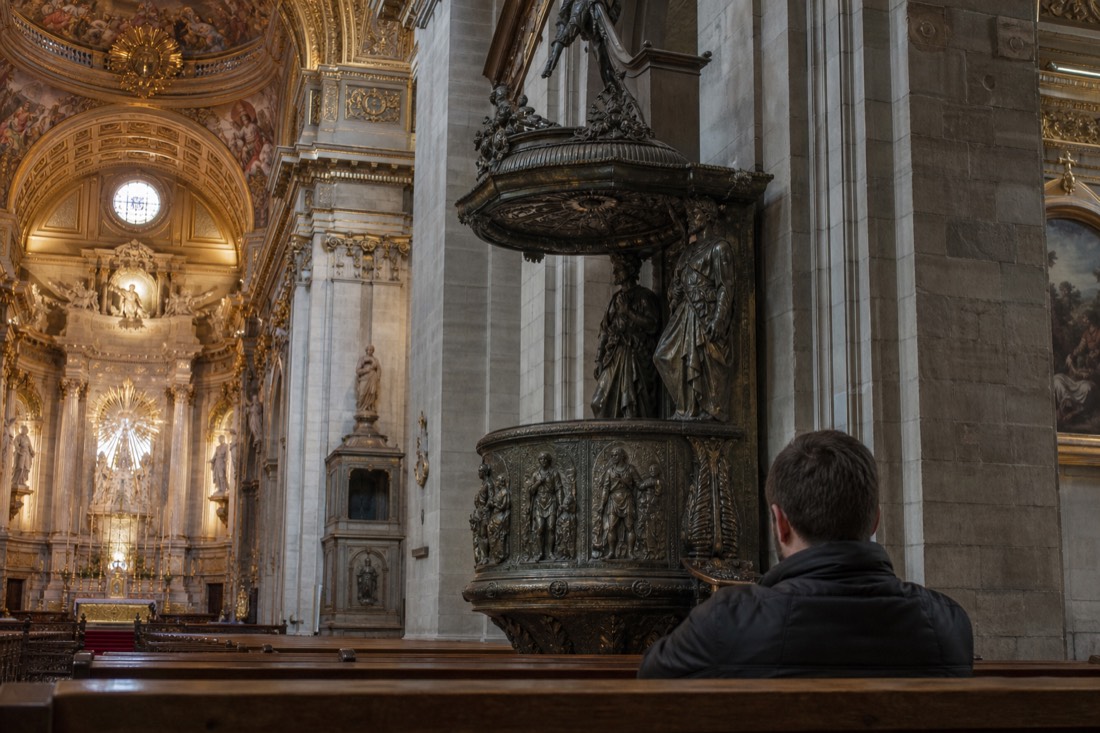
Time is the whole argument. A four-minute stop gives you a facade you could have seen on a postcard. Thirty gives you the door, the floor and the dates, and after that the rest of Old Quebec starts making a different kind of sense. Fold it into day one of a Quebec City itinerary and it does real work: it explains why the settlement grew where it did, before you spend two more days walking the results.
Is Notre-Dame de Québec the same church as Notre-Dame in Montréal?
No. They are separate basilicas in separate cities about three hours apart. Montréal's Notre-Dame Basilica hosts the AURA immersive show. Québec City's Notre-Dame de Québec Basilica-Cathedral, on rue De Buade in Old Quebec, does not.Can I see the AURA show in Quebec City?
There is an AURA experience in Québec City, staged at Église Saint-Roch in the Saint-Roch district below the old town, not at the cathedral. Runs and times change through the year, so check the current schedule on the show's own booking page.How old is the Notre-Dame de Québec Basilica?
The first stone church on the site was built in 1647. The building has been rebuilt more than once since, so the site is far older than the fabric you walk into today.What is the Holy Door, and can I walk through it?
A Holy Door is a ceremonial threshold opened only in designated holy years. Québec's is one of seven in the world and the only one outside Europe. It was inaugurated in 2013 for the parish's 350th anniversary, reopened in 2024 for the diocese's 350th, and sealed again in December 2024.Who is buried under the basilica?
More than 900 tombs fill the crypt, including bishops and archbishops of Québec, Thomas Baillairgé, and four governors of New France.Do walking tours go inside?
Coverage varies by operator and by what the parish has scheduled that day. Guided Old Quebec walks routinely stop at the basilica and work it into the route; whether the group steps inside depends on services. Ask the operator before booking if the interior matters to you.One last thing I say on the pavement every week. The most remarkable object in this church is not gilded and does not photograph well: it is a sealed door that opens roughly twice in a generation, and there is not another one on this side of the ocean. Stand in front of it for a minute. The light show can wait for another city.
Your Next Step
Choose Your Quebec Experience
General recommendation, before you add preferences. Confirm dates and participation requirements with the operator.
Have your travel date in mind? Connect Place Royale, Petit Champlain and the upper town with a licensed guide and an included funicular ride. Check the departure before arranging the rest of your day.
2 hours; meet at 112 Rue Saint-Paul and finish near City Hall. Hotel pickup is excluded.
Departure schedule from Viator; final availability and price are confirmed on Viator.
Compare Options And Fit Your Plans
Connect Place Royale, Petit Champlain and the upper town with a licensed guide and an included funicular ride. 2 hours; meet at 112 Rue Saint-Paul and finish near City Hall. Hotel pickup is excluded.
Explore the fortifications and historic gates with a licensed guide in period military costume. 2 hours in English or French; meet at the Wolfe-Montcalm Monument, 7 Rue des Carrières. An outdoor heritage circuit; Citadelle and battlefield museum entry are not included.
Combine guided Lower Town stories with a round-trip ferry crossing and views from Lévis. 2 hours in English or French; meet at the Wolfe-Montcalm Monument, 7 Rue des Carrières. Ferry fare is included; this is a walking outing with a river crossing.
Affiliate links: we may earn a commission at no extra cost to you.