Where To Eat In Quebec City: A Guide'S Honest Orientation
Old Quebec has more dining rooms than a visitor can survey in a week, and the prettiest street is not the best-fed one. Here is how a local guide sorts them: by neighbourhood, by budget, and by the kind of night you are having.
 Written with Jean-Pierre Tremblay, Quebec City tour guide & heritage specialist
Short answer
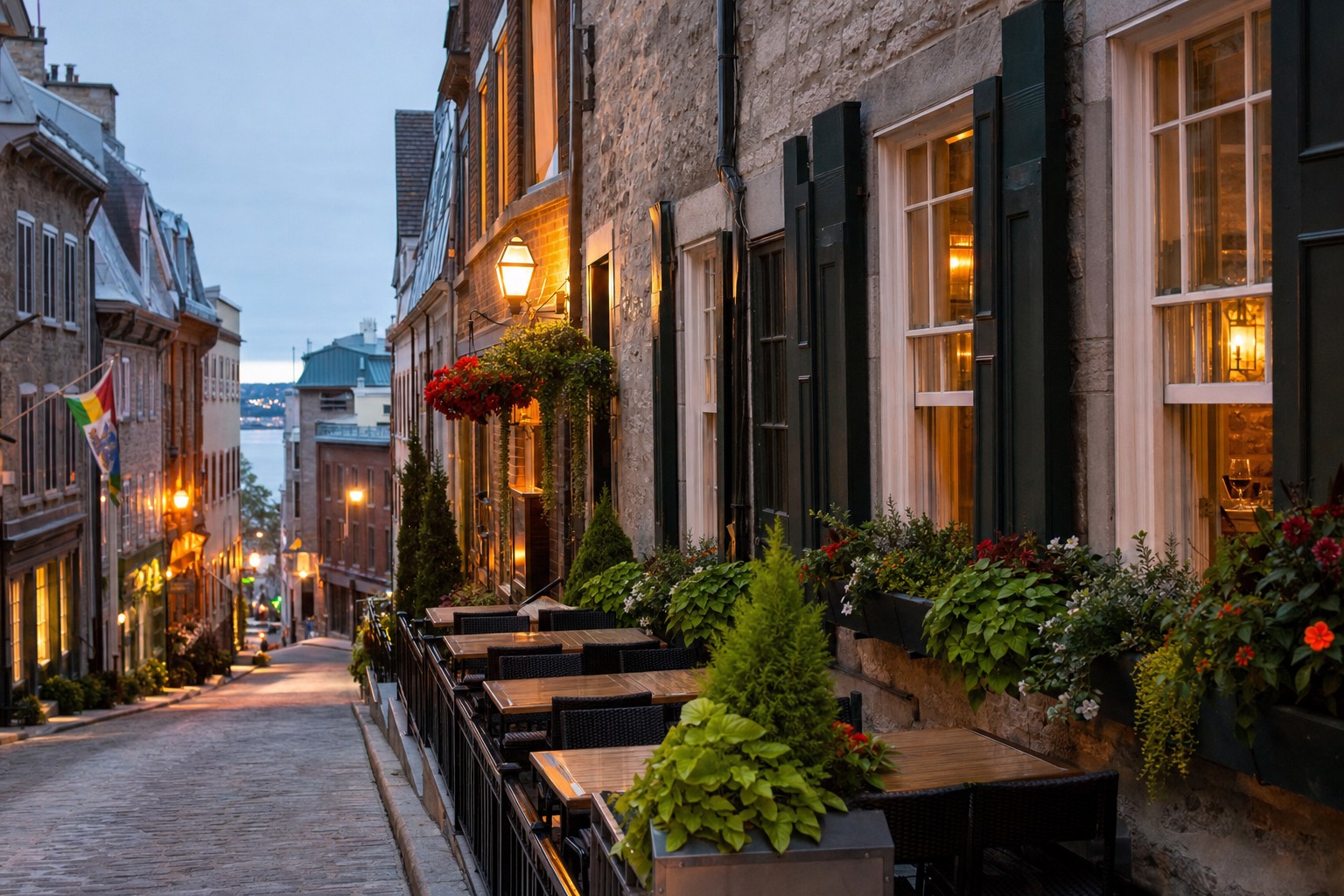
Eat in Saint-Roch for the best cooking per dollar, in Petit Champlain and Place Royale for the setting, on rue Saint-Jean for a quick casual dinner inside the walls, in the Old Port for seafood and brunch, and on Île d'Orléans for producers and cider. For the city's top kitchens, the Michelin Guide Québec 2026 selection is the shortlist worth booking.
My tours finish most days on Place Royale, and within about ninety seconds someone asks the same question. Where should we eat tonight? Not where can we eat. That answer is everywhere, on every corner, with a chalkboard out front. The real question is where a specific group should eat on a specific evening with two tired children, or a fortieth birthday, or sixty dollars between them. I have been answering it since 2022, and I get graded the next morning, because guests come back and tell me exactly how the meal went. Here is the version I give when there is time to give an honest one.
TL;DR: Old Quebec holds well over a hundred dining rooms in a few walkable blocks, so the trick is choosing a neighbourhood before you choose a restaurant. Saint-Roch has the strongest cooking for the money. Petit Champlain and Place Royale sell the setting. The Michelin Guide Québec 2026 selection gives you four names worth planning around. Tip 15 percent on the pre-tax total, book ahead for anything with a reputation, and treat a food tour as reconnaissance rather than dinner.
What Are The Best Restaurants In Quebec City?
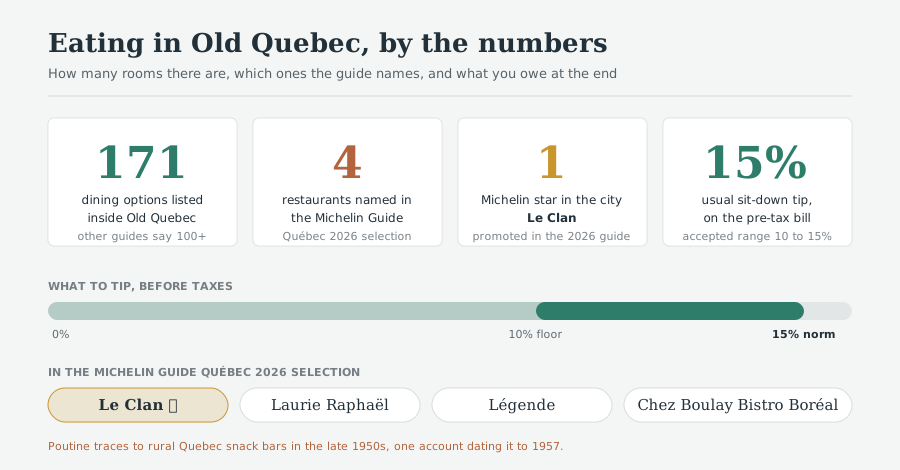
The Michelin Guide Québec 2026 selection gives the city its first widely recognised shortlist. Le Clan was promoted to one Michelin star in that edition, and Laurie Raphaël, Légende and Chez Boulay Bistro Boréal are featured alongside it. Those four names are the reliable answer when someone wants the city's serious cooking.
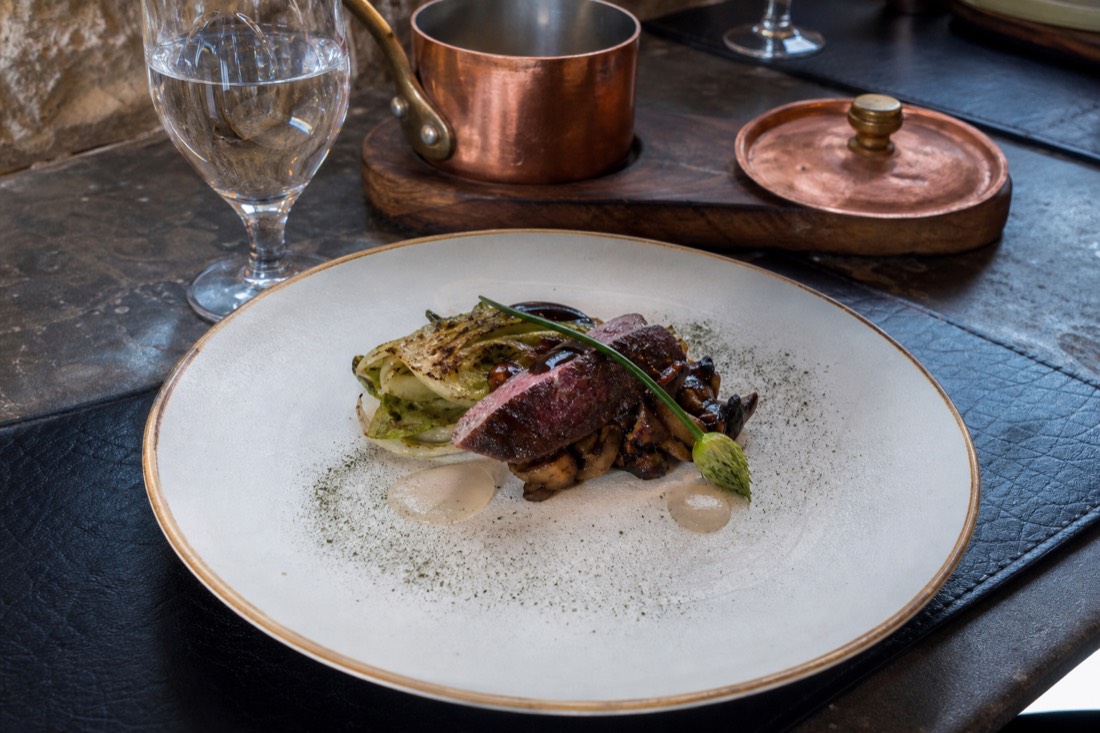
For years the honest answer to "what is the best restaurant here" was a shrug and a list of personal favourites. That changed when the Michelin Guide Québec 2026 landed and put a small group of Quebec City kitchens on an international scoreboard. Le Clan took the star. Laurie Raphaël, Légende and Chez Boulay Bistro Boréal appear in the same selection, which is not the same thing as a star but does mean inspectors ate there and thought it mattered.
What I tell guests is this: a guide listing is a floor, not a ceiling. It says the kitchen is consistent enough to survive an anonymous visit, which helps when you have one night and no local instinct. It says nothing about whether the room suits your evening. A tasting menu will take three hours and a serious share of your holiday budget, so book weeks out if that is the night you want. Otherwise keep reading. The rest of this guide is about the other four hundred meals people actually have here.
One thing the guide does capture well is the boreal turn in Quebec cooking: fir, sea buckthorn, wild mushrooms, game, the cold-climate ingredients that chefs here started foregrounding a decade ago. You will see it on menus far below the fine-dining tier, and it is the single most distinctive thing about eating in this province. I unpack the dishes themselves in the French Canadian food guide.
Where Should You Eat In Each Quebec City Neighbourhood?
Pick the neighbourhood first. Saint-Roch has the highest concentration of ambitious, fairly priced kitchens. Petit Champlain and Place Royale sell atmosphere at a premium. Rue Saint-Jean handles casual dinners inside the walls. The Old Port does seafood and brunch. Île d'Orléans is a producer trail, not a dinner destination.
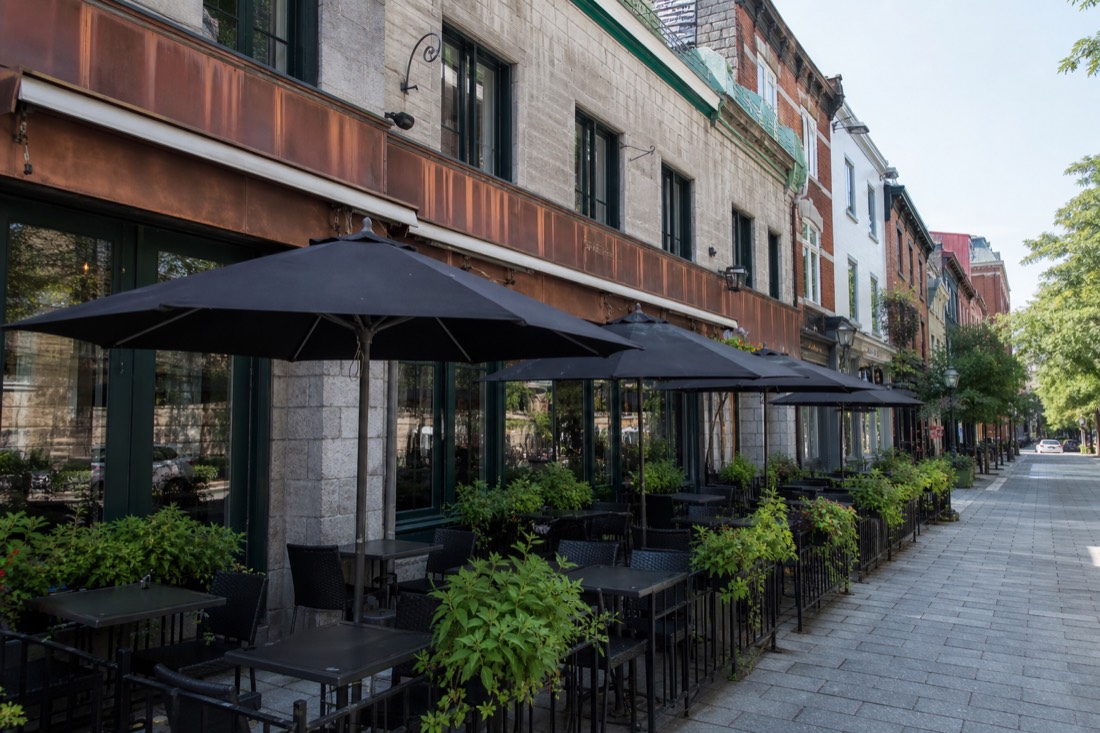
Density is the thing nobody warns you about. Restaurant directories list around 171 dining options inside Old Quebec alone, and other local guides put the figure at over a hundred within the historic quarter. That is a lot of chalkboards for an area you can cross on foot in twenty minutes. The difference between a good meal and a forgettable one is often just which street you were on when you got hungry.
| Neighbourhood | What it suits | The honest catch |
|---|---|---|
| Saint-Roch (rue Saint-Joseph) | Ambitious cooking, microbreweries, dinner with locals rather than visitors | A 20 to 30 minute walk from the walls, uphill on the way back |
| Petit Champlain and Place Royale | Setting, date nights, the photograph you came for | Highest tourist density in the city, and prices follow |
| Rue Saint-Jean, inside the walls | Casual dinners, late bites, families who do not want to travel far | Quality swings hard from door to door on the same block |
| Old Port and rue Saint-Paul | Seafood, brunch, flat streets, antique browsing between courses | Quieter in the evening once the market crowd thins |
| Montcalm and avenue Cartier | Neighbourhood bistros, wine bars, almost no tour groups | Nothing scenic about the walk over |
| Île d'Orléans | Cider, cheese, chocolate, farm stands, lunch | You need a car or a tour, and most places shut early |
My working rule after four years of sending people out: eat lunch where the view is and dinner where the cooking is. Petit Champlain at noon, with the light on the murals, is worth the markup. The same table at eight in the evening costs more and delivers less than a bistro on avenue Cartier. If you are still choosing a base for the trip, my where to stay guide covers which neighbourhoods put you within stumbling distance of good food, and the Île d'Orléans guide explains why the island works as a lunch trip rather than a dinner one.
How Much Does Dinner Cost In Quebec City?
There is no published city-wide average I would repeat, so here is the honest structure instead: a casual sit-down dinner, a mid-range bistro night and a tasting-menu evening sit in three clearly separate bands. Taxes are added at the till, and the tip goes on the pre-tax total, which catches visitors out.
I get asked for a number constantly and I refuse to invent one, because Quebec City menu prices swing with the season and with the block. What I can give you is a ladder, anchored where real prices exist: the guided food experiences sold on the booking platforms carry published per-person prices, and they bracket the restaurant tiers neatly.
| Tier | What the evening looks like | Relative band | A real anchor price |
|---|---|---|---|
| Snack bar and casse-croûte | Poutine, smoked meat, a counter, no booking | $ | Cheapest full meal in the city |
| Casual sit-down | Rue Saint-Jean bistro, brasserie, pub kitchen | $$ | Île d'Orléans Taste Trail runs from $62 per person |
| Mid-range bistro | Saint-Roch or Montcalm, wine list, two courses | $$$ | Old Quebec food tour, 10+ tastings, from $125 |
| Guided gourmet evening | Multi-course dinner walk with a guide | $$$$ | 5-course gourmet food and history walk, from $217 |
| Tasting menu, Michelin selection | Three hours, wine pairing, book weeks ahead | $$$$$ | VIP agritourism lunch tour, from $333, sits in this band |
Two practical notes that save money. First, the midday table d'hôte is the best-value meal in this city by a distance: the same kitchens that charge fine-dining prices at eight serve a set lunch for a fraction of it. Second, terrace seating in July carries an unspoken premium in every tourist quarter on earth, and Old Quebec is no exception. Eat inside and you often eat better for less.
Do You Need Reservations In Quebec City, And How Much Should You Tip?
Tipping in Quebec restaurants generally runs 10 to 15 percent of the bill before taxes, with 15 percent the common norm for sit-down service. Reservations are the bigger practical issue: anything with a reputation fills days ahead in summer and during Carnival, while casse-croûtes and pub kitchens take walk-ins all night.
The tipping convention is the one hard rule worth memorising, and the official visitor information for the province states it plainly: 10 to 15 percent before taxes, with 15 percent standard for table service. Card terminals here often suggest percentages calculated on the taxed total, which quietly inflates the number. Nobody will chase you down the street for tipping on the pre-tax line.
Reservations are where I give judgment rather than policy, because no restaurant publishes how far ahead it fills. This is my own rule of thumb, built from what guests report back:
| Situation | My rule | Why |
|---|---|---|
| Michelin-selection restaurant, any season | Book several weeks ahead | Small rooms, international demand since the 2026 guide |
| Any well-reviewed bistro, June to September | Book 2 to 4 days ahead | Peak season fills the good tables first |
| Winter Carnival and the Christmas market weeks | Book ahead, and eat early | The old town's capacity does not grow in February |
| Casual dinner inside the walls, shoulder season | Walk in | You will find a table within two blocks |
| Sunday brunch in the Old Port | Book or arrive at opening | Locals treat brunch seriously here |
| Lunch anywhere | Rarely needed | Midday is the city's quiet service |
One more thing that trips up Americans especially: many kitchens in the old town stop serving earlier than you expect, particularly outside summer. If your plan is a nine o'clock dinner in January, phone first. The official tourism site keeps current listings and hours, which beats any schedule I could freeze into a web page.
What Should You Actually Eat In Quebec City?
Poutine, obviously, but eat it at a casse-croûte rather than a tourist terrace. Beyond that: tourtière, maple in everything from pie to glazed salmon, cretons at breakfast, local ciders from Île d'Orléans, and the boreal ingredients that define modern Quebec cooking. One good meal here tastes like nowhere else in North America.
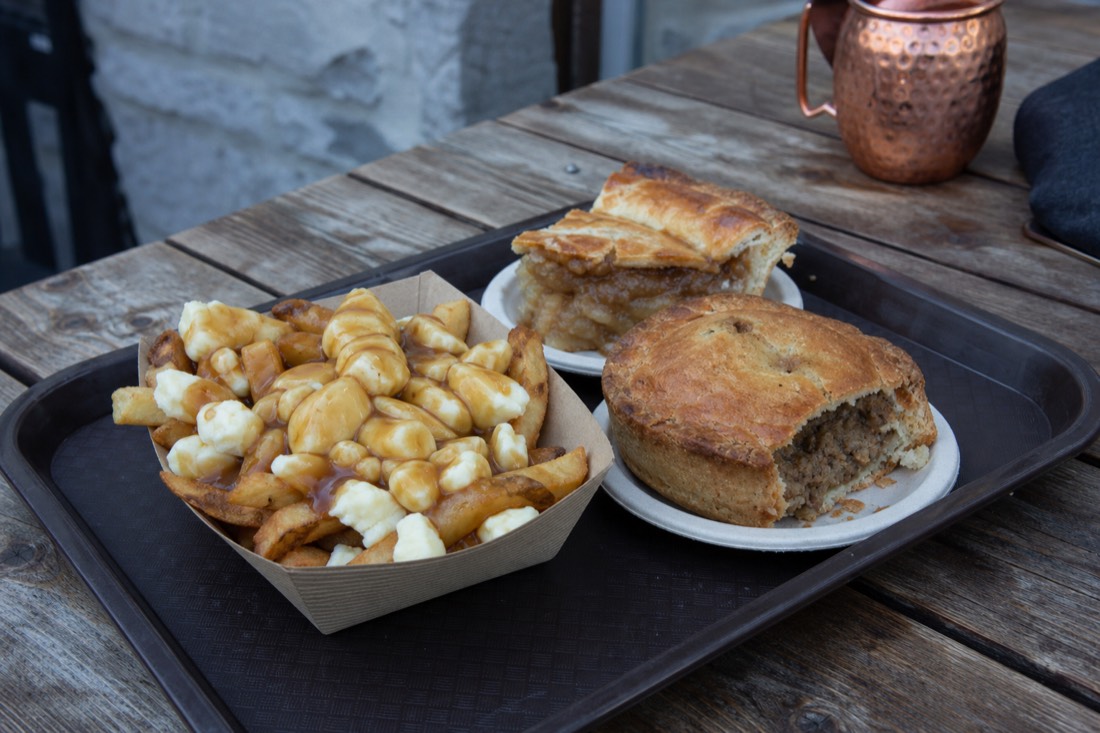
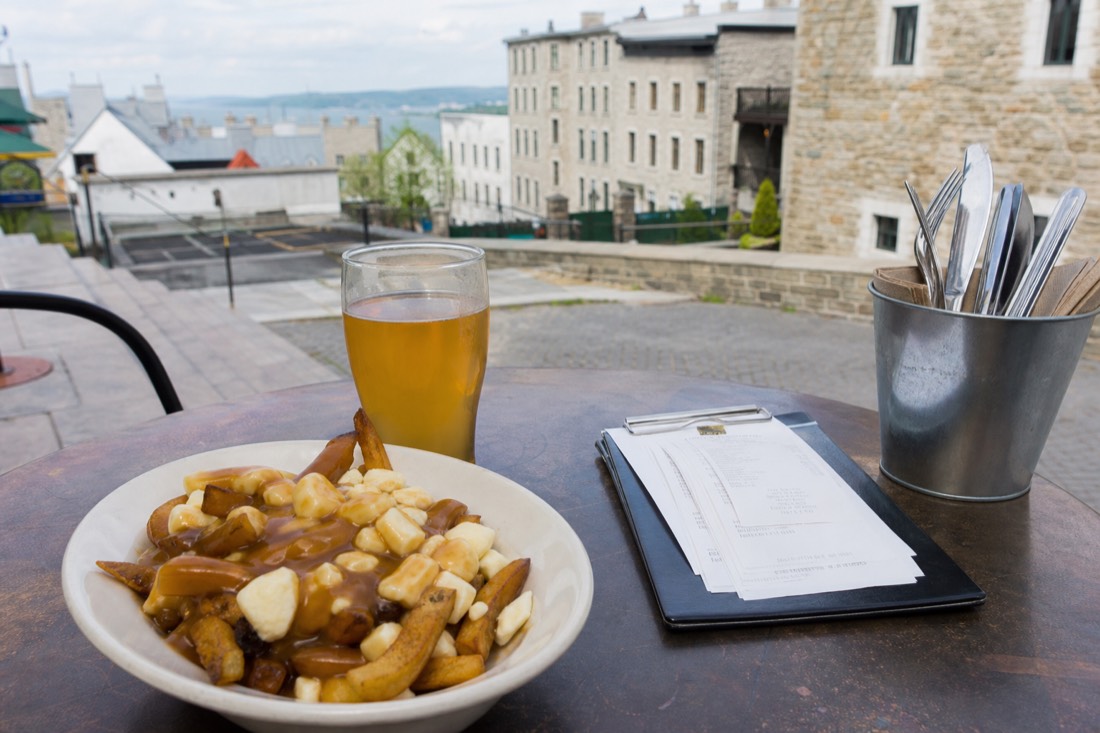
Poutine came out of rural Quebec snack bars in the late 1950s, and the most widely repeated origin story dates it to 1957 at Le Lutin qui rit in Warwick. The full history is messier and involves several towns claiming the invention, which is very Quebec. What matters for your dinner is that poutine was never restaurant food. It was late-night food, counter food, and it is still best at the places with paper napkins.
The rest of the local canon rewards curiosity. Tourtière, the spiced meat pie, comes in regional variations and belongs to winter. Maple runs deeper than the syrup bottles in the gift shops: glazes, vinaigrettes, sugar pie, and the spring sugar shacks outside the city. Cider is the island's specialty, ice cider included. The full dish-by-dish rundown is the job of the French Canadian food guide, and for a different angle, where Anthony Bourdain ate in Quebec City traces the addresses he actually filmed in.
Which Quebec City Restaurants Are In The Michelin Guide Québec 2026?
Four names carry the city in that selection. Le Clan was promoted to one Michelin star. Laurie Raphaël, Légende and Chez Boulay Bistro Boréal appear in the same 2026 selection without a star, which means inspectors ate there and judged the kitchens worth listing to an international audience.
A star and a listing are different things, and the difference is worth understanding before you spend an evening on either. The star is the guide's own top tier. Inclusion in the selection without one says the inspectors rated the kitchen highly enough to publish, which for a city that had no internationally benchmarked shortlist at all until this edition is a significant statement.
What it does not tell you is which room fits your night. A tasting menu is a three-hour commitment with a wine list attached, and if you are travelling with children or have a show to catch, the best kitchen in the city is the wrong answer. My advice to guests has not changed since the guide landed: treat these four as the shortlist for one special evening, then get on with eating everywhere else. The booking column below is my own rule of thumb, built from what guests report back, not a policy any of these restaurants publishes.
| Restaurant | Standing in the Michelin Guide Québec 2026 | My booking rule |
|---|---|---|
| Le Clan | Promoted to one Michelin star | Several weeks ahead, any season |
| Laurie Raphaël | Featured in the 2026 selection | Several weeks ahead in summer, a week or two off-peak |
| Légende | Featured in the 2026 selection | Several weeks ahead in summer, a week or two off-peak |
| Chez Boulay Bistro Boréal | Featured in the 2026 selection | A few days ahead outside peak weeks, longer in July and February |
How Does Eating In Quebec City Change With The Season?
Summer is the hardest stretch to walk into a good room and the easiest to eat outdoors. Winter shortens service hours and fills the old town twice: Carnival, February 5 to 14 in 2027, and the German Christmas Market, November 19 to December 23 in 2026, with 125 exhibitors across five free sites.
Dining here is seasonal in two separate ways that visitors tend to merge. The first is supply: terraces exist from roughly late spring to early autumn and vanish entirely for the rest of the year, so the same restaurant has two different capacities depending on the month. The second is demand, and demand in this city is event-shaped rather than weather-shaped. February looks like the quietest month on a chart and contains the single busiest fortnight in the old town.
Autumn is the answer nobody asks for. Colour peaks at the end of September into early October, September room rates run roughly 35 to 40 percent below the summer peak, and the good tables are reachable a couple of days out instead of a couple of weeks. If you have flexibility, that is when I would come to eat.
| Period | What changes at the table | My move |
|---|---|---|
| June to August | Terraces open, rooms full, prices at their yearly peak | Book two to four days out, eat lunch outside and dinner inside |
| Late September into early October | Fall colour weeks, and September rates sit 35 to 40 percent below summer | The best eating month of the year here, in my view |
| November 19 to December 23, 2026 | Christmas market across five free sites, 125 exhibitors, kiosks selling bratwurst and Glühwein | Graze the market, then book anything indoors |
| February 5 to 14, 2027 | Carnival, a festival that draws nearly 400,000 visitors a year | Book ahead and eat early, or eat outside the walls |
| March to May | Sugar shack season outside the city, quiet streets in it | Walk-ins work again, midday table d'hôte at its best value |
| May to October | Cruise season, 156 calls in one recent season | Lower Town lunch gets tight from late morning |
What Time Should You Show Up For Dinner In Old Quebec?
Earlier than you think, especially outside summer. Kitchens inside the walls wind down sooner than visitors from New York or London expect, and a nine o'clock plan in January can end at a locked door. These are the service windows I plan around after four years of guiding, and I still phone ahead.
This section is judgment rather than policy, because no restaurant here publishes a "we stop cooking at" line and the ones that do change it by season. What I have is four years of guests reporting back, which is enough to spot the pattern: the city eats earlier than the tourist assumption, the midday service is the strongest value in town, and the gap between lunch and dinner is real in the smaller rooms.
The practical consequence is that a late arrival needs a plan. If your train or flight lands after eight in winter, the safe options are the casse-croûtes, the pub kitchens and the hotel bars, not the bistro you bookmarked. Phone the room in the afternoon and ask what time the kitchen closes. It is a thirty-second call that has saved more of my guests' evenings than any recommendation I have ever given.
| Service | The window I plan around | Why |
|---|---|---|
| Breakfast | From opening, before the walking tours leave | Bakeries inside the walls are the reliable early option |
| Midday table d'hôte | Roughly noon to 2 p.m. | Same kitchens, smaller bill, the best value meal in the city |
| Afternoon gap | Roughly 2 to 5 p.m. | Many dining rooms close between services; counters and cafés do not |
| Early dinner | 5:30 to 7 p.m. | Best walk-in odds of the day, and the light on the terraces in summer |
| Peak dinner | 7 to 9 p.m. | The booked-out window in July, Carnival and market weeks |
| Late dinner | After 9 p.m. | Thin outside summer. Phone first before building an evening on it |
Is A Food Tour Worth It If You Can Just Walk In Anywhere?
A food tour is not dinner and should not replace it. What it does well is compress a week of trial and error into one afternoon: ten or more tastings, a guide explaining what you are eating, and a mental map of which streets to return to alone. Book it early in the trip, not late.
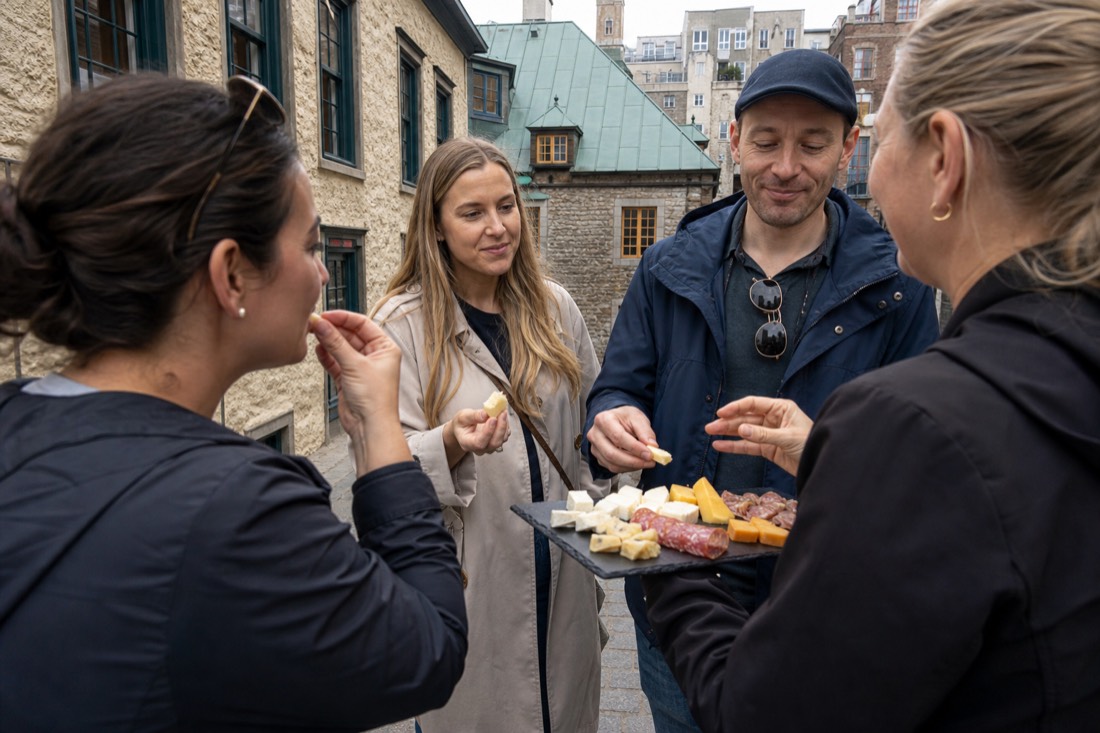
I am plainly not neutral here, since this site earns a commission when someone books, so let me be specific about when it pays. It pays on day one of a first visit, for travellers who do not read French menus comfortably and would otherwise default to whichever terrace looked busiest. It pays for anyone who wants context: why the boreal thing exists, what a casse-croûte is, which of those hundred-plus rooms are still run by the families whose names are above the door. It does not pay if you already have three nights, a shortlist and a booking.
The walking-tour version covers the old town on foot with ten or more tastings, which is enough food to stand in for lunch and dinner combined on a warm day. If that is your day one, browse the options on the food tours page and check live availability & prices on Viator before the summer dates thin out. Guests who want the same thing with more history in it usually pair it with a walking tour the following morning, when the streets are empty and the bakeries are opening.
Your Next Step
Choose Your Quebec Experience
General recommendation, before you add preferences. Confirm dates and participation requirements with the operator.
Have your travel date in mind? Make dinner part of a guided progression through Old Quebec, with five courses and history between stops. Check the departure before arranging the rest of your day.
Three-hour evening walk. An evening food walk. Review the current menu, meeting point and dietary arrangements before reserving.
Departure schedule from Viator; final availability and price are confirmed on Viator.
Compare Options And Fit Your Plans
Make dinner part of a guided progression through Old Quebec, with five courses and history between stops. Three-hour evening walk. An evening food walk. Review the current menu, meeting point and dietary arrangements before reserving.
Taste poutine, pea soup and maple treats across a guided Old Quebec food walk. 3 hours, English guide. Menus can change; dietary substitutions require advance confirmation.
Ride from Old Quebec to island producers for small local tastings. 3 hours, English or French; meet at 18 Rue des Jardins. Hotel pickup and a full meal are not included. Mobility and dietary needs require confirmation.
Affiliate links: we may earn a commission at no extra cost to you.