French-Canadian Food: What To Eat In Quebec City (Tourtière, Poutine, Maple)
A Quebec City guide's honest guide to French-Canadian food: what tourtière actually is and why two versions exist, how to judge poutine, why Quebec makes most of the world's maple syrup, and when in the year each dish is at its best.
 By Jean-Pierre Tremblay, Quebec City tour guide & heritage specialist
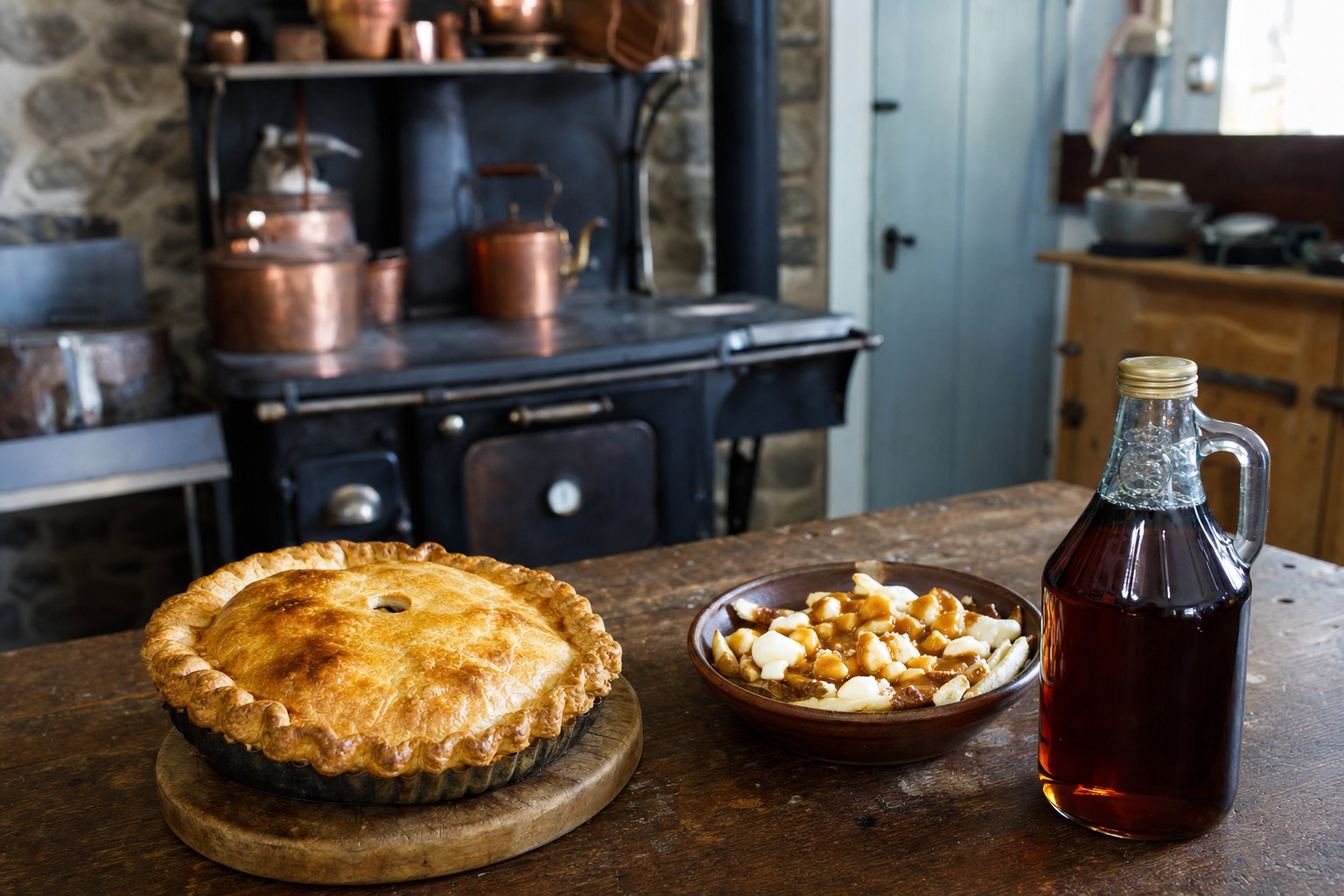
My mother puts clove in her tourtière and refuses to discuss it. Every December the pie comes out of the oven at about four in the afternoon, the crust cracks when the knife goes in, and the kitchen smells of pork fat and warm spice for the rest of the night. That pie is where I would start any visitor's education in French-Canadian food, because everything else on the table follows the same logic: cheap cuts, long cooking, a hard winter to beat.
Guests ask me for restaurant names. What they usually need first is a map of the food itself, so the menu in front of them stops looking like a foreign language. Here it is, from someone who grew up eating this.
TL;DR
- Tourtière is the anchor dish, a Quebec meat pie going back as early as the 1600s, and it splits into a shallow pork-filled pie and the deep-dish cubed-meat Tourtière du Lac-Saint-Jean from the Saguenay region.
- Poutine was invented in 1957 in Warwick, Quebec, when Fernand Lachance dropped cheese curds onto fries at Le Lutin qui rit. Judge a plate on curd squeak and gravy heat, not on the topping list.
- Quebec produced 90.0% of Canada's maple syrup in 2025, 17.0 million gallons, and close to 72% of the world's supply.
- Cretons, a spiced pork spread, goes on toast at breakfast. Pouding chômeur, born in the 1930s during the Great Depression, closes dinner.
- To taste the range in one afternoon, the Old Quebec City Food Tour runs 4.9 across 1,607 Viator reviews at $125 with 10 or more tastings.
What Is French-Canadian Food, Actually?
French-Canadian food is farm-and-winter cooking: pork, potatoes, root vegetables, game, dairy and maple, cooked slowly and served hot. The techniques arrived from 17th-century France. The ingredients are whatever survives a Quebec January in a cold cellar. Tourtière, poutine, cretons, baked beans and pea soup form the core.
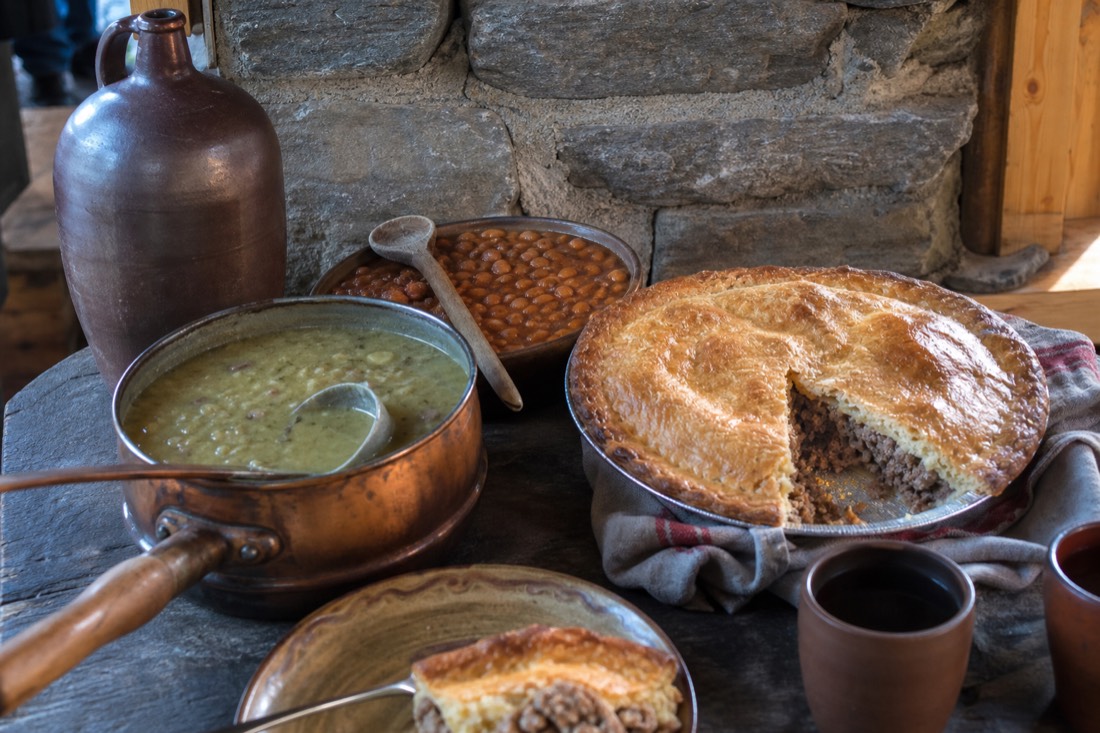
Nothing here was designed to impress you. It was designed to keep a family working through February, which is why the flavours run to fat, salt, spice and sugar rather than delicacy. Once you accept that, the menus make sense. The official tourism office leans on the same canon when it talks about the city's tables, and the dishes below are what you will meet again and again inside the walls.
| Dish | What it is | When it is eaten | Where you meet it in Quebec City |
|---|---|---|---|
| Tourtière | Spiced meat pie, pork or a game blend, under pastry | Christmas, réveillon, all winter | Traditional dining rooms in the old town; food tours serve a slice |
| Poutine | Fries, fresh cheese curds, hot brown gravy | Late night, after skating, any time | Casse-croûtes and pubs across Upper and Lower Town |
| Cretons | Spiced pork spread, cold, thick, on toast | Breakfast, every day | Breakfast rooms, delis, market counters |
| Fèves au lard | Slow-baked beans with salt pork and molasses | Breakfast and brunch, sugar-shack meals | Traditional Québécois menus and spring cabanes |
| Soupe aux pois | Yellow split pea soup with ham | Starter, coldest months | Classic French-Canadian restaurants inside the fortifications |
| Tarte au sucre | Shallow pastry filled with sugar or maple and cream | Dessert, holidays, all year | Bakeries, market stalls, dessert menus |
| Pouding chômeur | Cake baked under hot syrup or caramel sauce | Dessert, comfort food | Bistros and diners, most reliably in winter |
| Tire d'érable | Hot maple syrup poured on snow and rolled on a stick | Sugar season and winter festivals | Sugar shacks in spring, Carnival sites in February |
If you want the same information sorted by address and price bracket rather than by dish, my where to eat in Quebec City guide does that job.
What Is Tourtière, And Why Do Two Different Versions Exist?
Tourtière is a French-Canadian meat pie from Quebec, documented as early as the 1600s. Two versions compete. The common one is a shallow pie of finely ground pork, spiced with clove and cinnamon. The other is Tourtière du Lac-Saint-Jean from the Saguenay region, a deep dish of cubed meat and potato baked for hours.
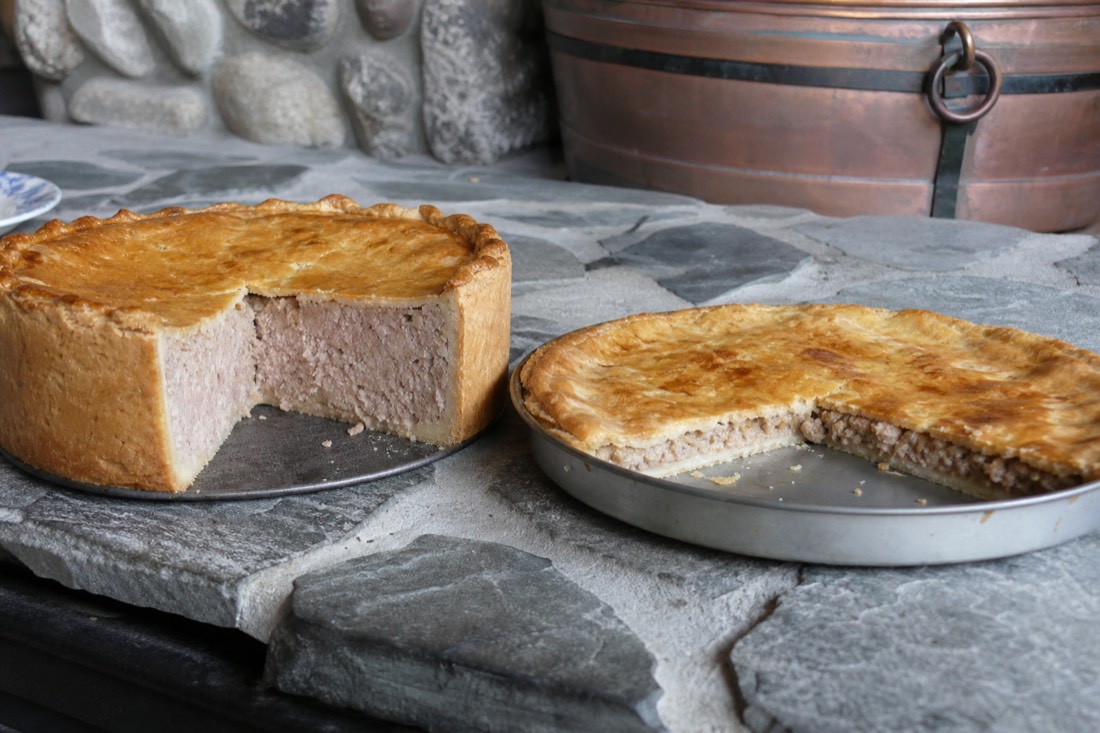
The split matters more than it sounds, because Quebec families take sides. A shallow tourtière is a slice, eaten with ketchup or a spoonful of pickled beets, and it belongs to the Christmas Eve réveillon table. The Lac-Saint-Jean version is closer to a casserole: cubes of pork, beef and often game, layered with potato, sealed under pastry and left in a slow oven most of a day. Serve one to a family raised on the other and you will get a polite silence.
Historians trace the pie back through the colony's first century, and Canadian Food Focus lays out how the regional forms drifted apart. What that history does not tell you is the practical bit: in Quebec City restaurants, a tourtière on a summer menu is usually the shallow kind, made small. The deep-dish version shows up in winter, often as a special, sometimes only around the holidays. If December is your window, the same season that fills the ovens also fills the streets, and I covered that stretch in Christmas in Quebec City.
Where Do You Find The Best Poutine In Quebec City?
Poutine was invented in 1957 in Warwick, Quebec, when Fernand Lachance added cheese curds to fries at Le Lutin qui rit. Quality has nothing to do with fancy toppings. Fresh curds that squeak against your teeth, gravy hot enough to soften them slightly, and fries that survive the sauce: that is the whole test.
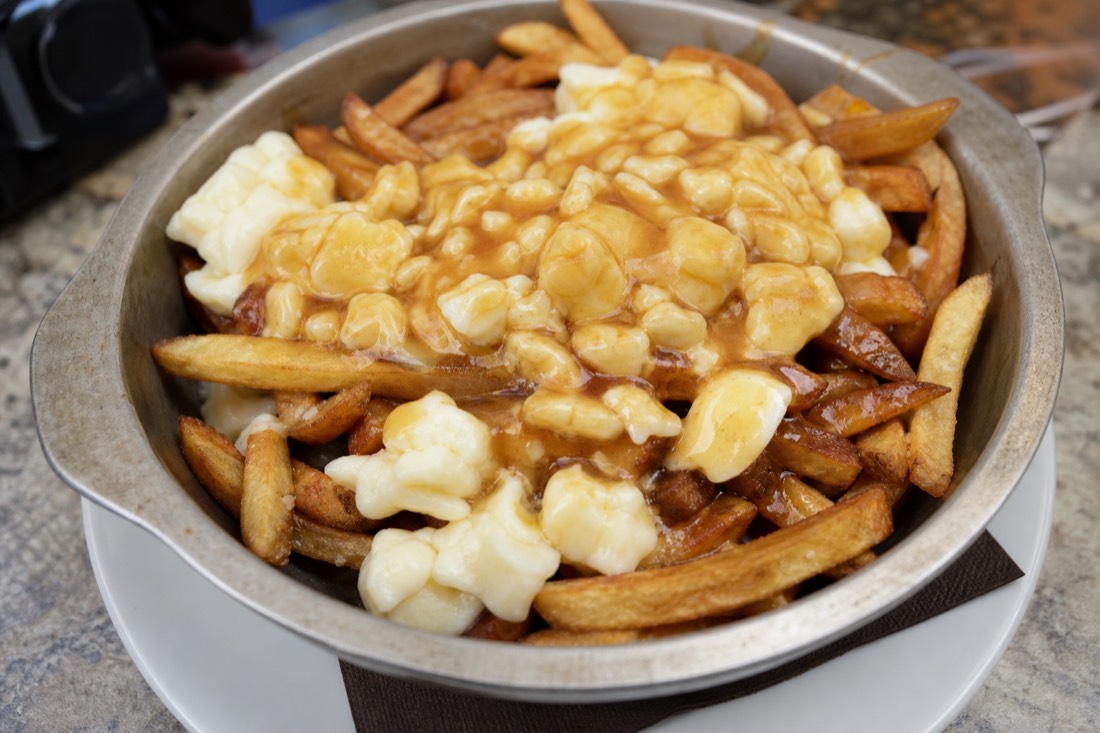
I have had the argument about the best poutine in this city more times than I can count, and I have stopped naming a single winner, because the honest answer is a method rather than an address. Order at a casse-croûte, the small counter-service places, rather than a terrace with a laminated tourist menu. Ask whether the curds are from the day. If they arrive cold and squeaking, you are in the right room. Refrigerated curds go rubbery and stop squeaking, which is why locals treat the squeak as a freshness signal rather than a texture preference.
The other thing worth knowing: the styles below are all legitimate poutine, and none of them is a tourist invention.
| Style | What is in it | Best for | Watch out for |
|---|---|---|---|
| Classique | Fries, fresh curds, brown gravy, nothing else | The baseline every other version is judged against | Pre-shredded mozzarella instead of curds |
| Italienne | Curds and fries under a meat-and-tomato sauce | Anyone who finds brown gravy too salty | The sauce cools fast, so the curds never melt |
| Galvaude | Classic poutine plus shredded chicken and green peas | A one-plate meal after a long walk | Portion size; this one defeats most people |
| Smoked meat | Classic poutine topped with Montreal-style smoked meat | Salt lovers and late nights | Doubling up on salt from gravy and cured beef |
| Duck or foie gras | Fries and curds with duck confit or gravy enriched with foie gras | Tasting the province's upmarket side | The price jump, and gravy that hides the curd |
| Breakfast | Fries, curds, gravy, egg, sometimes bacon or sausage | Recovering from a night in the Petit Champlain bars | Restaurants that use ordinary cheese to cut cost |
Why Is Maple Such A Big Deal In Quebec?
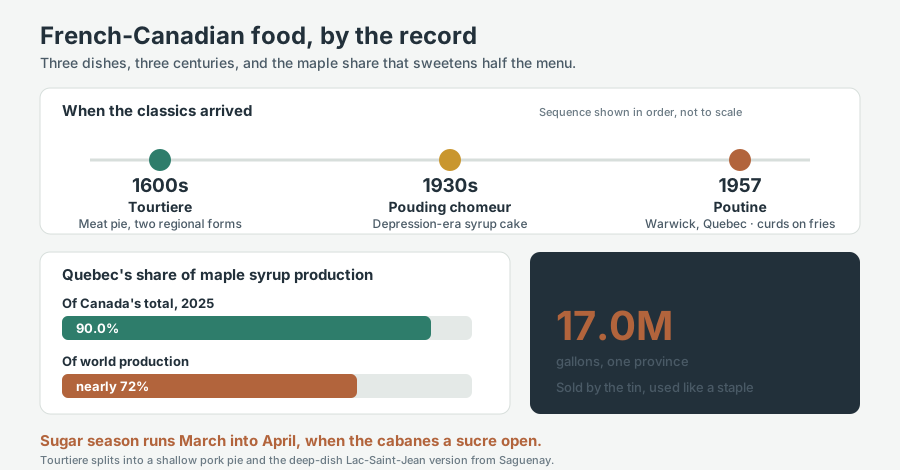
Because Quebec supplies most of the world's maple syrup. The province produced 90.0% of Canada's total in 2025, 17.0 million gallons, and close to 72% of global production. That scale turns syrup from a breakfast condiment into a local ingredient used in glazes, desserts, ham, beans and even vinaigrettes.
The numbers come from Statistics Canada, and the industry body Maple from Canada puts the province at nearly 72% of world supply. Read those two figures together and the local attitude makes sense. Syrup here is not a luxury import. It is agriculture, priced like a staple, sold in tins the size of paint cans.
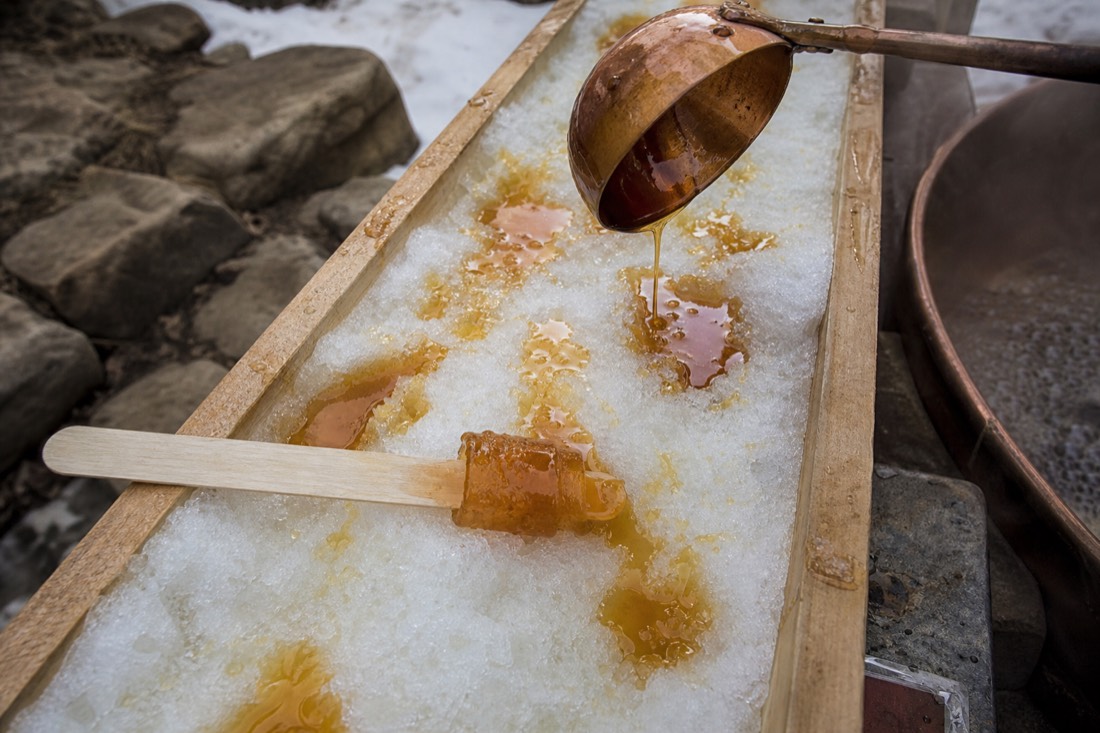
Sugar season is the part visitors miss. For a few weeks when nights still freeze and days thaw, usually March into April, the sap runs and the cabanes à sucre open for enormous communal meals: ham in syrup, beans, omelettes, pea soup, pancakes, and tire d'érable rolled on a stick out in the snow. I have been going since I was a kid, and the noise of a full sugar shack dining hall is closer to a wedding than a restaurant. Producers on Île d'Orléans and in the hills behind the city run their own versions, and outside sugar season the same maple shows up in the pastry cases year-round.
What Do Quebecers Eat For Breakfast And Dessert?
Breakfast runs to cretons, a cold spiced pork spread eaten on toast, alongside eggs, baked beans and maple. Dessert leans sweet and plain: pouding chômeur, a cake baked under hot syrup that dates to the 1930s and the Great Depression, plus sugar pie and anything maple.
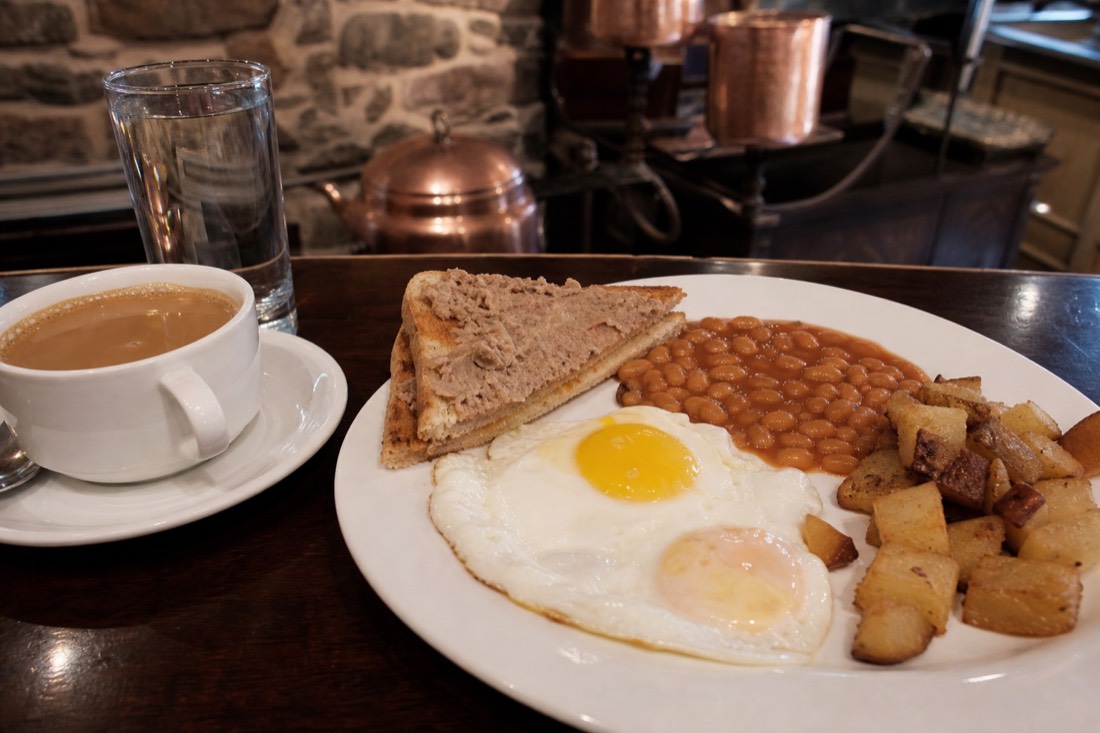
Cretons is the one dish visitors reliably skip because it looks like plain pâté in a plastic tub. It is a forcemeat-style pork spread with onions and spices, served cold, and a good one has enough clove and pepper to wake you up faster than the coffee. Spread it thick. Do not treat it as butter.
At the other end of the meal, pouding chômeur translates roughly as "unemployed person's pudding", and the name is not a joke: it came out of Depression-era kitchens in the 1930s, built from pantry staples and hot syrup poured over batter before baking. The syrup sinks, the cake rises, and you get sauce underneath without making one. Sugar pie sits nearby on most dessert menus, a shallow shell of pastry filled with sugar or maple and cream, and it is sweet enough that one slice serves two people honestly. Anthony Bourdain's Quebec episodes chased exactly this end of the table, which I traced in where Bourdain actually ate here.
Is A Quebec City Food Tour Worth It, Or Should You Just Wander?
Worth it on day one, unnecessary by day three. A guided tasting walk solves the two problems visitors actually have: which of forty old-town menus is cooking the real thing, and how to try eight dishes without ordering eight full plates. After that you will know enough to eat on your own.
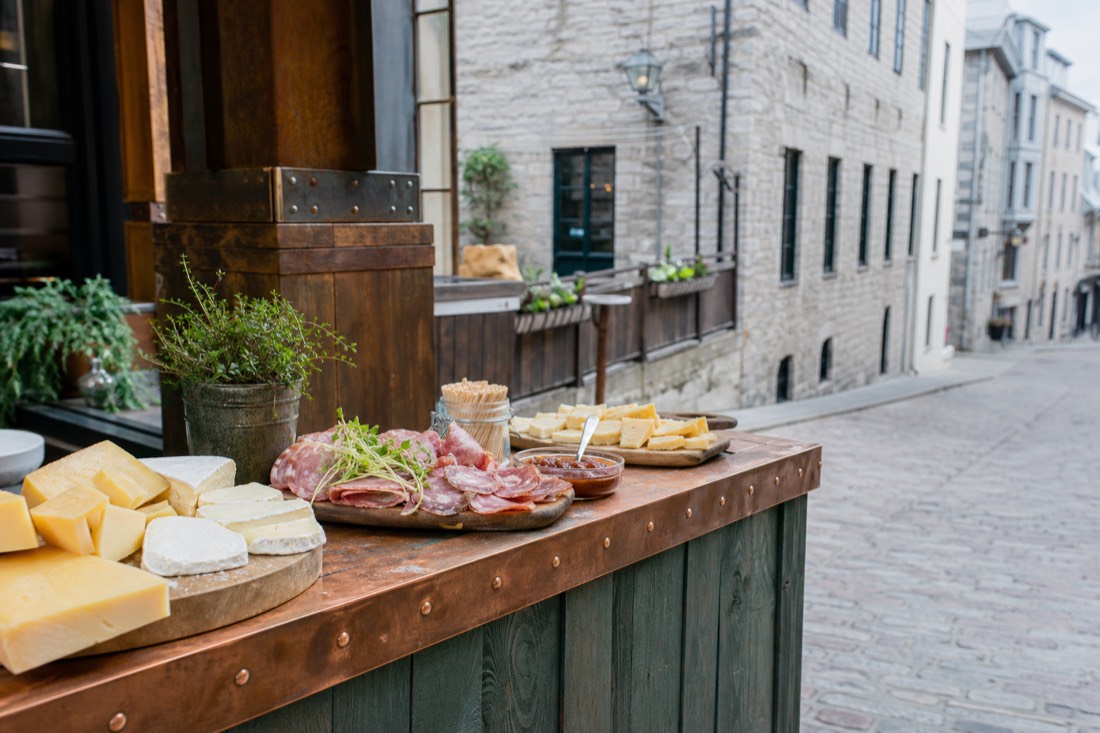
The old town is dense with restaurants, and the ones on the busiest corners are not always the ones cooking tourtière from scratch. A tasting walk short-circuits that guesswork, and the portion structure is the real argument: nobody can eat a full poutine, a slice of tourtière, a plate of cretons and a sugar pie in one sitting. Here is how the bookable options line up.
| Tour | Rating and reviews | From | What it suits |
|---|---|---|---|
| Old Quebec City Food Tour | 4.9, 1,607 Viator reviews | $125 USD | Widest range, 10+ tastings across Upper and Lower Town |
| 5-Course Gourmet Food and History Walk | 4.9, 515 Viator reviews | $217 USD | An evening sit-down progression rather than street bites |
| Île d'Orléans Taste Trail | 4.6, 239 GetYourGuide reviews | $62 | Producers, cider and farm stands off the island loop |
| VIP Agritourism Lunch Tour | 5.0, but only 16 reviews so far, a small new sample | $333 USD | Private-style island and falls day built around lunch |
For a first visit, the 10-tasting walk does the most work per dollar, and its 4.9 across more than 1,600 reviews is the steadiest signal in the set. Browse the full lineup on the food tours page, then check live availability & prices on Viator before you lock in a date, because afternoon departures in summer fill first.
In What Order Should You Eat All This Over Two Days?
Front-load the heavy dishes. Cretons and eggs at breakfast, a poutine after a long walk rather than before one, tourtière as a sit-down dinner, and dessert only on the night you are not walking home uphill. Two days covers the core dishes without anybody ending the trip feeling ill.
This is the part nobody plans, and it is why visitors tell me they got tired of Quebec food by Tuesday. They did not get tired of it. They ate a poutine at noon, a tourtière at seven, and a sugar pie on top, which would defeat anyone. The cooking was built for people who spent the day outdoors doing physical work, and the city obliges by making you climb between Upper and Lower Town whether you meant to or not.
So stagger it. Rich in the morning, light in the middle of the day, heavy at night when you are done walking. Keep two dishes for the guided tasting walk if you are booking one, because arriving hungry is the whole trick with ten-plus tastings. And treat dessert as an event rather than a course: one pouding chômeur, properly, beats three half-finished sweet things. The schedule below is the one I hand guests who want the full canon in a short stay, and it assumes you are on your feet most of both days.
| Meal | Day one | Day two |
|---|---|---|
| Breakfast | Cretons on toast, eggs, coffee | Fèves au lard, pancakes, maple |
| Late morning | Nothing. You just ate pork | Coffee only, especially if a tasting walk is booked |
| Lunch | Something light: soupe aux pois in the cold months, a market plate otherwise | The tasting walk covers this. Do not eat first |
| Afternoon | Tire d'érable if a festival site is selling it | One tarte au sucre, split between two people |
| Dinner | Tourtière, shallow in summer, deep dish in winter | Poutine at a casse-croûte, late, after the walking |
| Dessert | Skip it tonight | Pouding chômeur, once, and share it |
| Afterwards | Casse-Cou stairs down and back up | The same hill, and you will want it |
Which Dishes Work If You Do Not Eat Pork?
Most of the canon is pork. Cretons, tourtière, fèves au lard with salt pork and soupe aux pois with ham are all built on it, and poutine gravy is not reliably vegetarian, so ask before ordering. What stays wide open is the maple half of the table: tire d'érable, tarte au sucre, pouding chômeur.
Traditional Québécois menus are honest about this, which helps. The dishes are named for what is in them, and a server will tell you straight whether the gravy is meat-based or the beans were baked with salt pork. The word to learn is "lard", as in fèves au lard, because it appears on menus where you might not expect it.
Vegetarians do better than the dish list suggests, mostly because the dessert and dairy end of the table is enormous. Cheese is everywhere, curds included, and the maple canon is entirely plant-based apart from any cream in a sugar pie. Gluten is the harder one: pastry runs through tourtière, tarte au sucre and most of the bakery case, so the practical fallback is poutine with a question about the gravy, plus anything maple. The table below is my own ordering guide rather than an allergen document, so confirm with the kitchen every time.
| If you | What still works | What to ask about | What to leave |
|---|---|---|---|
| Do not eat pork | Tarte au sucre, pouding chômeur, tire d'érable, cheese | Poutine gravy, and whether the beans were baked with salt pork | Cretons, tourtière, soupe aux pois with ham |
| Are vegetarian | Maple desserts, cheese and curds, market produce | Poutine gravy first, then the soup base | The whole meat-pie half of the menu |
| Avoid gluten | Fries and curds, most maple sweets | Whether the gravy is thickened with flour | Tourtière, tarte au sucre, the bakery case |
| Avoid dairy | Tourtière, fèves au lard, soupe aux pois | Cream in dessert fillings | Poutine, which is curds by definition |
| Have a small appetite | One dish shared between two | Portion size on galvaude poutine | Ordering a full plate each |
What Can You Take Home, And What Will Not Survive The Trip?
Syrup travels, curds do not. Maple is sold here like a staple, in tins the size of paint cans, and it is the one souvenir worth the suitcase weight. Fresh cheese curds go rubbery once refrigerated, which kills the exact quality you came for. Everything else sits somewhere between those two.
Quebec produced 90.0% of Canada's maple syrup in 2025, 17.0 million gallons of it, and close to 72% of world supply, which is why the shops here price syrup like flour instead of like a delicacy. Buy it in a tin rather than a gift bottle. Same syrup, a fraction of the price per litre, and the tin survives baggage handlers better than glass.
The perishable half of the canon is where visitors waste money. Cretons is a refrigerated pork spread with a short life, a frozen tourtière is fine in a cooler for a drive but not for a long-haul flight, and tire d'érable exists only in the moment it is poured onto snow. Curds are the saddest case: people buy a bag on the last afternoon, and by the time it reaches home the squeak has gone. Eat those here. Take the maple, the maple sugar, and a bottle of island cider if the weight allowance can stand it.
| What you want to take | Travels? | Notes |
|---|---|---|
| Maple syrup in a tin | Yes | Check your airline's liquid rules before packing it in a carry-on |
| Maple butter and maple sugar | Yes | Solid forms, so the liquid question disappears |
| Tarte au sucre | A day or two | Sturdy pastry, but it is best on the day |
| Cider from Île d'Orléans | Yes | Glass and weight are the only problem |
| Frozen tourtière | Short trips only | Fine in a cooler for a drive, not for a long flight |
| Cretons | No | Cold pork spread, refrigerated, short life |
| Fresh cheese curds | No | The squeak does not survive the fridge, and the squeak is the point |
| Tire d'érable | No | It is made on snow and eaten where it is poured |
When Is The Best Time Of Year To Eat In Quebec City?
Late winter into spring, if you are choosing by food alone. March and April bring sugar season and the cabanes à sucre. December delivers tourtière and holiday tables. Summer belongs to markets and Île d'Orléans produce, and autumn to apples, cider and game.
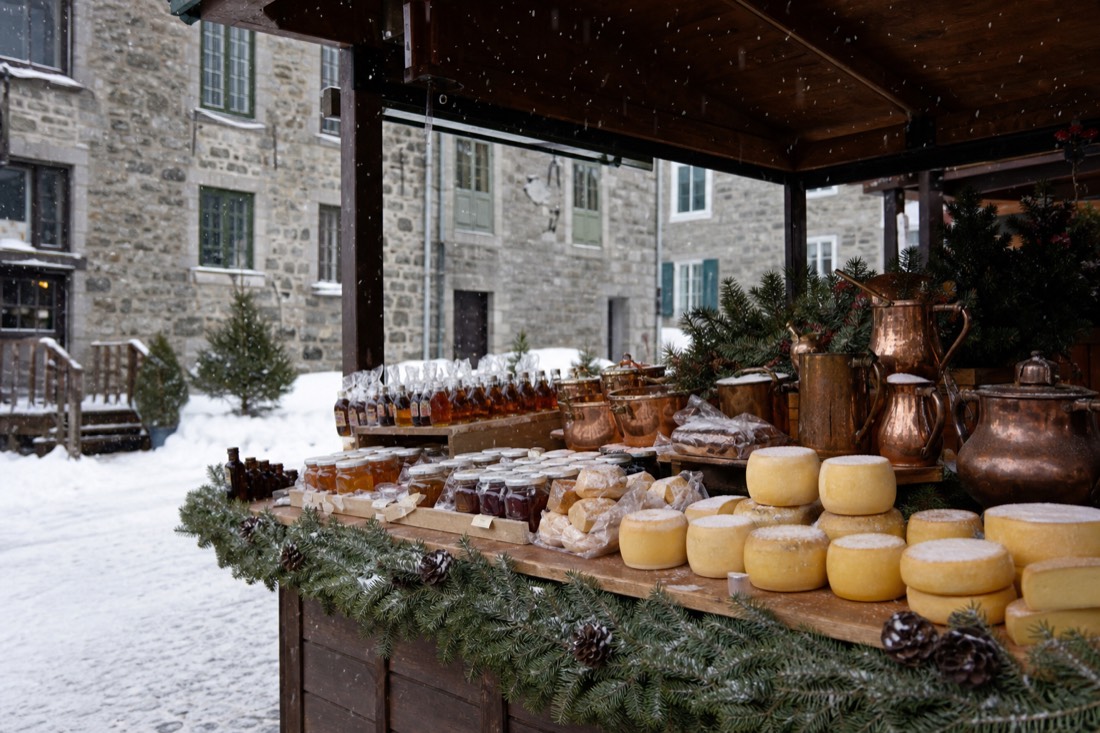
Every dish above has a season when it is at its peak and a season when it is simply on the menu. This calendar is the one I give guests who can move their dates.
| Months | What the table is doing | Worth planning around |
|---|---|---|
| January to February | Deep comfort cooking: pea soup, beans, pouding chômeur, tire d'érable at Carnival sites | Coldest weeks, warmest food; see my winter guide |
| March to April | Sugar season, the cabanes à sucre open for communal syrup meals | The most distinctly Québécois eating of the year |
| May to June | Menus lighten, terraces open, first island strawberries appear late June | Good weather with pre-peak restaurant crowds |
| July to August | Markets at full strength, island produce, food tours running every day | Book tastings ahead; this is the busiest window |
| September to October | Apple harvest, cideries pressing, duck and game returning to menus | Fall colour plus the best cider tastings |
| November to December | Tourtière season, réveillon menus, Christmas market food stalls | Holiday tables book out weeks in advance |
Walk it off afterwards. That is the local half of the advice: eat heavy, then take the Casse-Cou stairs down to Petit Champlain and back up through the walls, or join a walking tour and let somebody else pick the route while you digest. My mother would approve of the pie. She would approve even more of the hill.
Your Next Step
Choose Your Quebec Experience
General recommendation, before you add preferences. Confirm dates and participation requirements with the operator.
Have your travel date in mind? Taste poutine, pea soup and maple treats across a guided Old Quebec food walk. Check the departure before arranging the rest of your day.
3 hours, English guide. Menus can change; dietary substitutions require advance confirmation.
Departure schedule from Viator; final availability and price are confirmed on Viator.
Compare Options And Fit Your Plans
Taste poutine, pea soup and maple treats across a guided Old Quebec food walk. 3 hours, English guide. Menus can change; dietary substitutions require advance confirmation.
Make dinner part of a guided progression through Old Quebec, with five courses and history between stops. Three-hour evening walk. An evening food walk. Review the current menu, meeting point and dietary arrangements before reserving.
Ride from Old Quebec to island producers for small local tastings. 3 hours, English or French; meet at 18 Rue des Jardins. Hotel pickup and a full meal are not included. Mobility and dietary needs require confirmation.
Affiliate links: we may earn a commission at no extra cost to you.