Train Montreal To Quebec City 2026: Times, Fares And Arrival
VIA Rail averages 3 h 26 between Montréal and Québec and runs 34 departures a week. Here is how the fares behave, what the bus and the car cost instead, and what to do with your first hour at Gare du Palais.
 Written with Jean-Pierre Tremblay, Quebec City tour guide & heritage specialist
Quick answer
The train averages 3 h 26 with 34 departures a week, roughly four to five a day. Economy fares start around $47 CAD one way, and VIA suggests booking at least two weeks ahead. You arrive at Gare du Palais, 450 rue de la Gare du Palais, a short uphill walk from Old Quebec.
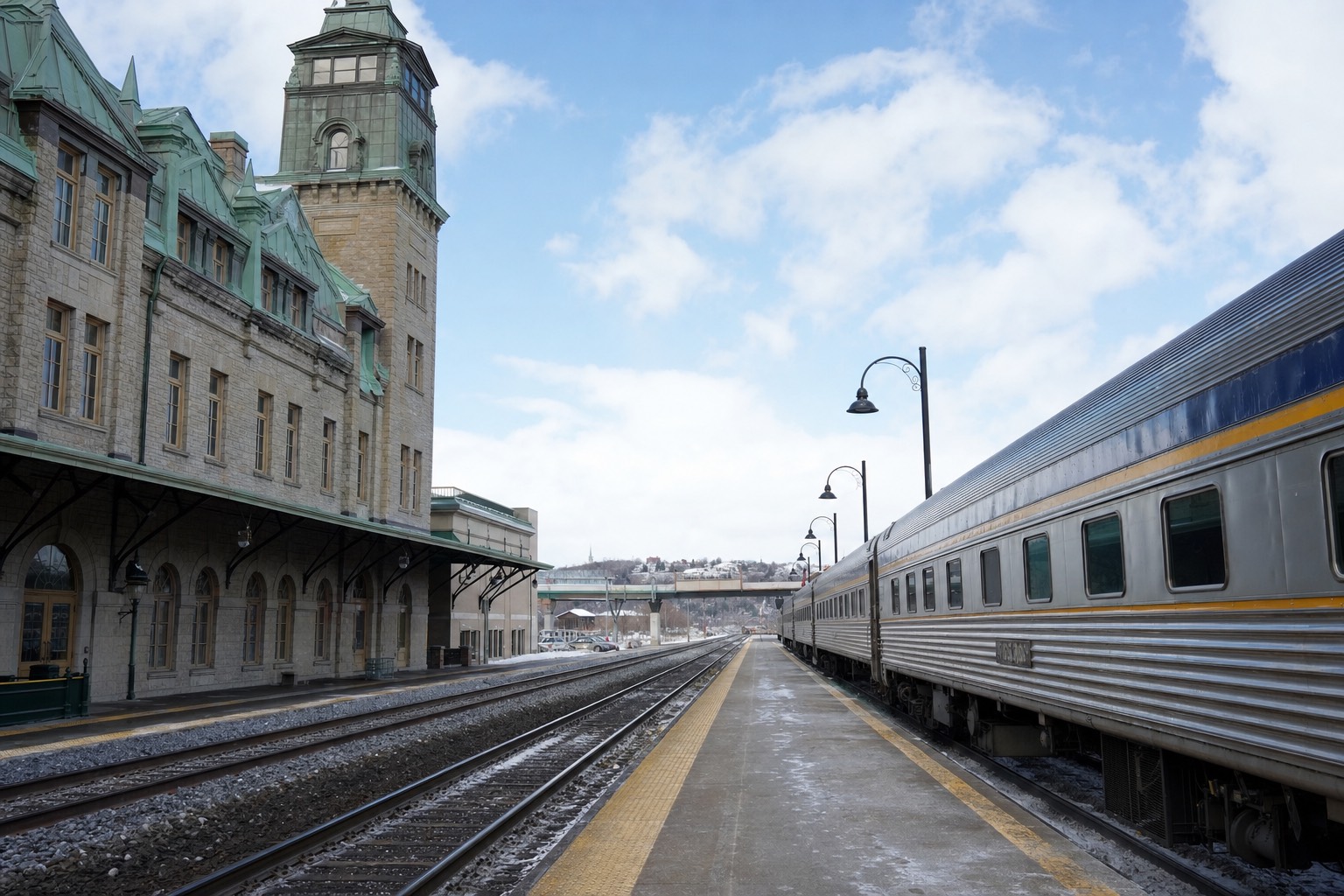
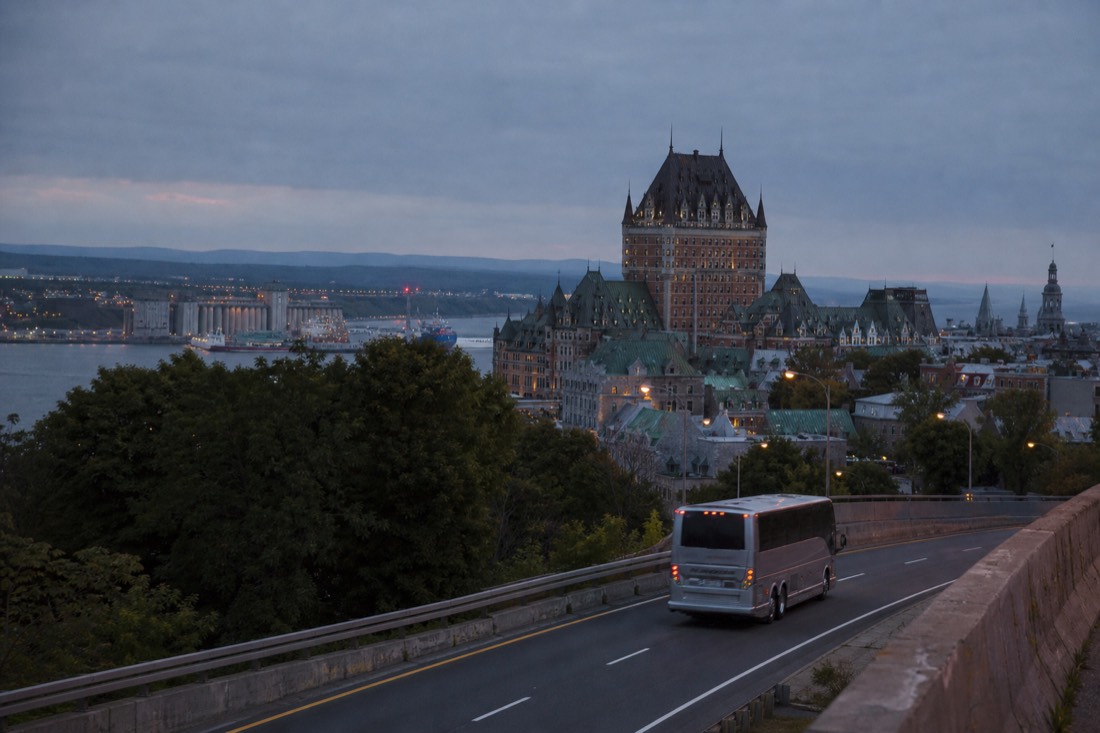
Gare du Palais does not look like a train station. It looks like a small château that someone dropped beside the port: steep copper roof gone green, dormers, a clock. I have walked guests past it hundreds of times on the way down to Place Royale, and roughly once a week somebody stops and asks what the building is. When I say it is where the Montréal train arrives, the reaction is always some version of "wait, the train comes right here?"
It does. Six or seven walking minutes from where you step off, you are in Lower Town. That single fact makes the train a different proposition from the bus and the car, and it is the reason I keep pushing arriving visitors toward it.
TL;DR: VIA Rail averages 3 h 26 between Montréal and Québec, with 34 departures a week, roughly four to five a day. Economy fares start near $47 CAD one way and examples climb to about $96 depending on the date. Book at least two weeks ahead. The bus is cheaper and runs far more often; the car is fastest on paper at 2.5 to 3 hours. If you only have one day and want none of this admin, the guided coach handles it.
How Long Does The Train From Montreal To Quebec City Take?
About 3 hours 26 minutes on average, according to VIA Rail's own route figures, with 34 departures a week across the corridor. That works out to roughly four or five trains a day in each direction. Individual departures run faster or slower than the average, so the timetable matters more than the headline number.
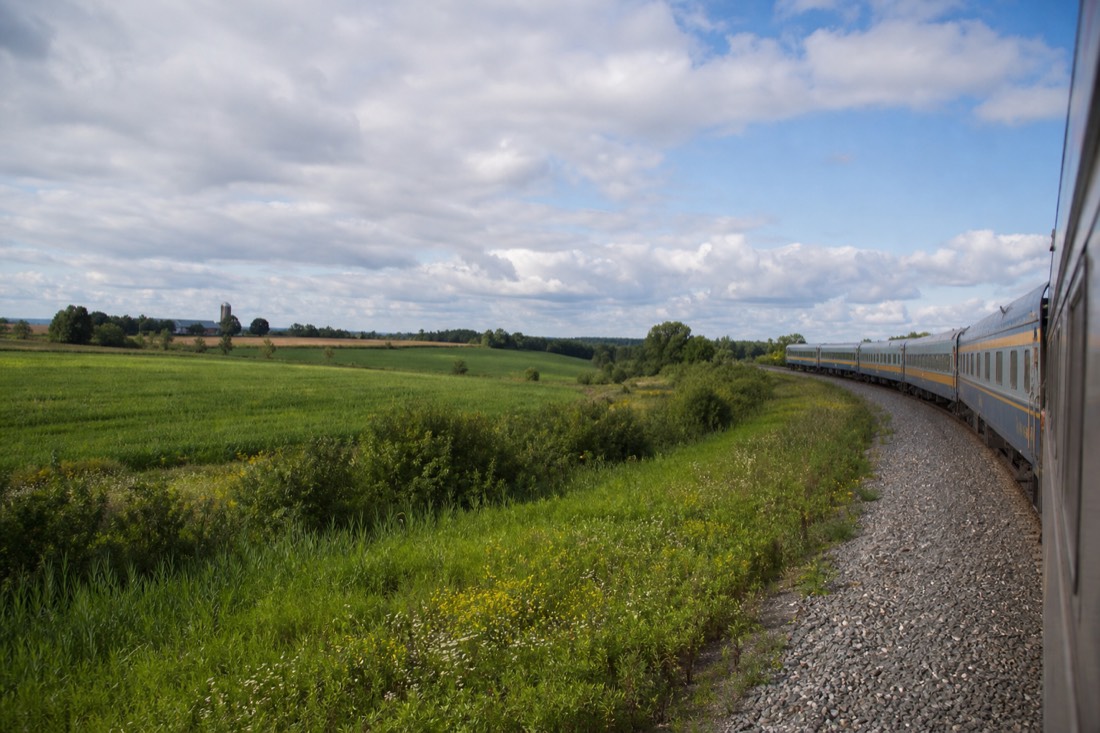
Four to five departures a day sounds generous until you look at where they fall. They are not spread evenly, and the spacing is what actually shapes your plan. A mid-morning departure lands you in Quebec in time for a late lunch and a full afternoon on foot. A mid-afternoon one lands you at dusk, which is lovely in December and slightly wasteful in July. Check the live timetable on VIA Rail's Montréal to Québec City page before you fix anything else about the trip, because everything downstream, your first-night dinner, your walking tour slot, hangs off which of those four or five slots you take.
One planning note I give constantly: 3 h 26 is door-of-train to door-of-train. Add the walk to Montréal's station, the recommended arrival buffer, and the climb into Old Quebec at the other end, and you should budget closer to four and a half hours of your day. That is still less hassle than the same trip by road, but it is not a ninety-minute hop between neighbouring cities.
What Does A VIA Rail Ticket Cost, And When Should You Book?
Economy fares start around $47 CAD one way, with real examples for late-August 2026 dates spanning roughly $47 to $96. VIA recommends booking at least two weeks in advance and watching for its lowest-fare options and Discount Tuesday specials. The spread between the cheap seat and the expensive one is the whole game.

A doubling in price between the same two cities on the same route, depending only on when you clicked, is the thing most visitors do not expect. Twice the fare for the identical seat is normal on this corridor. Two weeks out is VIA's own suggested minimum, and for a summer weekend or a Winter Carnival Saturday I would treat that as the floor rather than the target.
| What you are looking at | Figure | What to do with it |
|---|---|---|
| Lowest observed Economy fare, one way | from $47 CAD | Your realistic best case, on quiet dates booked early |
| Example fare spread, late-August 2026 dates | roughly $47 to $96 CAD | Assume the high end if you book late or travel on a Friday |
| VIA's own booking advice | at least 2 weeks ahead | The single cheapest change you can make to your trip |
| Discount Tuesday specials and lowest-fare search | date dependent | Worth a look before you settle on a departure |
| Anything above Economy | not itemised on the route page | Price it live at booking rather than budgeting a guess |
Return trips are simply two of these decisions, and they rarely price the same. A cheap outbound on a Wednesday morning and an expensive Sunday-evening return is the standard shape. If you are weighing all this against just staying over, the where to stay in Quebec City guide has the neighbourhood breakdown; a night inside the walls often costs less than the fare gap you are trying to dodge.
Train, Bus, Car Or Guided Tour: Which One Should You Take?
The train wins on comfort and on where it drops you. The bus wins on frequency and price, with 17 daily departures and fares from $25 CAD. The car is fastest at 2.5 to 3 hours and best for groups. The guided coach wins if you have exactly one day and want zero logistics.
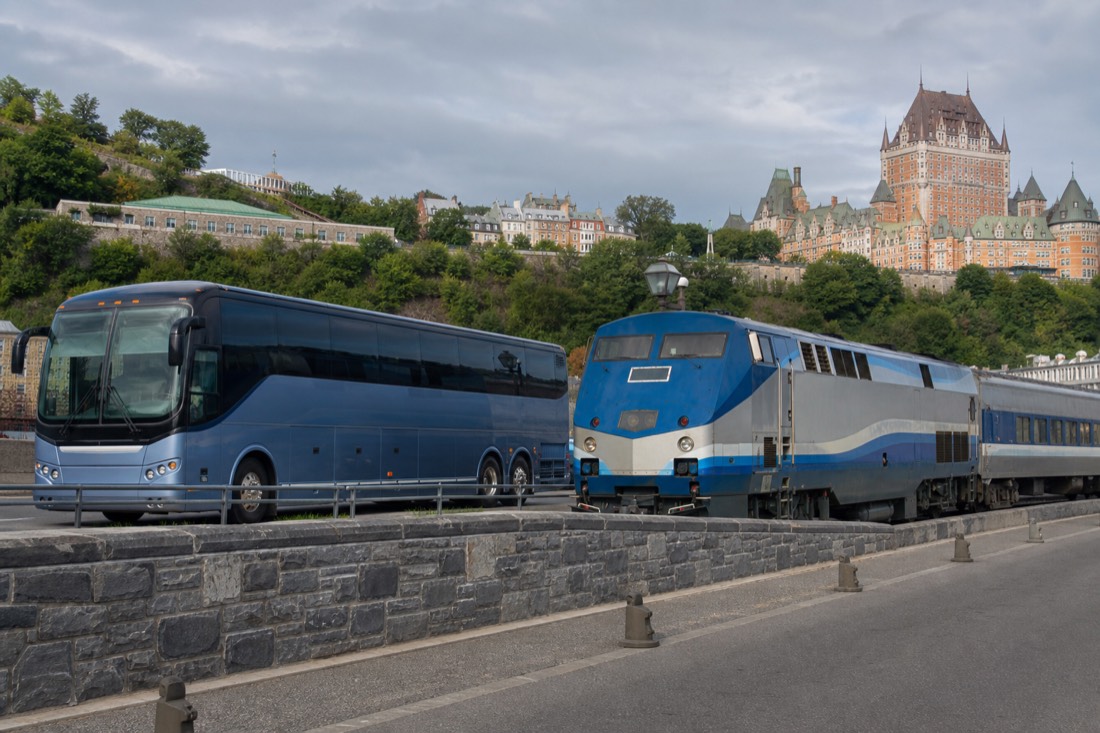
Here is the corridor in one table, using each operator's own published figures.
| Option | Time each way | Cost, one way | Frequency | Flexibility | Best for |
|---|---|---|---|---|---|
| VIA Rail train | 3 h 26 average | from $47 CAD, examples to about $96 | 34 departures a week | Fixed times, easy walk at both ends | Couples and solo travellers who want the ride to be restful |
| Orléans Express bus | 3 h 15 average, 3 h at best | from $25 CAD, typically $50 to $70 | 17 daily departures | Most departures to choose from | Tight budgets and last-minute dates |
| Your own car | 2.5 to 3 h over 250 to 270 km | Fuel and parking, split by seat | Whenever you like | Total, until you look for parking | Families of three or four, or anyone adding Île d'Orléans |
| Guided full-day coach | Built into the day | from $81, round trip included | Scheduled departures | None, and that is the point | One-day visitors who want it all handled |
That last row is not really transport, it is a solved day. Concord Tours' full-day coach from Montreal carries 4.7 across 1,679 GetYourGuide reviews and folds in a Montmorency Falls stop that train and bus day-trippers almost never fit. Whether a day trip is even the right call is a separate argument, and I make it properly in the Montreal to Quebec City day trip guide. If you have already decided and just want the version with no timetable to manage, it sits with the other motorised options on the bus tours page, and you can check live availability & prices on GetYourGuide for your date.
Which Side Of The Train Has The St. Lawrence Views?
Do not plan around it. VIA sells this route on time and price and publishes no scenic-side guidance for it, so treat any seat as a seat. The dependable river view of this trip is the one you walk to after you arrive, from Dufferin Terrace above the Château Frontenac.

I get asked this more than any other train question, usually by people who have seen a photo of a river and assumed three and a half hours of it. The honest version: I am a guide in Quebec City, not a conductor, and I will not invent a side of the carriage for you when no official source names one. What I can tell you is where the view you are imagining actually is. It is at the far end, from the terrace boardwalk, with the river turning pewter under the cliff and the ferry crossing to Lévis.
So spend your seat-choice energy elsewhere. Pick the departure time that gives you daylight on arrival, and give your first evening to the Quebec City itinerary rather than to a window. If the two-city comparison is still unsettled in your head, the Montreal vs Quebec City guide is where I lay out what each place is genuinely better at.
Where Does The Train Arrive, And What Should Your First Hour Be?
At Gare du Palais, 450 rue de la Gare du Palais, in the Old Port at the bottom of the hill. Old Quebec starts a few minutes away on foot. Drop your bags first, because the cobbles and the stairs between you and Upper Town are not luggage terrain, then walk into Lower Town.
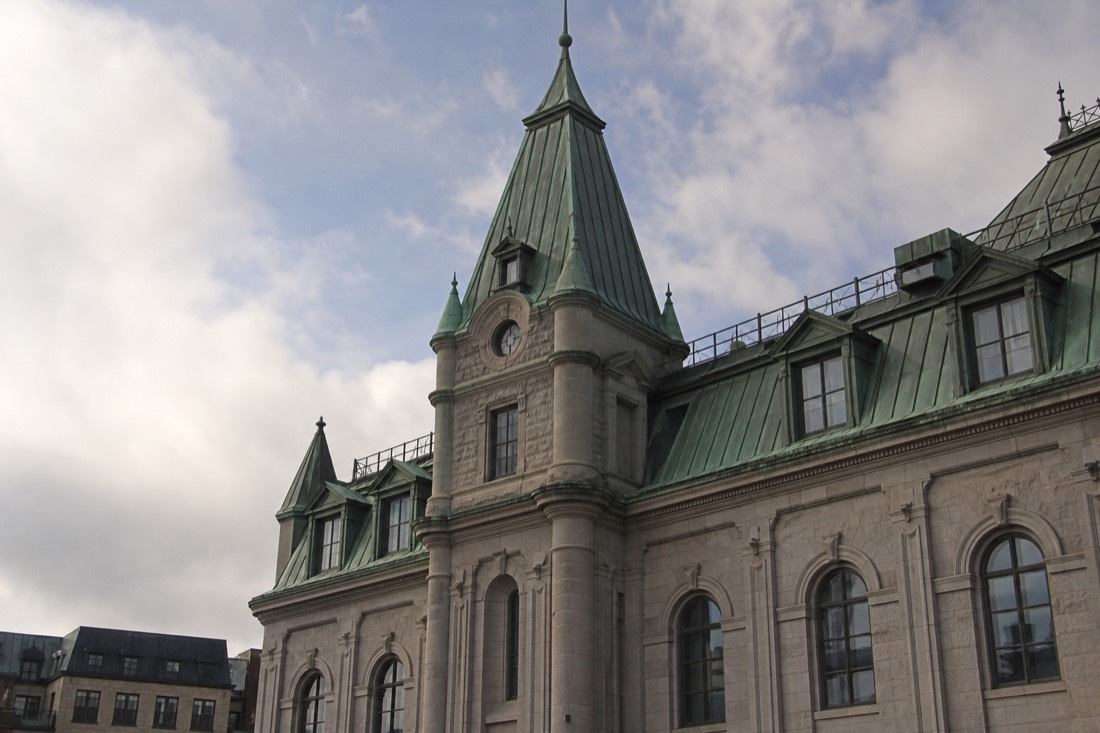
The station's own details, including the address and access information, sit on VIA Rail's Gare du Palais page. What that page cannot tell you is the shape of the ground outside the doors. You arrive at the low end of the city. Everything postcard-famous is uphill from there, on stone that was laid for horses. Suitcase wheels lose that argument every time.
| Minute | What you are doing | Why in that order |
|---|---|---|
| 0 to 10 | Off the train, out the front doors, orient on the copper roof | The station faces the Old Port, so the old city is up and to your right |
| 10 to 30 | Bags to the hotel, or into station storage if you are day-tripping | Nothing below is fun while towing a case |
| 30 to 45 | Walk up through the Old Port toward Place Royale | The oldest stone square in the city, and the natural first stop |
| 45 to 60 | Petit Champlain, then the funicular or the Casse-Cou stairs | The glass funicular car is the painless way up to Dufferin Terrace |
| First evening | Dufferin Terrace at dusk | The view you thought you were getting from the train |
For onward movement once you are settled, buses, the funicular and the ferry all make sense in different situations, and the getting around Quebec City guide sorts out which is which. If you would rather have the first afternoon structured by somebody who knows the ground, the two-hour options on the walking tours page start within a few minutes of where you will be standing, and the things to do in Quebec City roundup covers what is worth queuing for.
Is The Orléans Express Bus A Better Deal Than The Train?
On price and frequency, yes. Orléans Express runs 17 daily departures Montréal to Québec with a 3 h 15 average and a 3 h best case, and adult fares start at $25 CAD, typically landing between $50 and $70. It is quicker on average than the train and often half the fare.
Seventeen departures against roughly four or five is not a small gap. The bus is the option that bends to your day rather than the other way round, and if your plans are loose or your date is tomorrow, it is the obvious pick. Fares and schedules live on the Orléans Express Montréal to Québec page.
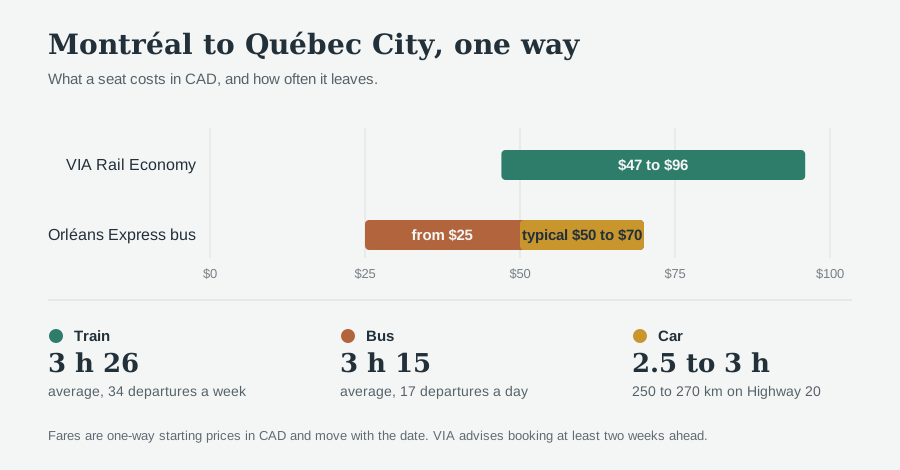
What the numbers do not show is the difference in the three hours themselves. A train seat lets you work, sleep or read a book without motion sickness, and it is immune to the traffic that a bus shares with every truck on the highway. The 3 h 15 bus average is genuinely quicker than the 3 h 26 train average, and I still send nervous first-timers to the train, because an average is not a promise once a Friday afternoon jam gets involved.
How Should You Actually Book The VIA Rail Ticket?
Book at least two weeks out, which is VIA's own stated minimum, and check its lowest-fare options and Discount Tuesday specials before you settle on a departure. The same Economy seat has run from $47 to about $96 CAD on late-August 2026 dates. Timing your click matters more than picking a train.
Almost every fare complaint I hear on the terrace traces back to the same mistake: choosing the departure first and looking at the price second. On a corridor where the identical seat can double, the sensible order is reversed. Find the cheap dates, then build the day around whichever of the four or five departures they fall on.
Two weeks is a floor, not a plan. It is what VIA itself recommends, and for a summer weekend, a Winter Carnival Saturday or anything near a public holiday, I would treat it as the point where you have already left it late. Return journeys price independently, so the standard shape of a booking is one cheap leg and one expensive one, usually the Sunday evening back.
| When you book | What you tend to see | What to do about it |
|---|---|---|
| More than 2 weeks out | The bottom of the range is still available, around $47 CAD | Book the outbound now, watch the return |
| VIA's 2-week minimum | Still workable on quiet weekdays | The single cheapest change you can make to the trip |
| Inside 2 weeks | Drifting toward the $96 CAD end of the observed spread | Compare against the bus at 17 daily departures |
| A few days out, summer weekend | Assume the high end | Bus, or the guided coach if it is a one-day visit |
| Any date, any time | Discount Tuesday specials and lowest-fare search | Worth one look before you commit |
| Anything above Economy | Not itemised on the route page | Price it live rather than budgeting a guess |
Can You Do This Trip With Luggage, A Stroller Or Limited Mobility?
Yes, and the train is the kindest of the three options for it, because you step out at the bottom of the city in the Old Port. The hard part begins outside the station doors. Everything famous sits uphill on cobbles, so plan the last ten minutes rather than the three and a half hours.
I meet the results of poor planning on this almost daily: someone hauling a hard-shell case up Côte de la Montagne in July, or standing at the top of the Casse-Cou stairs with a pushchair, working out that 59 steps is not a suggestion. Gare du Palais, at 450 rue de la Gare du Palais, sits in the low, flat part of town. The postcard part is above it, and the ground between was laid for horses.
The fix is dull and it works. Bags go to the room or into storage before you do anything else, and you choose your route up the cliff on wheels and knees rather than on price. The funicular at $7 one way removes the climb entirely, the ramp of Côte de la Montagne is step-free if slow, and the stairs are for people carrying nothing. Confirm any onboard assistance or station service directly with the operator before you travel, since that sits on their listing rather than mine.
| Travelling with | At the station end | Route up into the old town | My time allowance |
|---|---|---|---|
| One cabin bag | Straight out and walking | Any of the three, stairs included | 10 min to Lower Town |
| Two large suitcases | Drop at the hotel first, or station storage | Funicular or Côte de la Montagne | 30 to 45 min before sightseeing |
| Stroller or pushchair | Level exit, then cobbles begin | Côte de la Montagne, step-free grade | Double whatever the map says |
| Wheelchair or limited mobility | Confirm assistance on the operator's listing | Côte de la Montagne, or funicular where feasible | Build in a full extra hour |
| Small children, no stroller | Fine, they will want the funicular | Funicular up, stairs down later for fun | Feed them before the climb |
| Skis, sledges, winter kit | Bulky on cobbles and ice | Funicular, no debate in January | Add slack for the ice |
How Much Of Your Day Does Each Option Really Eat, Door To Door?
Add roughly an hour of overhead to every headline figure. The train's 3 h 26 becomes about four and a half hours of your day once you count the arrival buffer and the climb from Gare du Palais. The car's 2.5 to 3 hours grows once you have parked it. The guided coach absorbs its overhead internally.
Published journey times measure the vehicle, not the traveller. That gap is where day trips fall apart and where overnight arrivals turn up too tired to eat. The numbers below are my planning allowances rather than anybody's timetable, built by adding the ordinary friction at each end to the operators' own published durations.
The pattern that falls out of it is worth noticing. The bus is genuinely quicker than the train on average, 3 h 15 against 3 h 26, and yet both land in roughly the same place once the ends are counted, because the friction is the constant. The car is the only option whose overhead is unbounded, since the parking hunt inside the walls has no ceiling in July. And the coach is the outlier in the other direction: its overhead is somebody else's problem, which is the entire product.
| Option | Headline time | The overhead | Realistic door to door | What the overhead actually is |
|---|---|---|---|---|
| VIA Rail train | 3 h 26 average | About 1 h | Roughly 4 h 30 | Reaching the Montréal station, arrival buffer, the climb into the old town |
| Orléans Express bus | 3 h 15 average, 3 h at best | About 1 h, plus traffic risk | 4 h 15 and upward | Terminal at both ends, no protection from a Friday jam |
| Your own car | 2.5 to 3 h over 250 to 270 km | Unbounded in summer | 3 h 30 to 4 h | Parking outside the walls, then walking in |
| Guided full-day coach | Built into the day | Handled for you | The day is the product | Nothing to plan, at the cost of a fixed schedule |
| Train plus a night in the old town | 3 h 26 each way | Paid once, not twice | n/a | The overhead stops mattering after the first hour |
Should You Just Drive Instead?
Drive if you are three or four people, or if you want Île d'Orléans and Montmorency Falls on the same trip. The road route covers roughly 250 to 270 km on Highway 20 in 2.5 to 3 hours, which beats both the train and the bus. Then you have to park it.
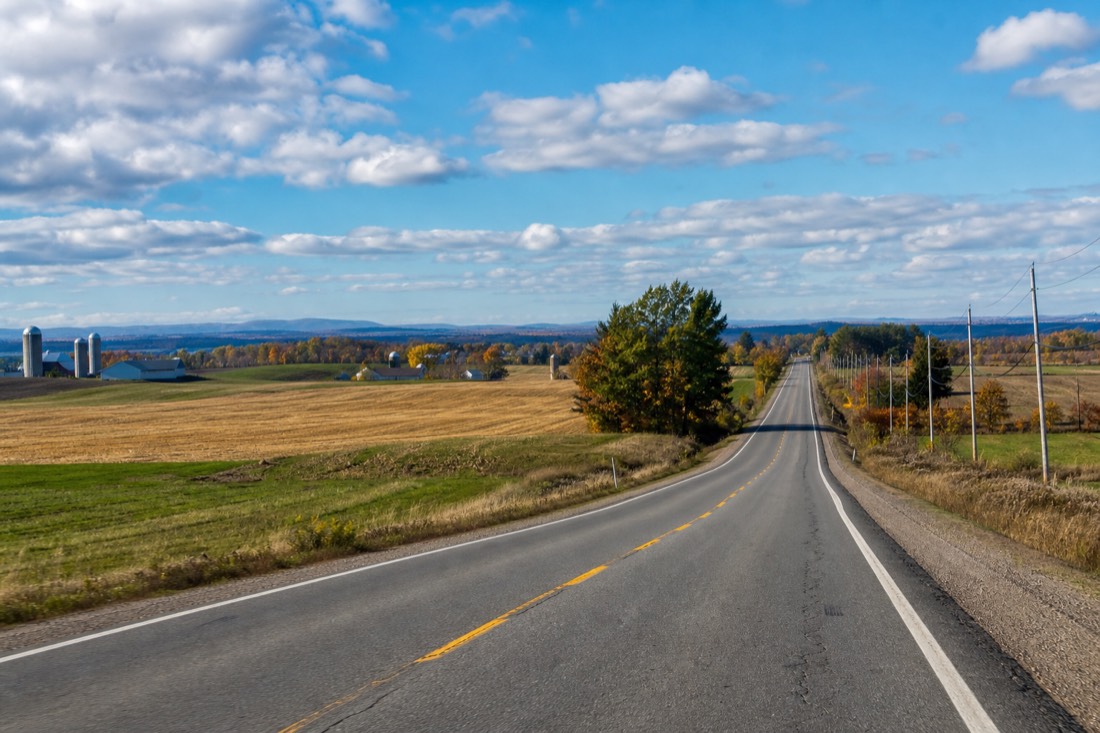
The car's real advantage is not speed, it is the stops. Everything worth seeing outside the walls sits on a road, and the train cannot take you to a cider house on Île d'Orléans. For a family of four the arithmetic is also plain: one tank of fuel against four train fares that start at $47 each. Official route context is on Québec Cité's Montréal to Québec City page, which is the tourism board's own version of this comparison.
The catch arrives when you do. Old Quebec was built before cars and has not forgiven them. Streets are narrow, one-way and often closed to traffic, and in July I have watched visitors give up half an hour of a short visit circling for a space they were never going to find. Park outside the walls in a garage, walk in, and leave the car alone until you leave the city. Do that and the drive is a good decision. Do the opposite and you will spend your afternoon wishing you had taken the 3 h 26 and walked out of Gare du Palais with nothing to park.
Your Next Step
Choose Your Quebec Experience
General recommendation, before you add preferences. Confirm dates and participation requirements with the operator.
Have your travel date in mind? Connect Place Royale, Petit Champlain and the upper town with a licensed guide and an included funicular ride. Check the departure before arranging the rest of your day.
2 hours; meet at 112 Rue Saint-Paul and finish near City Hall. Hotel pickup is excluded.
Departure schedule from Viator; final availability and price are confirmed on Viator.
Compare Options And Fit Your Plans
Connect Place Royale, Petit Champlain and the upper town with a licensed guide and an included funicular ride. 2 hours; meet at 112 Rue Saint-Paul and finish near City Hall. Hotel pickup is excluded.
Combine round-trip Montreal transport, an Old Quebec guided walk and Montmorency Falls in one day. 13 hours, returning to Montreal. It is not a one-way train or transfer; cable-car operation depends on availability.
Combine guided Lower Town stories with a round-trip ferry crossing and views from Lévis. 2 hours in English or French; meet at the Wolfe-Montcalm Monument, 7 Rue des Carrières. Ferry fare is included; this is a walking outing with a river crossing.
Affiliate links: we may earn a commission at no extra cost to you.