Best Views Of Quebec City: Where To Stand, What It Costs, And When The Light Works
Almost every visitor photographs this city from inside it. The good angles are all outside it, and the cheapest one costs less than a coffee.
 Written with Jean-Pierre Tremblay, Quebec City tour guide & heritage specialist
Quick answer
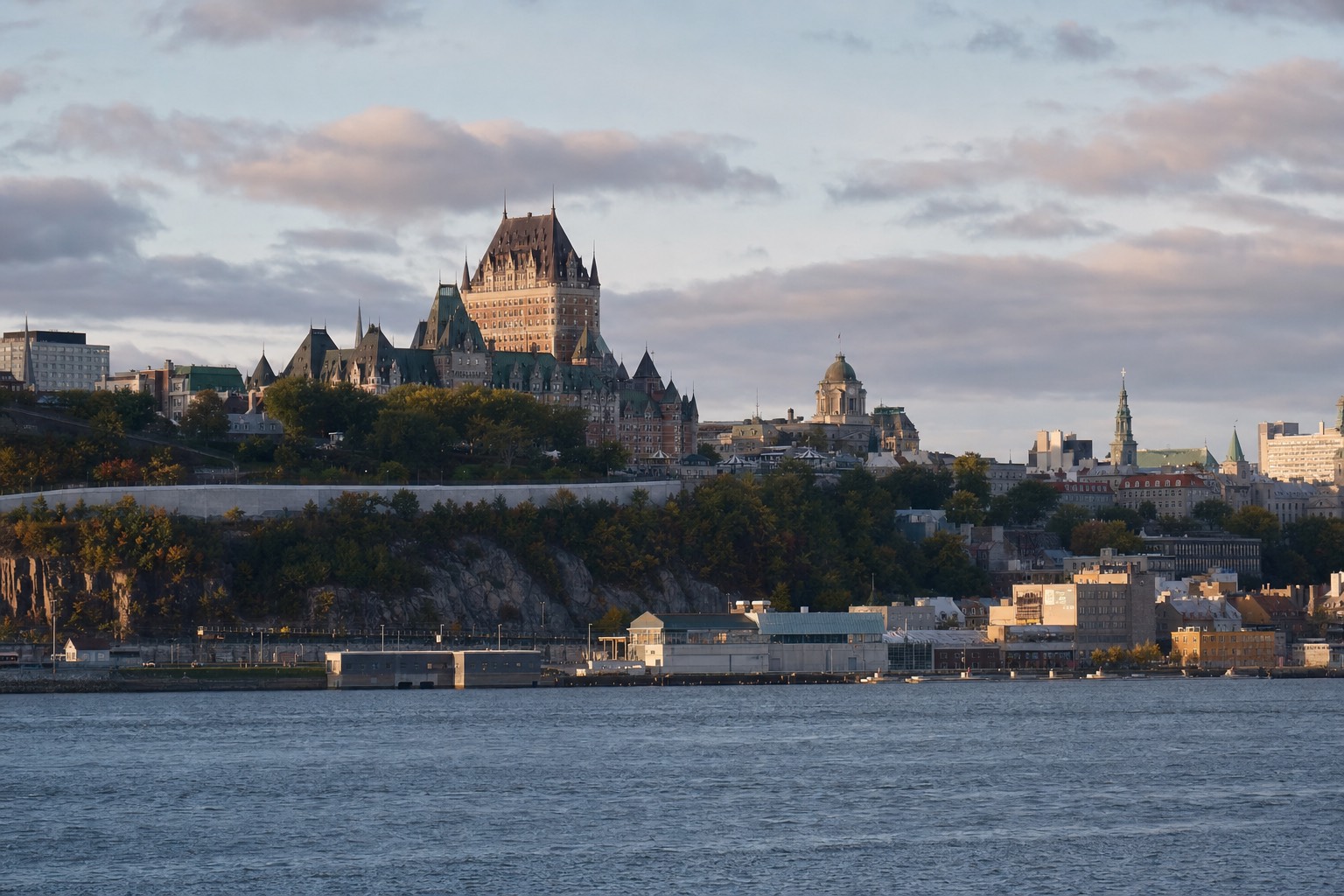
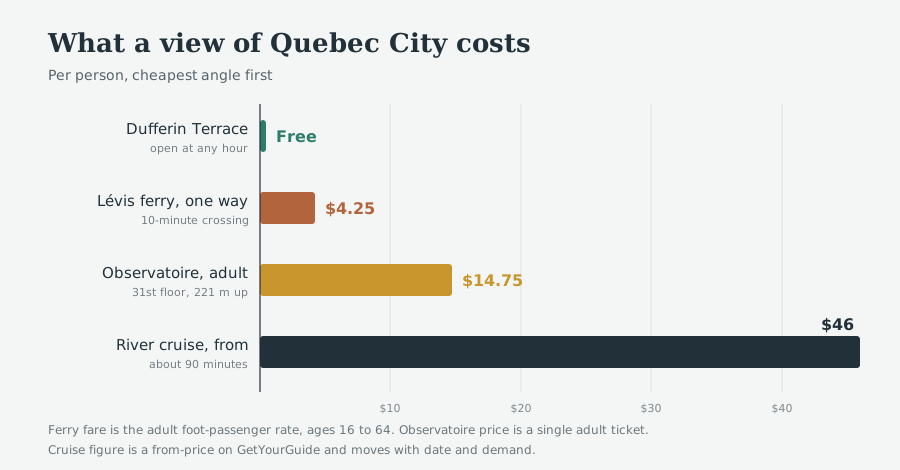
The best full view of Quebec City is from the middle of the St. Lawrence, looking back at the cliff. The cheapest way to get it is the Québec City to Lévis ferry at $4.25 one way for an adult foot passenger, a 10-minute crossing. The highest is the Observatoire de la Capitale, on the 31st floor of the Marie-Guyart Building at 221 metres above sea level, $14.75 for an adult ticket.
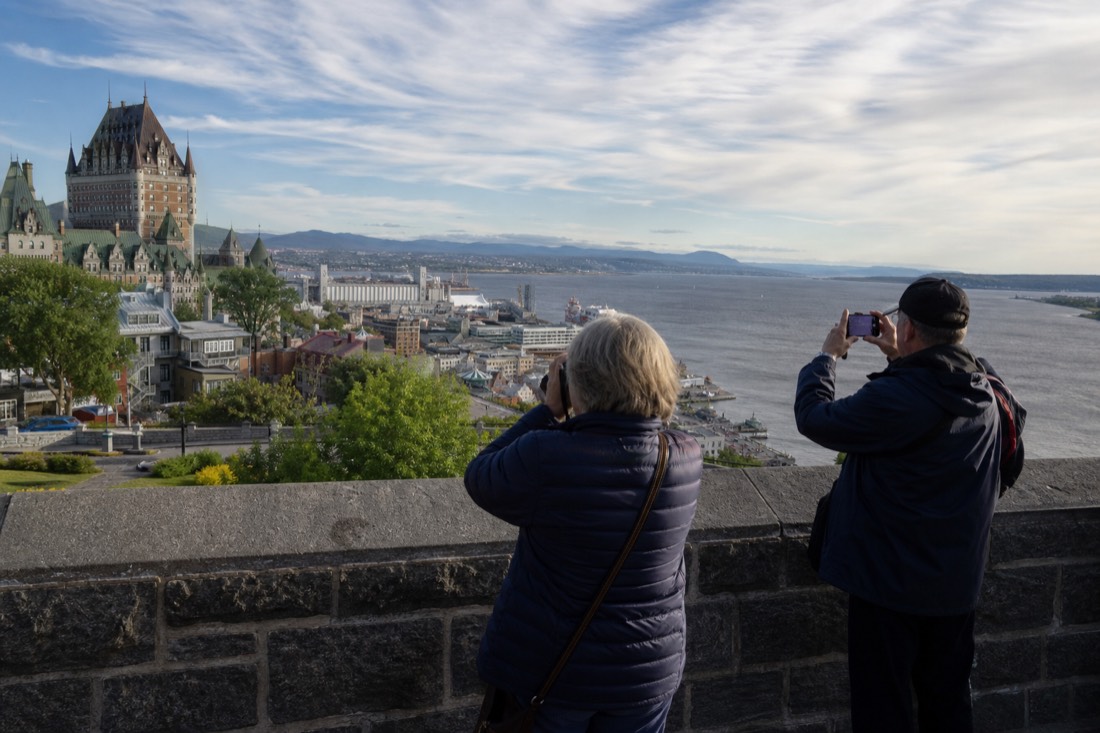
The first thing I tell a group on a clear afternoon is to turn around. People arrive on Dufferin Terrace, lean on the rail, and photograph the river, which is water. The photograph they wanted is behind them: a green copper roofline stacked on a grey cliff, with the whole old town underneath it. In eight seasons of walking these streets, by my own count with more than a thousand visitors, I have watched that same small correction turn a mediocre holiday album into a good one. Quebec City was built to be seen from the river. Almost nobody goes out onto the river to see it.
TL;DR: the classic view of Quebec City is from the water or the far shore, not from inside the walls. The Lévis ferry costs $4.25 one way for an adult and crosses in 10 minutes, which makes it the cheapest great view in the city by a wide margin. The Observatoire de la Capitale is the highest, on the 31st floor at 221 metres, $14.75 for an adult. Dufferin Terrace, the Plains of Abraham cliff edge and Parc du Bois-de-Coulonge are free. Evening light is better than morning light for the Château Frontenac, and the reverse is true from the terrace itself.
Where Is The Best View Of Quebec City?
From the middle of the St. Lawrence, looking north at the cliff. Only from the water do the three layers of the city stack correctly: Lower Town at the waterline, the rock face above it, and the Château Frontenac on the skyline. Every land viewpoint gives you one or two of those layers, never all three.
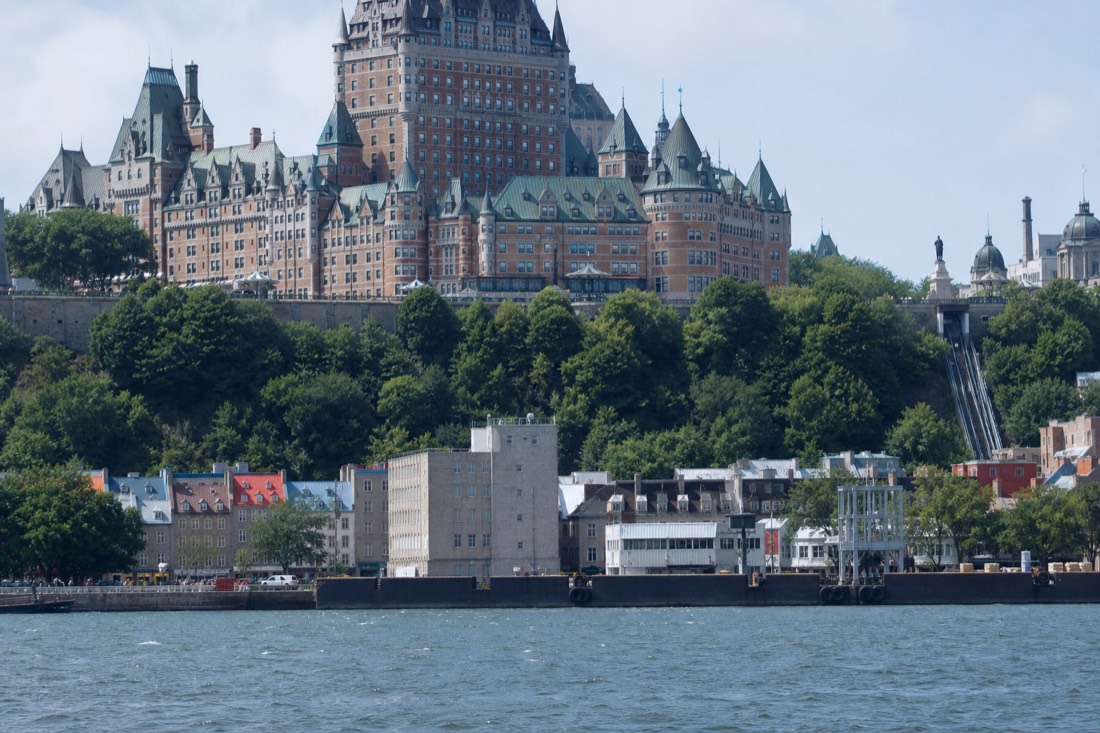
This is a geography argument, not a taste one. The old town sits on a promontory where the river narrows, which is exactly why Champlain put a settlement here. Stand anywhere inside the walls and you are on top of the thing you came to look at. Step 500 metres offshore and the whole promontory resolves into one photograph.
Here is how the main viewpoints compare, with what each costs and what it takes to reach.
| Viewpoint | Cost | Effort | Best light | What you actually see |
|---|---|---|---|---|
| Lévis ferry deck | $4.25 one way, adult foot passenger | 10-minute crossing, no climb | Late afternoon and golden hour | The full stacked skyline, cliff to copper roof |
| Guided river cruise | From $46 | About 90 minutes, booked ahead | Late afternoon | Same skyline, more angles, time to work the shot |
| Observatoire de la Capitale | $14.75 adult | Lift to the 31st floor | Clear midday, high cloud | 221 metres up, the city's full spread and the river bend |
| Dufferin Terrace | Free | Flat, central, always open | The hour before sunset | River, Lévis shore, and the Frontenac above you |
| Plains of Abraham cliff edge | Free | 15-minute walk from the walls | Evening | Wide river, cargo ships, the drop to Cap Blanc |
| Parc du Bois-de-Coulonge | Free | A 294-step staircase | Morning | A quiet river panorama west of the crowds |
Two things fall out of that table. The single best-value view in the city costs $4.25, and the two most photographed spots inside the walls are not on the list of places that give you the postcard, because you are standing on the postcard.
Is The Observatoire De La Capitale Worth The Ticket?
Yes, in two situations: bad weather and first-day orientation. The Observatoire sits on the 31st floor of the Marie-Guyart Building at 221 metres above sea level, and an adult single ticket is $14.75. It is indoor, glazed, and warm, which in a Quebec January is worth more than the elevation.
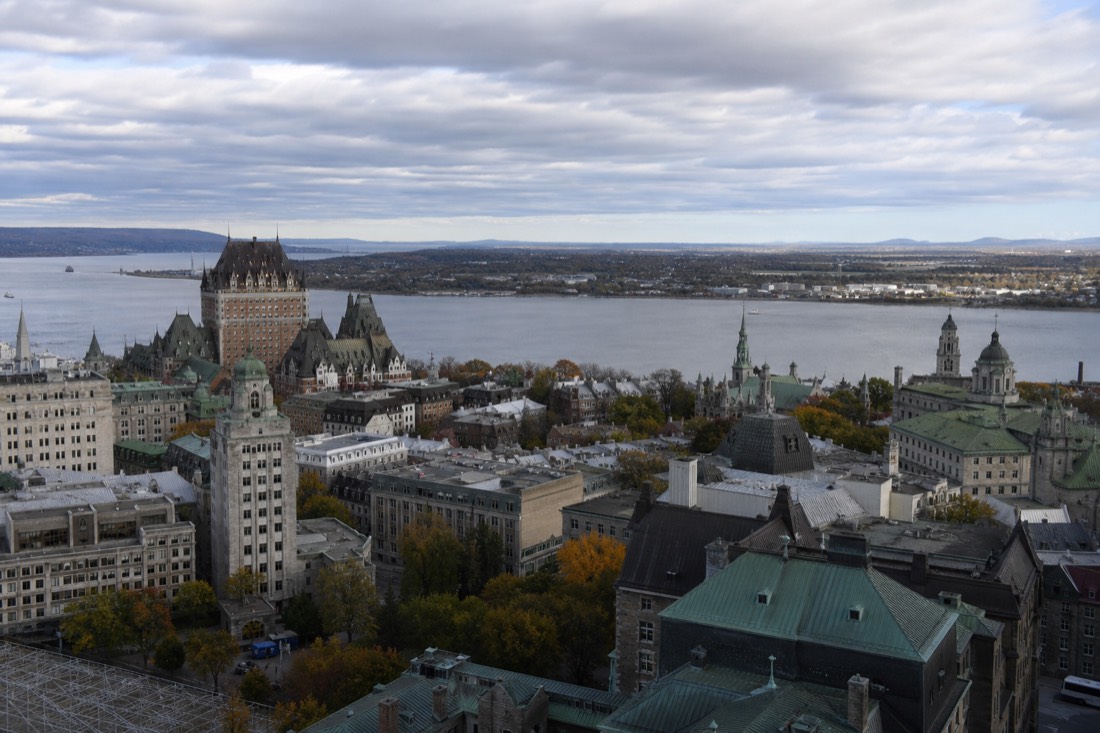
I send people here on day one and rarely on day three. From 221 metres the old town stops being a maze of streets and becomes a shape you can hold in your head: the walls, the river bend, the Plains running west along the cliff, the bridges toward Lévis. Twenty minutes up there saves an hour of confusion on the ground, and the official Observatoire site lists the current ticket price and opening hours before you walk over.
The honest caveat is the glass. You are shooting through a window, so phone photos pick up reflections unless you press the lens flat against the pane. Serious photographers get a better frame from the ferry for a quarter of the money. Sightseers get more understanding here than anywhere else in the city.
It also sits outside the walls in the Parliament Hill district, roughly ten minutes on foot from Porte Saint-Louis, which puts it within reach of a morning on the Plains of Abraham without doubling back.
What Is The Cheapest Great View In Quebec City?
The Québec City to Lévis ferry. An adult foot passenger aged 16 to 64 pays $4.25 one way, and the crossing takes 10 minutes. For that money you get the exact angle the postcards use, from a moving deck, with the option of turning straight around and coming back.
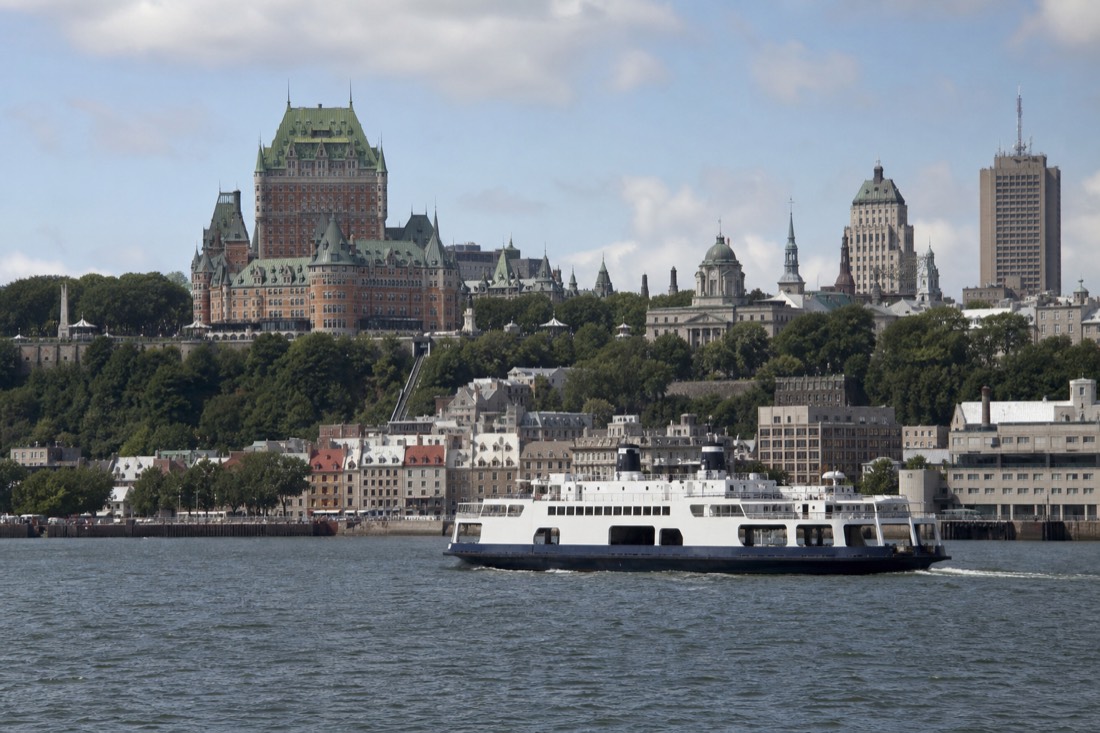
This is the tip I give away most often and the one visitors are most surprised by. The ferry is not an attraction. It is a working commuter link that happens to sail across the best photograph in eastern Canada, roughly every half hour through the day, from the terminal in the Old Port a few minutes below Place Royale. Fares and the current timetable sit on the Société des traversiers fares page and the matching schedule page.
Do it this way. Board about an hour before sunset, stand outside on the upper deck at the stern, and shoot continuously as the terminal pulls away, because the best frame comes at about the two-minute mark when the cliff opens up but the Frontenac still dominates. At Lévis, walk five minutes uphill to the terrace above the terminal, then catch the next boat back and shoot the same skyline with the lights coming on. Two crossings, twenty minutes of sailing, under nine dollars.
| What you pay for | Cost | What the money actually buys | Skip it if |
|---|---|---|---|
| Dufferin Terrace | Free | The widest river view inside the walls, open at any hour | Nothing. Everyone should walk it |
| Lévis ferry, one way | $4.25 | The postcard angle from the water, 10 minutes | You get seasick on a millpond |
| Funicular to Lower Town | $7 one way | 30 seconds in a glass car, a moving cliff-face view | Your knees are fine and the stairs are dry |
| Observatoire de la Capitale | $14.75 | Height, weatherproofing, and orientation on day one | The sky is already grey and low |
| Guided river cruise | From $46 | 90 minutes of angles, commentary, a deck to move on | You only want the one shot |
Which Free Viewpoints Are Worth The Climb?
Three, in this order: Dufferin Terrace for the river and the hotel above you, the cliff edge of the Plains of Abraham for the wide bend and the ships, and Parc du Bois-de-Coulonge for the quiet version, reached by a staircase of 294 steps. All three cost nothing and none of them close.
Dufferin Terrace is the obvious one and still the best free ground in the city, 430 metres of planking hung off the cliff, which I have written about in detail in my walkthrough of the terrace. What most visitors miss is that the terrace does not end. It runs south into the Promenade des Gouverneurs, a long wooden staircase along the cliff below the Citadelle, and the views from halfway up that climb are better than anything on the boardwalk itself, because you finally have height without glass in front of you.
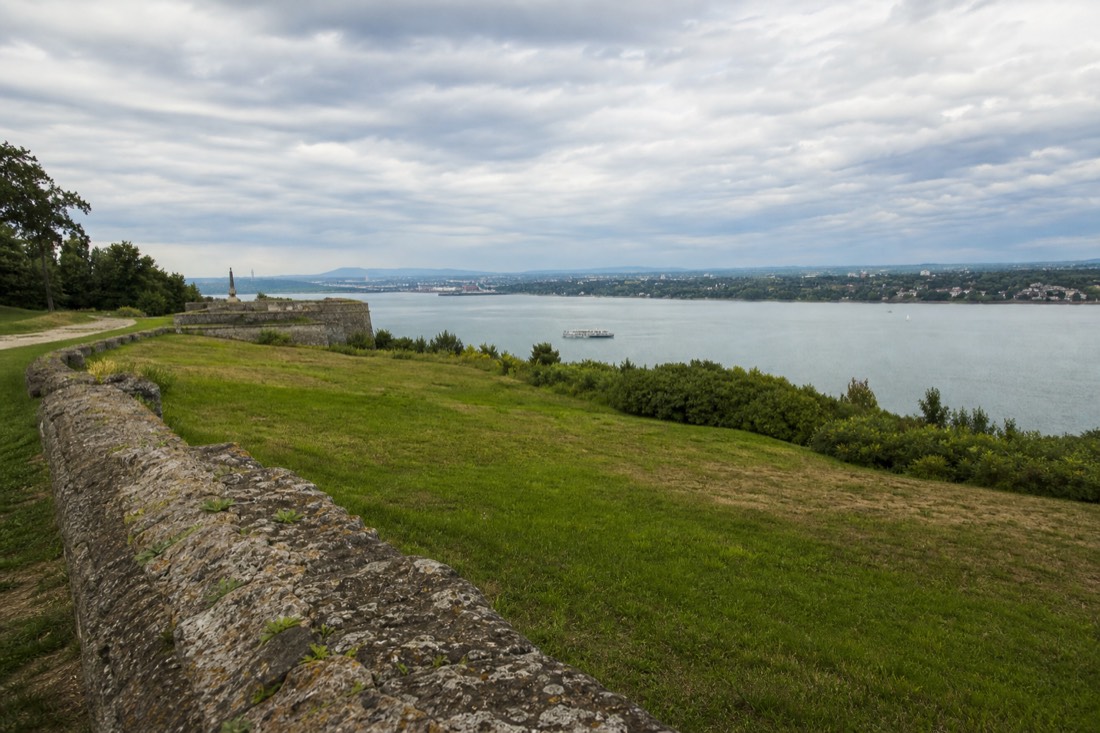
Keep going and you arrive on the Plains, where the ground simply stops at a cliff a hundred metres above the water. That edge is the widest view in the city, and it faces the shipping lane, so there is usually a cargo vessel working upriver to give the frame scale. Below it, the Cap Blanc staircase drops the whole cliff face down to the riverside road in one long public flight. It is a serious climb in either direction and a genuinely spectacular one, with the drop opening beside you the whole way.
Bois-de-Coulonge is the one I hesitate to publish. It sits west along the same cliff, a former estate turned public park, and its 294-step staircase deters exactly the people who would fill it. On a Sunday morning in September you can have a river panorama to yourself, a short bus ride from a city where the terrace is three deep at the rail. Routes are in my notes on getting around the city.
Ferry Or Cruise: Which Gets You The Better Photograph From The Water?
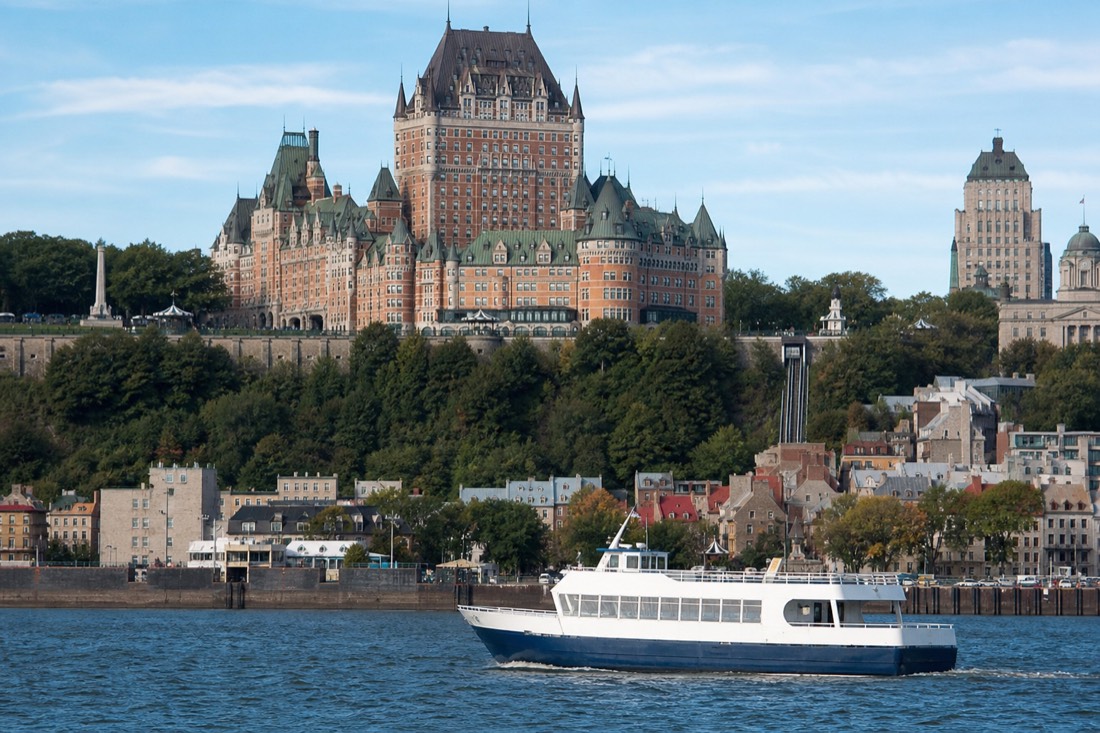
The ferry wins on price and beats the cruise for one specific shot. The cruise wins on everything else: about 90 minutes instead of 10, a deck you can move around, commentary that tells you what you are looking at, and enough time on the water to wait out a cloud.
Think of it as ten minutes versus ninety. The ferry gives you one pass, one side, one chance, and if the light goes flat as you board, that is your crossing. I still recommend it to everybody, because $4.25 buys a view that most cities would charge thirty for.
The cruise is a different purchase. The AML sightseeing boat works a wider stretch of the river than the ferry lane, which means the cliff rotates past you instead of sliding by once, and you get the city from angles the commuter crossing never reaches. Reviewers consistently describe the same two things: the commentary is the reason to choose it over the ferry, and the upper deck is where you want to be regardless of weather. It runs about 90 minutes and holds 4.4 stars across 3,211 GetYourGuide reviews, from $46. If your trip is short and the forecast has one clear evening in it, spend that evening on the water: compare the options on the river cruises page, and check live availability & prices on GetYourGuide before the sunset departures fill, because those are the first to go in July and August.
One warning that applies to both. Wind on the St. Lawrence is stronger than the temperature in town suggests, and it is coming down a river valley from the northeast. Bring a layer you would not think you needed.
Sunrise Or Sunset: When Does The Light Actually Work?
Sunset, for the city itself. Old Quebec faces east and southeast across the river, so the evening sun comes over your shoulder from behind Upper Town and lights the cliff, the Lower Town rooftops and the Frontenac's copper. Sunrise is the opposite, and it belongs to the far shore at Lévis, looking back.
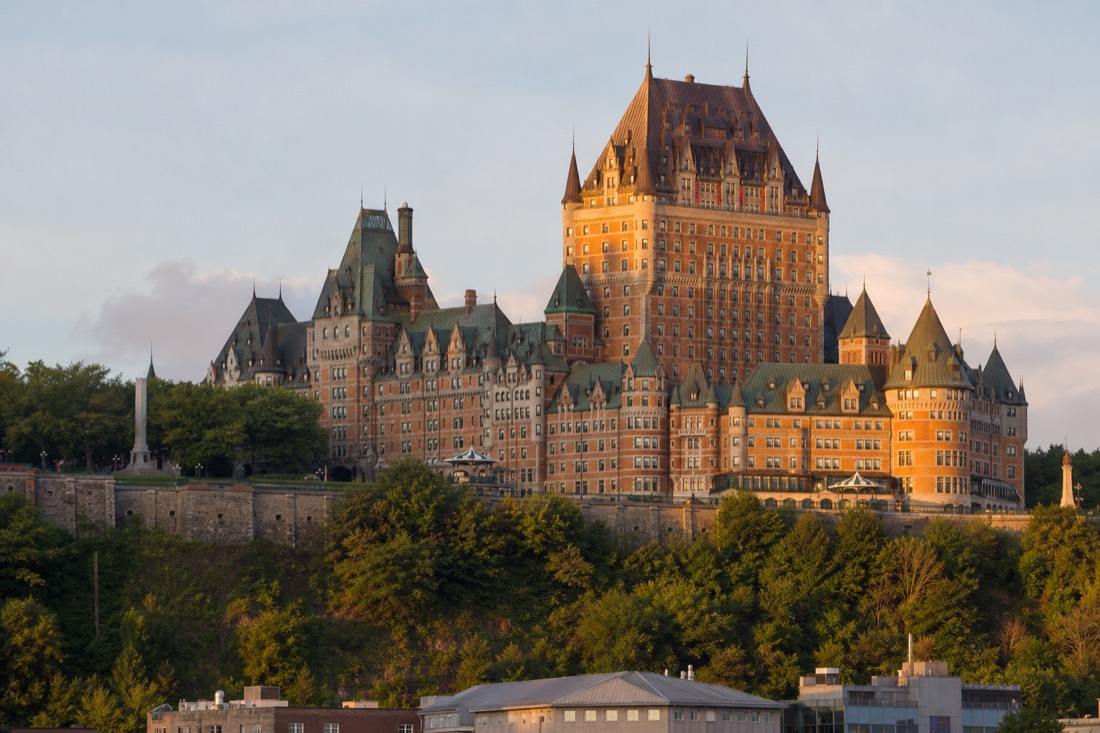
Here is the mistake I correct several times a week. Visitors plan a sunset on Dufferin Terrace expecting the sun to drop into the river. It does not. You are looking east from that boardwalk, so the sun sets at your back and what you get is twenty minutes of low copper light travelling across the water and up the hotel. That is the better photograph anyway, as long as you turn around to take it.
From Lévis, everything flips. Early morning puts the sun directly behind you and throws frontal light onto the whole face of the city, which is the cleanest, most postcard-like version of this skyline you will get. Evening from Lévis is moodier, warmer and more sidelit. Both work. Neither is available from inside the walls.
| Season | Morning verdict | Evening verdict | Where I would send you |
|---|---|---|---|
| Summer (Jun to Aug) | Hazy over the river, but the terrace is empty | Long, generous golden hour well after dinner | Evening ferry crossing, then the terrace at dusk |
| Autumn (Sep to Oct) | The best air of the year, sharp and cold | Warm light plus colour on the Lévis shore | Bois-de-Coulonge in the morning, the Plains at dusk |
| Winter (Dec to Mar) | Low hard sun, snow holding the light | Short, and gone by late afternoon, so plan early | Dufferin Terrace, then indoors up the Observatoire |
| Spring (Apr to May) | Grey more often than not, ice off the river | Improving weekly, quiet everywhere | The ferry, whenever the sky opens |
Two practical notes. In winter the daylight window is genuinely short, so a viewpoint plan built around a late golden hour will fail: shoot early and treat the Observatoire as your bad-weather fallback, which is the pattern I use throughout the cold months described in my guide to Quebec City in winter. And the funicular runs daily from 9:00 to 21:00 at $7 one way, which matters if you have shot Lower Town at dusk and do not fancy the Casse-Cou stairs in the dark.
Where Do You Get The Classic Château Frontenac Photograph?
Not from the terrace beside it. The three angles that work are the Lévis ferry deck for the whole cliff, the lower end of the Promenade des Gouverneurs for the hotel rising above the boardwalk, and rue du Petit-Champlain looking up, where the towers appear over the rooftops of Lower Town.
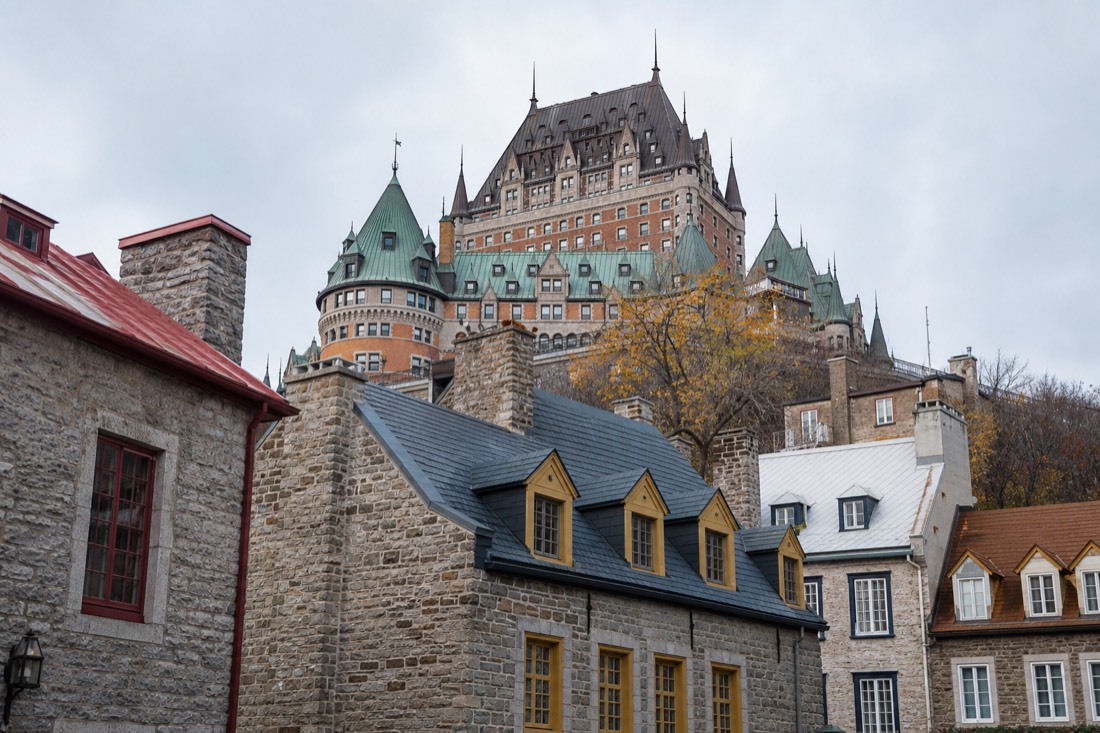
The hotel is too big and too close to photograph from Place d'Armes. People try anyway, tilt the phone back, and end up with a leaning wall and a lot of sky. Distance is the whole trick.
My working order, if you have one afternoon: shoot upward from the Petit Champlain streets, cross to Lévis on the ferry for the full skyline, come back, then climb the first flight of the Promenade des Gouverneurs at golden hour for the hotel-on-a-cliff frame. That sequence slots neatly into the self-guided walking route, and the building's own story, along with what it costs to step inside, sits in my piece on visiting the Château Frontenac. If you would rather have someone carry the history while you shoot, the walking tours that start on the terrace cover the same ground.
When Do These Viewpoints Get Crowded, And How Do You Dodge It?
Dufferin Terrace clogs at the rail between late afternoon and sunset in July and August, when tour demand across the city runs two to three times winter levels. The ferry rarely clogs, because it is a commuter boat sailing roughly every half hour. Sunset cruise departures are the ones that sell out first.
I work the terrace most days in season, so I can tell you where the pinch actually is. It is not the boardwalk, which is 430 metres long and absorbs an astonishing number of people. It is the fifty metres of railing directly in front of the Château Frontenac, because that is where everyone stops walking. Move a hundred metres south toward the Citadelle end and the same view arrives with a third of the bodies in front of it.
The ferry behaves differently because it is transport, not an attraction. Its busy moments are commuter-shaped rather than tourist-shaped, and the crossing takes 10 minutes regardless, so even a full boat resolves quickly. What genuinely sells out is the evening slot on the guided cruise in high summer, which is why I tell people to pick their date on arrival rather than on the afternoon they fancy it.
| Viewpoint | When it clogs | When it is clear | The dodge |
|---|---|---|---|
| Dufferin Terrace, Frontenac end | Late afternoon to sunset, July and August | Early morning, and any winter hour | Walk 100 m south along the boardwalk |
| Lévis ferry deck | Commuter runs rather than tourist peaks | Most of the middle of the day | Stand at the stern before the ropes go |
| Observatoire de la Capitale | Rainy afternoons, when everyone has the same idea | Clear mornings | Go on a clear day, when others are outdoors |
| Guided river cruise | Sunset departures in July and August | Earlier sailings, shoulder season | Book the date before you arrive |
| Plains of Abraham cliff edge | Festival days on the Plains | Almost always, otherwise | Walk 10 minutes further west |
| Parc du Bois-de-Coulonge | Rarely, the 294 steps do the filtering | Sunday mornings in September | Just go |
Which Quebec City Viewpoints Work If Stairs Are A Problem?
Three are effectively step-free: Dufferin Terrace, 430 metres of flat planking, the Observatoire, reached by lift to the 31st floor, and the Lévis ferry, which you walk onto. The funicular at $7 one way replaces the Casse-Cou stairs. Bois-de-Coulonge asks for 294 steps, and the Promenade des Gouverneurs is a staircase throughout.
This city is built on a cliff, and the guidebooks are quiet about what that means for anyone with a bad knee, a stroller or a reason to avoid stairs. The good news is that the single best free viewpoint, the terrace, is also the flattest ground in the old town and open at any hour. The awkward news is that the connections between Upper and Lower Town are historically stairs, and the funicular running 9:00 to 21:00 is the fix for exactly that problem.
Two viewpoints are honestly out of reach for a lot of visitors. Bois-de-Coulonge's staircase is the whole barrier, which is also why it stays quiet. The Cap Blanc staircase down the cliff face is a serious climb in both directions and should be treated as a hike rather than a shortcut.
Surfaces change with the season and operators update their access arrangements, so confirm anything critical before you set out.
| Viewpoint | Stairs involved | Step-free option | My verdict |
|---|---|---|---|
| Dufferin Terrace | None along the boardwalk itself | Flat throughout, open at any hour | The default for anyone avoiding stairs |
| Observatoire de la Capitale | None, a lift to the 31st floor | Yes, and it is indoors and warm | Best wet-weather choice, $14.75 adult |
| Lévis ferry | Walk-on as a foot passenger | Yes, terminal access at both ends | $4.25 one way, 10 minutes across |
| Upper to Lower Town link | The Casse-Cou stairs, otherwise | Funicular, $7 one way, 9:00 to 21:00 | Worth the fare on a wet or dark evening |
| Plains of Abraham cliff edge | Flat approach, 15-minute walk from the walls | Yes, on the level path | Wide open, no climb needed |
| Promenade des Gouverneurs | A long cliffside staircase | None | Skip it if stairs are the issue |
| Parc du Bois-de-Coulonge | 294 steps | None published | The quiet is the reward for the climb |
How Do You Shoot The Best Views Of Quebec City In A Single Evening?
One evening, three viewpoints, $15.50 in fares. Start on Dufferin Terrace two hours before sunset, drop to Lower Town on the funicular at $7, cross to Lévis on the 10-minute ferry at $4.25, shoot the city as the lights come on, then ride back for another $4.25.
This is the sequence I give photographers who have one clear evening and no car. It works because it moves downhill and outward, ending with the city fully lit behind you rather than beside you. Doing it in reverse means climbing the hill at the exact moment the light turns good, which is the one mistake that cannot be fixed on the day.
Watch the timing on the funicular. It stops running at 21:00, and in June an evening plan can easily outlast it, which leaves you with the Casse-Cou stairs in the dark. In December the opposite problem applies: the light is gone by late afternoon, so the whole sequence starts and finishes hours earlier than instinct suggests.
The clock below assumes summer, when sunset is late. Shift the whole block earlier by season, and treat the durations as my allowances rather than a timetable.
| Clock | Where you are | What you are shooting | Fare |
|---|---|---|---|
| Sunset minus 2 h | Dufferin Terrace, south end | The Frontenac with low light on the copper | Free |
| Sunset minus 90 min | Funicular down to Petit Champlain | The towers rising over Lower Town rooftops | $7 |
| Sunset minus 60 min | Old Port ferry terminal | Nothing yet. Buy the ticket, get to the stern | $4.25 |
| Sunset minus 45 min | Mid-crossing, two minutes out | The full stacked skyline, cliff to roofline | Included |
| Sunset minus 30 min | The terrace above the Lévis terminal | The city face on, warm and sidelit | Free |
| Sunset plus 20 min | Ferry back, upper deck | Lights coming on across the whole cliff | $4.25 |
| Sunset plus 45 min | Place Royale on foot | Lit stone, empty streets, long exposures | Free |
More Questions About Quebec City Viewpoints
How much is the Lévis ferry and how long does it take?
An adult foot passenger aged 16 to 64 pays $4.25 one way, and the crossing takes 10 minutes. Buy at the terminal in the Old Port, walk on, and stand at the stern on the upper deck for the view back at the city.How high is the Observatoire de la Capitale?
It sits on the 31st floor of the Marie-Guyart Building, 221 metres above sea level, which makes it the highest publicly accessible viewpoint in the city. An adult single ticket is $14.75.Is there a free viewpoint over Quebec City?
Several. Dufferin Terrace, the cliff edge of the Plains of Abraham, the Promenade des Gouverneurs staircase and Parc du Bois-de-Coulonge all cost nothing. Bois-de-Coulonge asks for a 294-step staircase in exchange for having a river panorama largely to yourself.Can you see Quebec City from a boat tour?
Yes, and it is the angle the city was designed around. The AML sightseeing cruise runs about 90 minutes on the St. Lawrence and rates 4.4 across 3,211 GetYourGuide reviews from $46, which buys considerably more time on the water than the ferry crossing does.What is the best time of day to photograph Old Quebec?
The hour before sunset from inside the city, because the low sun comes over Upper Town and lights the cliff and the copper roofs. Early morning is better from the Lévis side, where the sun is behind you and hits the city face on. Official visitor information, including seasonal opening hours for the main sites, is kept on the [city's tourism site](https://www.quebec-cite.com/en/).Get one thing right and the rest follows: get out of the city to look at it. Ten minutes and $4.25 is the whole price of admission.
Your Next Step
Choose Your Quebec Experience
General recommendation, before you add preferences. Confirm dates and participation requirements with the operator.
Have your travel date in mind? See the Château Frontenac and riverside landmarks from the St. Lawrence with bilingual commentary. Check the departure before arranging the rest of your day.
90-minute sightseeing cruise from Quebec City. Food, drinks and parking are extra; this is not whale watching.
Departure schedule from Viator; final availability and price are confirmed on Viator.
Compare Options And Fit Your Plans
See the Château Frontenac and riverside landmarks from the St. Lawrence with bilingual commentary. 90-minute sightseeing cruise from Quebec City. Food, drinks and parking are extra; this is not whale watching.
Combine guided Lower Town stories with a round-trip ferry crossing and views from Lévis. 2 hours in English or French; meet at the Wolfe-Montcalm Monument, 7 Rue des Carrières. Ferry fare is included; this is a walking outing with a river crossing.
See Quebec City from the indoor viewpoint on the 31st floor of the Marie-Guyart Building. Self-guided admission, valid for one day; reserve your date and go to the 31st floor. The listing states wheelchair access. No English guided commentary or hotel transport is included. Allow two hours including city travel and the viewpoint visit. This is a planning allowance, not a fixed ticket duration.
Affiliate links: we may earn a commission at no extra cost to you.